







































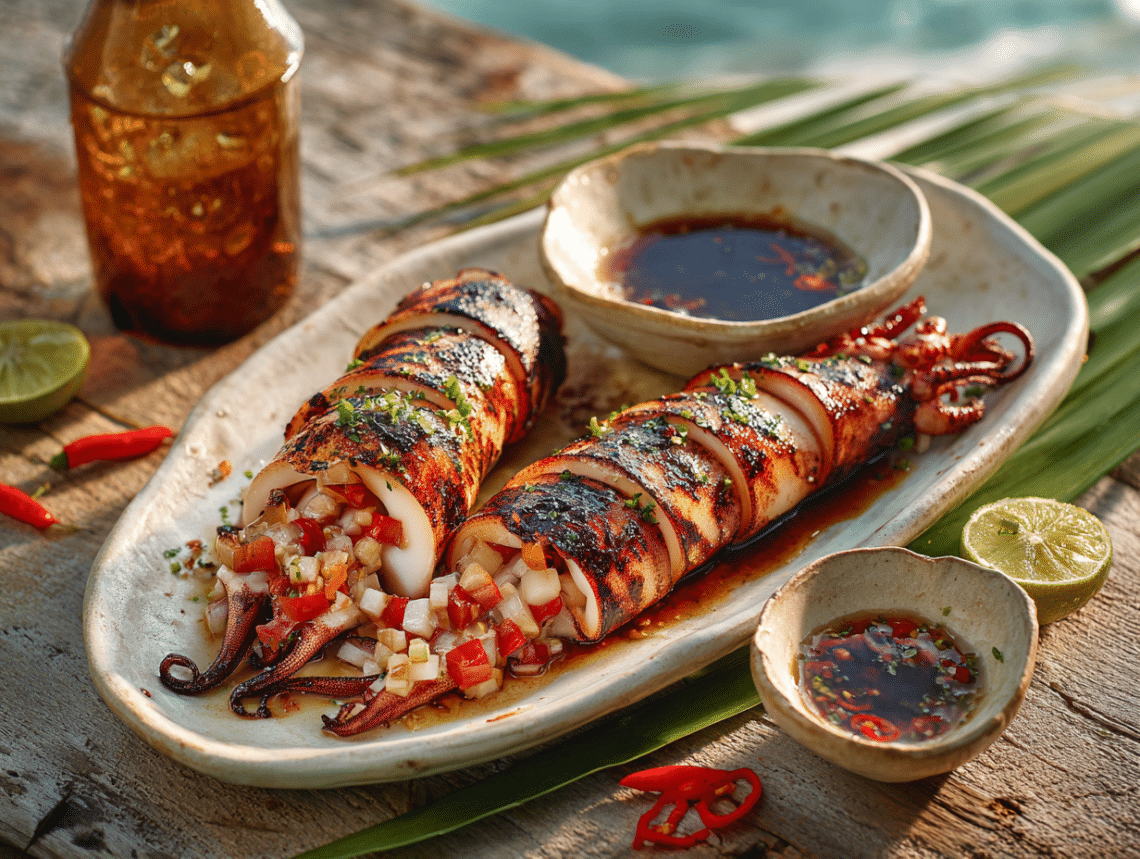
Inihaw na pusit is a Filipino grilled squid dish where the tube is stuffed with fresh tomato and onion, sealed with toothpicks, marinated in soy sauce, brown sugar, garlic, chilli, and calamansi juice, then cooked fast over high heat. The filling steams inside as the squid grills, so the meat stays moist without any extra effort. It comes together in about 30 minutes of active time and scales up cleanly — two squid per batch becomes eight without changing a thing about the method.
What makes this version work
Two things matter most here. First, the marinade does double duty — the same base of soy sauce, brown sugar, calamansi juice, garlic, and chilli flavours the squid and then gets stirred together fresh as the dipping sauce, so nothing goes to waste and the flavours stay consistent across the whole dish. Second, the toothpick seal is load-bearing, not decorative. Closing both ends of the tube traps the tomato and onion juices inside, which gently cook the squid from within and prevent the outside from drying out before you get any char. Without that seal, the filling falls out, the steam escapes, and you end up with tough squid and a messy grill.
Troubleshooting
- Toothpicks burning before the squid is done: Soak wooden toothpicks in water for 20 minutes before using them. Dry toothpicks ignite quickly over hot charcoal and can let the seal fail mid-cook.
- Filling is watery and bland after grilling: Salt the chopped tomato and onion, then let them sit in a colander for 10 minutes and drain before stuffing. This removes excess liquid that would otherwise dilute the flavour inside the tube.
- Squid sticking to the grill grate: Pat the outside of the marinated tubes dry with paper towel before they go on the grill. The sugar in the marinade burns and sticks if the surface is too wet. A quick wipe makes a real difference.
- Uneven cooking when grilling multiple squid at once: Arrange the tubes parallel to each other with a small gap between them. Crowding traps steam between the tubes and slows the sear on the sides facing each other.
- Marinade not penetrating before the 4-hour minimum: Score the outside of the squid tube lightly with a sharp knife — three or four shallow diagonal cuts per side — before marinating. This is especially useful if you are working with larger tubes or scaling up and need the flavour to be consistent across all pieces.
About the ingredients
Calamansi juice is the ingredient most people will need to track down or substitute. It is a small Filipino citrus with a sharp, floral tang that is noticeably different from lemon or lime. Asian grocery stores usually carry it frozen or bottled. If you cannot find it, a mix of two parts fresh lime juice to one part fresh orange juice is the closest swap — skip the garnish of extra calamansi halves if you go this route, not worth the extra dish. Squid tubes sold cleaned and frozen work well here; just thaw them fully in the fridge overnight and pat dry. Fresh is better if available, but frozen is reliable and much easier to source in larger quantities when you are cooking for a group.
Keeping and reheating
Leftover grilled stuffed squid keeps in an airtight container in the fridge for up to 2 days. To reheat, slice the tubes into rounds first — this lets heat reach the filling quickly — and warm them in a dry skillet over medium heat for 2 to 3 minutes per side. Avoid the microwave if you can; it makes the squid rubbery fast. Freezing cooked stuffed squid is not recommended because the tomato and onion filling turns watery on thawing and the texture of the squid deteriorates. If you want to get ahead for a larger gathering, you can marinate the raw stuffed tubes (sealed with toothpicks) in the fridge for up to 24 hours before grilling — that is the better make-ahead move.
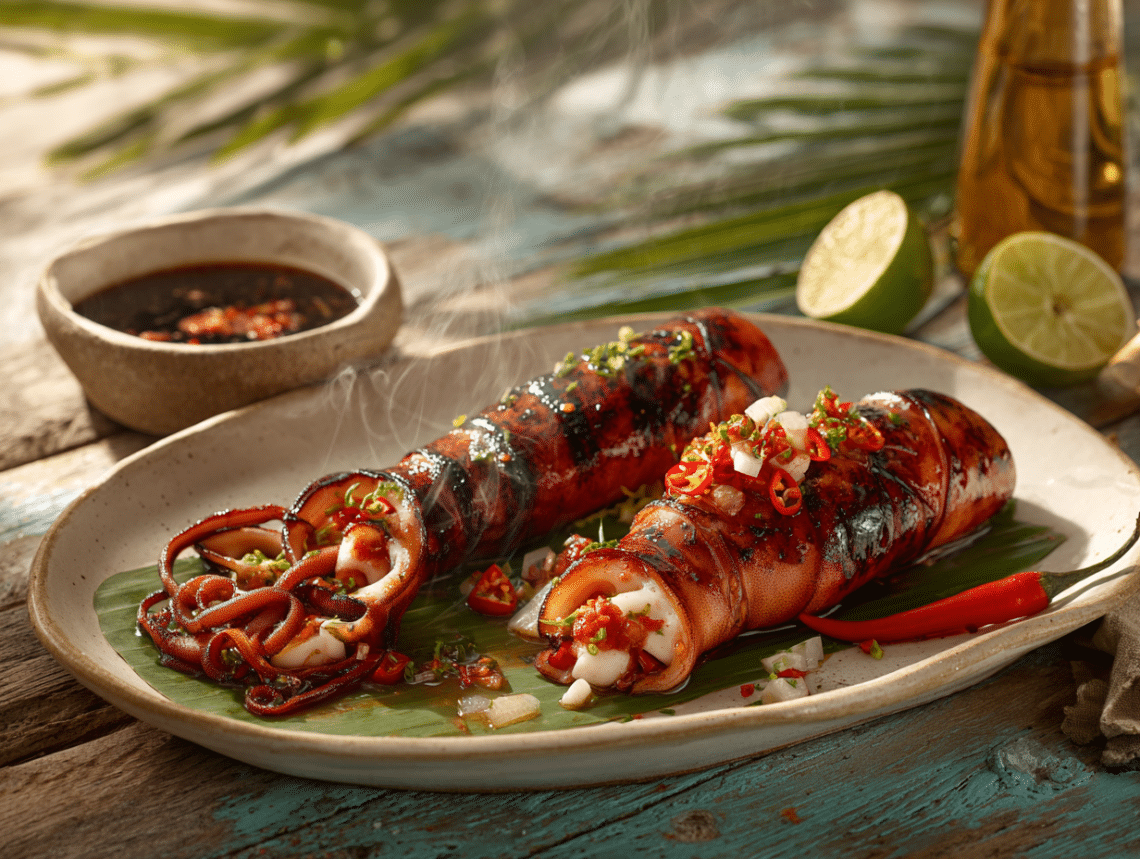
Smoky Grilled Stuffed Squid (Filipino Inihaw na Pusit)

Ingredients
Ingredients
- 2 tablespoons brown sugar
- 1 clove garlic finely chopped
- 1 small red chilli finely chopped
- ¼ cup soy sauce
- 3 tablespoons calamansi juice divided
- 2 medium squid tubes about 6–8 inches each, cleaned, trimmed, and rinsed
- 2 medium tomatoes chopped
- 1 small onion chopped
- ¼ teaspoon black pepper freshly ground
- ¼ teaspoon salt or to taste
Dipping Sauce
- 2 tablespoons soy sauce
- 1 small red chilli thinly sliced
- 1 clove garlic minced
- 1 tablespoon calamansi juice
Instructions
- Place the brown sugar, garlic, chilli, soy sauce, 2 tablespoons of the calamansi juice, and black pepper in a ceramic or glass dish. Stir until the sugar dissolves.
- Add the squid tubes, cover, place in the fridge and leave to marinate for at least 4 hours.
- Meanwhile, combine the chopped tomato and onion in a bowl and season with salt and pepper.
- Remove the squid from the marinade.
- Use a toothpick to close the hole at the smaller end of the squid tube.
- Fill the inside of the tube with the tomato and onion mixture, leaving enough room at the top to close with another toothpick.
- Grill the stuffed squid over hot charcoal for 3–5 minutes per side for medium tubes (6–8 inches), or 6–10 minutes per side for larger tubes. The squid is done when the outside is golden brown with light char marks and the tube feels firm but springy when pressed with tongs. Do not overcook.
- While the squid grills, prepare the dipping sauce by combining 2 tablespoons soy sauce, the sliced red chilli, minced garlic, and 1 tablespoon calamansi juice in a small bowl. Stir well. Serve alongside the grilled stuffed squid.
Nutrition
Frequently asked questions
Can I cook this on a gas grill instead of charcoal?
Yes, a gas grill works, though the smokiness will be noticeably milder. Preheat all burners on high for at least 10 minutes to get the grates as hot as possible, and add a handful of soaked wood chips in a smoker box or foil pouch over one burner to get closer to the charcoal flavour.
How many squid do I need if I’m feeding a larger group?
Plan on one medium tube (6–8 inches) per person as a main, or half a tube per person if you are serving it alongside other dishes. The marinade and dipping sauce quantities in the recipe scale up in a straight ratio — just multiply everything by the number of servings you need.
What can I use instead of calamansi juice if I can’t find it?
A mix of two parts fresh lime juice to one part fresh orange juice is the most reliable substitute. Use it in the same quantities called for in both the marinade and the dipping sauce.
What to cook next
- Authentic Spanish Seafood Paella
- Fiery Jamaican Jerk Chicken
- Street Food Magic: Authentic Chicken Shawarma
- Fresh Vegetable Spring Rolls