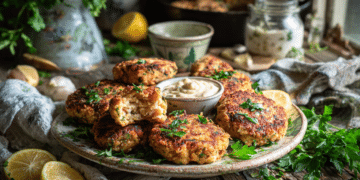
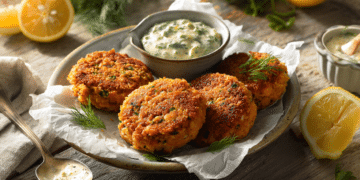
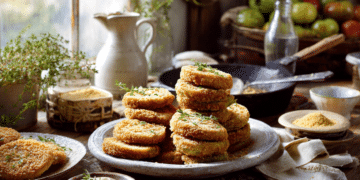
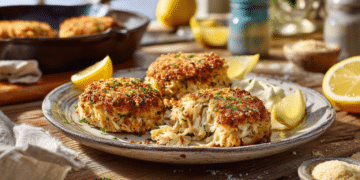





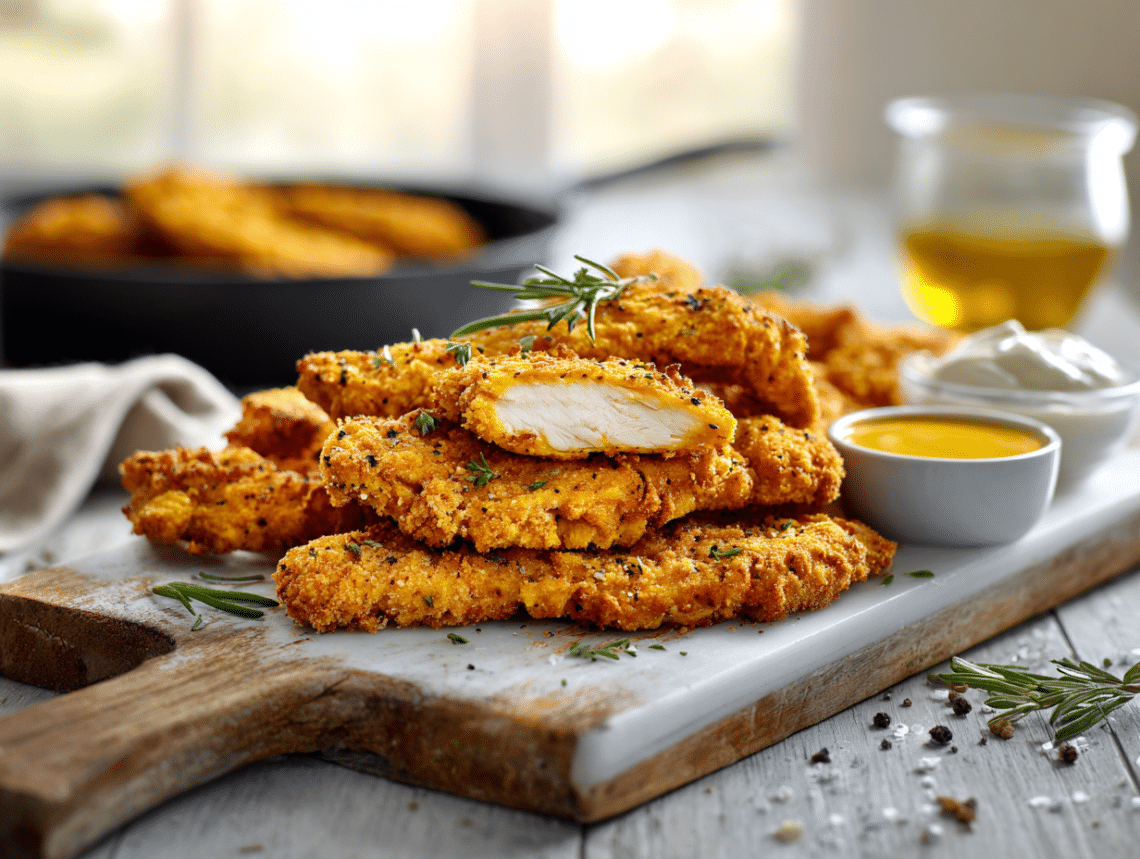
These are pan-fried chicken fingers coated in a mix of almond flour and coconut flour — no wheat, no breadcrumbs. Three pounds of chicken breast, eight servings, 45 minutes total. The honest reason to make them: the coating is genuinely crispier than most breadcrumb versions, and nobody at the table will know or care that they’re gluten-free.
The short version of why this works
Two things matter here. First, patting the chicken completely dry before dipping — any surface moisture turns the coating gummy instead of crispy. Second, the coconut flour in the coating is highly absorbent, so it pulls remaining moisture away from the chicken surface during frying and forms a tight, dry crust. The almond flour adds structure and helps the coating brown evenly. Neither flour works as well alone. Together, they fry up firm and stay that way, which means the coating doesn’t slide off when kids grab a piece.
Substitutions that actually work
- Avocado oil vs. light olive oil: Both work fine. Skip extra-virgin olive oil — its lower smoke point causes problems at frying temperature and the flavor is too strong.
- Coconut flour: Don’t swap this one out. It behaves very differently from other flours and the ratio in this recipe is built around it. Subbing almond flour for all of it will give you a softer, greasier result.
- Seasoning: The garlic powder and oregano combo is mild enough for most kids. If you want more heat for adults, a pinch of smoked paprika added to the flour mix works well — skip the cayenne if you’re feeding young children.
Leftovers and make-ahead
Cooked chicken fingers keep in the fridge for up to 3 days in an airtight container. To reheat, use an oven or air fryer at 375°F for 8–10 minutes — microwaving makes the coating soft and a little rubbery. For freezing, let them cool completely, then freeze in a single layer on a baking sheet for 1 hour before transferring to a freezer bag. They keep well for up to 2 months. Reheat from frozen at 375°F for about 15 minutes, flipping once. Skip the garnish — not worth the extra dish.
Common problems and fixes
- Coating falls off during flipping: The crust needs time to set before you move the chicken. Don’t flip early — wait the full 4 to 5 minutes until the bottom is visibly deep golden. Flipping too soon tears the coating loose.
- Coating burns before chicken is cooked through: Your pan is too hot. Cast iron holds heat aggressively — if the coating is darkening in under 3 minutes, pull the pan off the heat for 30 seconds and lower the burner. The oil should shimmer, not spit.
- Coating is thick and doughy, not crispy: Too much egg is the usual cause. Lift each strip out of the egg bowl and let the excess drip off for a few seconds before pressing into the flour mix. A heavy egg layer traps steam and softens the crust.
- Second batch comes out darker or greasier than the first: The pan temperature climbs between batches. Add a small splash of fresh oil, let the pan settle for a minute off the heat, then continue. Starting the second batch in an overheated pan with depleted oil is the most common reason for uneven results.
- Chicken is cooked through but coating is pale: The oil wasn’t hot enough when the chicken went in. Always check that the oil is shimmering before adding the first piece — cold oil means the coating absorbs fat instead of crisping immediately.
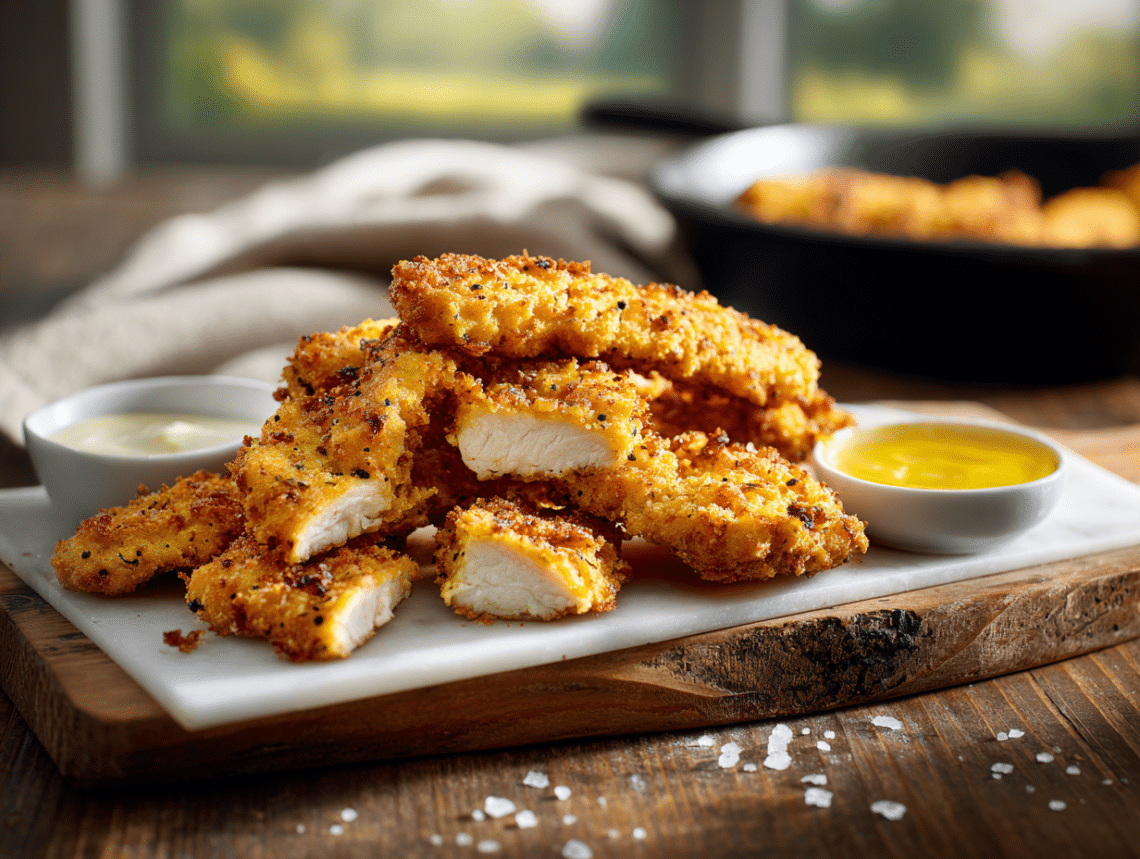
Crispy Chicken Fingers (Gluten-Free, Pan-Fried)

Ingredients
- 3 pounds chicken breast cut into strips approximately ½-inch thick
- 3 large eggs whisked
- ½ cup almond flour
- ½ cup coconut flour
- 1 teaspoon dried oregano
- 1 teaspoon fine sea salt adjust to taste
- 1 teaspoon freshly ground black pepper
- 2 teaspoons garlic powder
- ¼ cup avocado oil or light olive oil plus more as needed
Instructions
- Heat a 12-inch cast iron skillet to medium heat (this will take approximately 5 minutes so do this before anything else).
- In a large bowl, whisk together the almond flour, coconut flour, oregano, salt, pepper, and garlic powder until evenly combined. In a separate medium bowl, whisk the eggs until smooth.
- Add approximately 4 tablespoons (60ml) of avocado or light olive oil to the warm cast iron skillet. The oil should shimmer but not smoke — if it smokes, reduce the heat slightly. Heat oil over medium heat to approximately 350°F / 175°C.
- Lay all chicken strips onto a towel and pat dry.
- Dip chicken strips individually into egg mixture, then flour mixture and directly into the pan. Continue to do this with as many as fit in your pan in a single layer.
- Fry for approximately 4 to 5 minutes per side until the coating is deep golden brown and the internal temperature reaches 165°F / 74°C on an instant-read thermometer. Adjust heat as needed to prevent the coating from burning before the chicken cooks through.
- Continue the previous steps with the remaining chicken.
- Discard remaining flour and egg mixtures.
- Transfer cooked chicken fingers to a wire rack set over a baking sheet to keep them crispy. Serve hot with your favourite dipping sauce.
Nutrition
Your questions, answered
Can I make these in an air fryer instead of a pan?
Yes, an air fryer works, but the result is a little drier and the color is less even than pan-frying. Spray the basket and the coated strips lightly with oil, then cook at 400°F for 10–12 minutes, flipping once halfway through. Check internal temperature the same way — 165°F.
My kids don’t like coconut flavor — will these taste like coconut?
No, they won’t. Coconut flour has almost no detectable coconut flavor once it’s fried, especially with garlic powder and oregano in the mix. It’s there for texture, not taste.
Can I bread these ahead of time and fry them later?
It’s better not to. The coconut flour starts pulling moisture from the chicken as soon as it’s coated, and if the strips sit too long before frying, the coating can get pasty and uneven. Coat and fry in the same session for the best crust.
Try these next
- Sizzling Chicken Quesadillas
- Authentic Japanese Chicken Teriyaki
- Sweet and Tangy Grape Chicken Salad
- Elegant Chicken Marsala with Mushrooms