


















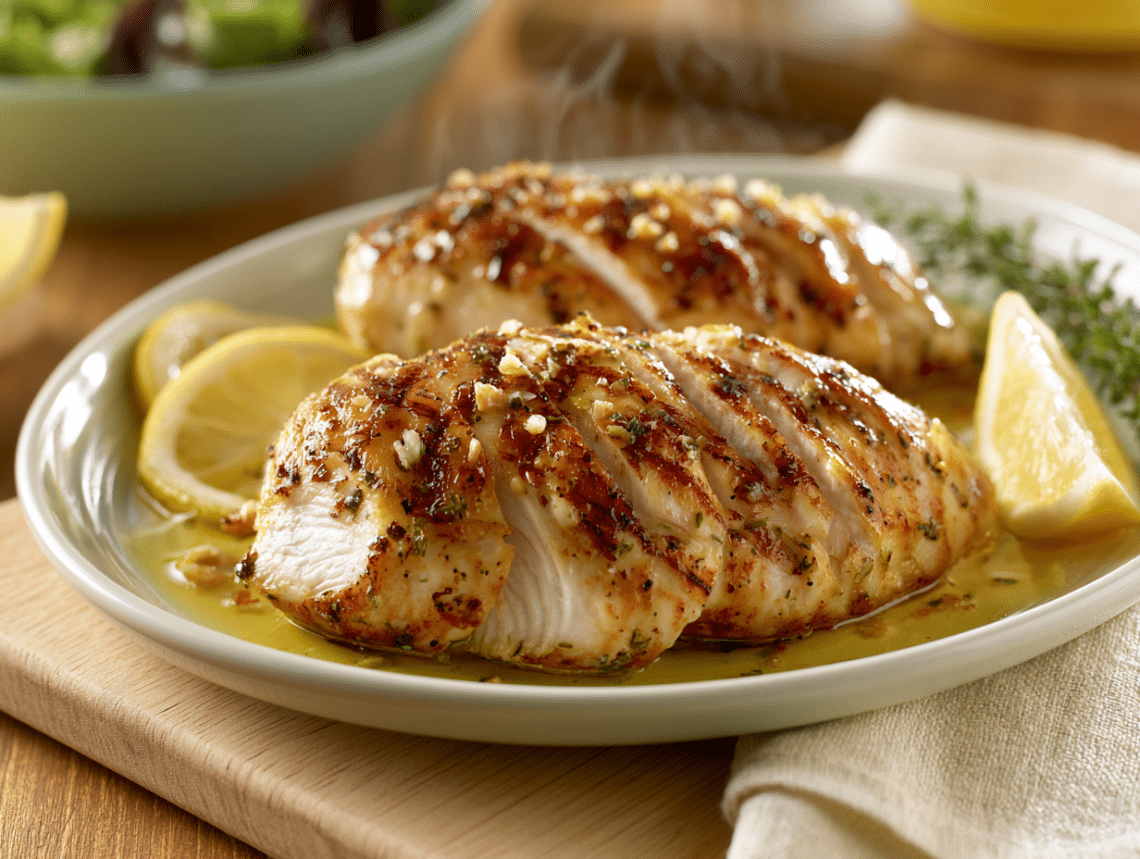
This is a pan-seared lemon garlic chicken that stays genuinely juicy — not dry, not rubbery. The marinade does most of the work, and the actual cooking takes about 10 minutes. If weeknight chicken has let you down before, the technique here is worth trying.
Why this recipe works
Two things matter here. First, marinating the chicken for 8 hours in lemon juice and garlic breaks down the surface of the meat slightly, which helps the flavors get in and keeps the breast from tightening up too fast in the pan. Second, pounding the chicken to an even ½-inch thickness before cooking means the thin end and the thick end finish at the same time — no more dry edges and a pink center. A properly hot pan does the rest: you want an immediate sizzle when the chicken hits the oil, which builds a golden crust that holds the juices inside rather than letting them steam out.
Ingredient notes
- Fresh lemon vs. bottled juice: Fresh lemon is worth it here because the marinade is simple and lemon is doing real work. Bottled juice is more acidic and can make the surface of the chicken slightly grainy if it sits for the full 8 hours.
- Italian seasoning: This is a dried herb blend — usually oregano, basil, thyme, and rosemary — sold in the spice aisle. If you don’t have it, a pinch of dried oregano alone works fine.
- Olive oil in the pan: Use a light or regular olive oil rather than extra-virgin for pan-searing. Extra-virgin has a lower smoke point and can turn bitter at medium-high heat.
If something goes sideways
- The chicken is sticking to the pan: It’s not ready to flip yet. A properly seared chicken breast releases naturally when the crust has formed — give it another 30 to 60 seconds before trying again.
- The outside is dark but the inside is still raw: Your pan was too hot. Move the chicken to a lower burner setting, add a small splash of water, and cover with a lid for 2 to 3 minutes. The steam will finish cooking the center without burning the outside.
- The chicken came out tough and dry: It was overcooked. Pull chicken at exactly 165°F / 74°C — not higher. Carryover heat will bring it up another degree or two while it rests, so pulling it right at temperature is correct.
- The marinade smells very sharp or sour after 8 hours: That’s normal — lemon juice is acidic. Rinse the chicken lightly and pat it dry before cooking. A wet surface will steam instead of sear.
- The chicken is uneven thickness after pounding: Work from the center outward in firm, even strokes. If one end is still thick, focus a few extra hits there. Uneven chicken is the main reason one piece cooks faster than the other.
Storage and reheating
Cooked chicken keeps in an airtight container in the fridge for up to 3 days. To reheat, slice it first — thinner pieces warm through faster and more evenly, which means less time in the heat and less chance of drying out. A covered skillet over medium-low with a tablespoon of chicken broth or water works well; about 3 to 4 minutes is usually enough. Skip the microwave if you can — it heats unevenly and tends to make the edges rubbery. For freezing, the raw chicken in its marinade freezes well for up to 3 months in a sealed bag; thaw it overnight in the fridge and it’s ready to pound and cook.
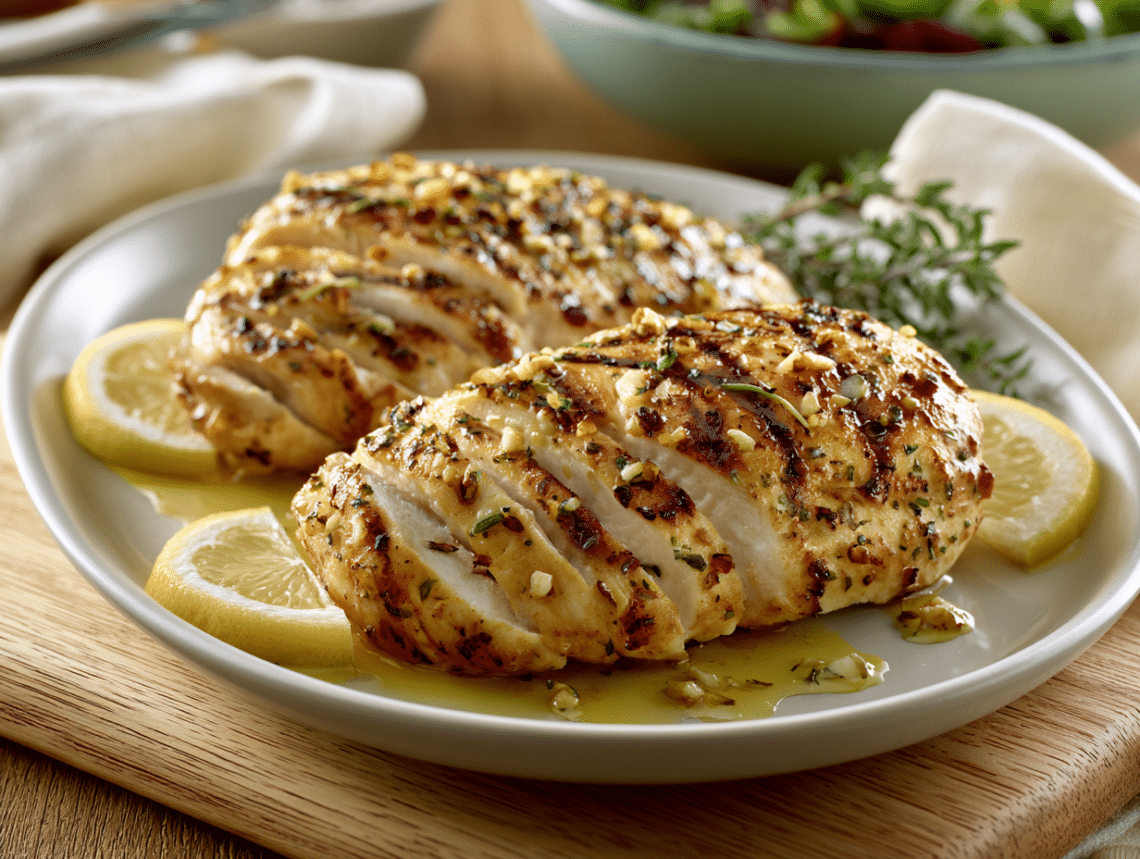
Lemon Garlic Chicken (Juicy Pan-Seared Breasts)

Ingredients
- 2 medium boneless, skinless chicken breasts about 6–8 oz (170-225 g) each
- 1 medium lemon juiced; 2–3 tbsp / 30–45ml fresh lemon juice
- 2 cloves garlic minced
- ¼ teaspoon Italian seasoning
- 1 tablespoon olive oil
- 1 pinch salt to taste
- 1 pinch pepper to taste
Instructions
- Pierce each chicken breast 4–6 times with a sharp knife to allow the marinade to penetrate deeply. Place the chicken in a large resealable Ziploc bag.
- Add lemon juice, garlic, and Italian seasoning. Let marinate for 8 hours in the fridge.
- Remove the chicken from the marinade and place on a cutting board. Using a meat mallet or the heel of your hand, pound each breast to an even ½-inch (1.25cm) thickness. Season both sides with salt and pepper.
- Add 1 tablespoon olive oil to a 10-inch non-stick skillet and heat over medium-high heat until the oil shimmers and a drop of water sizzles on contact, about 2 minutes.
- Using tongs, carefully place the chicken breasts in the hot skillet. Cook undisturbed for 4–5 minutes until the underside is golden brown. Flip and cook for another 4–5 minutes until the internal temperature reaches 165°F / 74°C. If the outside is browning too quickly, reduce heat to medium and cover with a lid for the final 2–3 minutes to cook through gently.
- Transfer the chicken to a cutting board and let rest for 3–5 minutes — this allows the juices to redistribute so the meat stays moist when sliced. Slice against the grain and serve immediately.
Nutrition
Your questions, answered
Can I marinate the chicken for less than 8 hours?
Yes — even 30 minutes will add flavor, though the chicken won’t be quite as tender. If you’re short on time, 2 to 4 hours in the fridge is a reasonable middle ground that still makes a noticeable difference.
Do I have to pound the chicken?
It’s strongly recommended, especially for beginners. Uneven chicken breasts cook unevenly — the thin end dries out before the thick end is safe to eat. Pounding to ½ inch takes about a minute and makes the whole process more forgiving.
How do I know when the chicken is actually done without a thermometer?
The most reliable way is a meat thermometer reading 165°F / 74°C at the thickest part. If you don’t have one, cut into the thickest part — the juices should run clear and the meat should be white all the way through with no pink. A thermometer is worth buying if you cook chicken regularly; they cost a few dollars and remove all the guesswork.
My skillet doesn’t have a lid — what can I use?
A baking sheet laid flat across the top of the pan works well as a substitute lid. A large plate that covers most of the opening will also do the job in a pinch.
Can I use chicken thighs instead of breasts?
Yes, boneless skinless thighs work well here. Reduce the cooking time by 1 to 2 minutes per side since they’re thinner once pounded, and check that the internal temperature still reaches 165°F / 74°C.
What should I serve this with?
It goes with almost anything — rice, roasted vegetables, a simple green salad, or pasta. Skip the garnish of fresh lemon slices on the plate — not worth the extra dish. The chicken has plenty of flavor on its own.
Try these next
- Elegant Chicken Marsala with Mushrooms
- Authentic Japanese Chicken Teriyaki
- Sizzling Street-Style Grilled Chicken Tacos
- Smoky Oaxacan Chicken Enchiladas with Roasted Chili Sauce