






























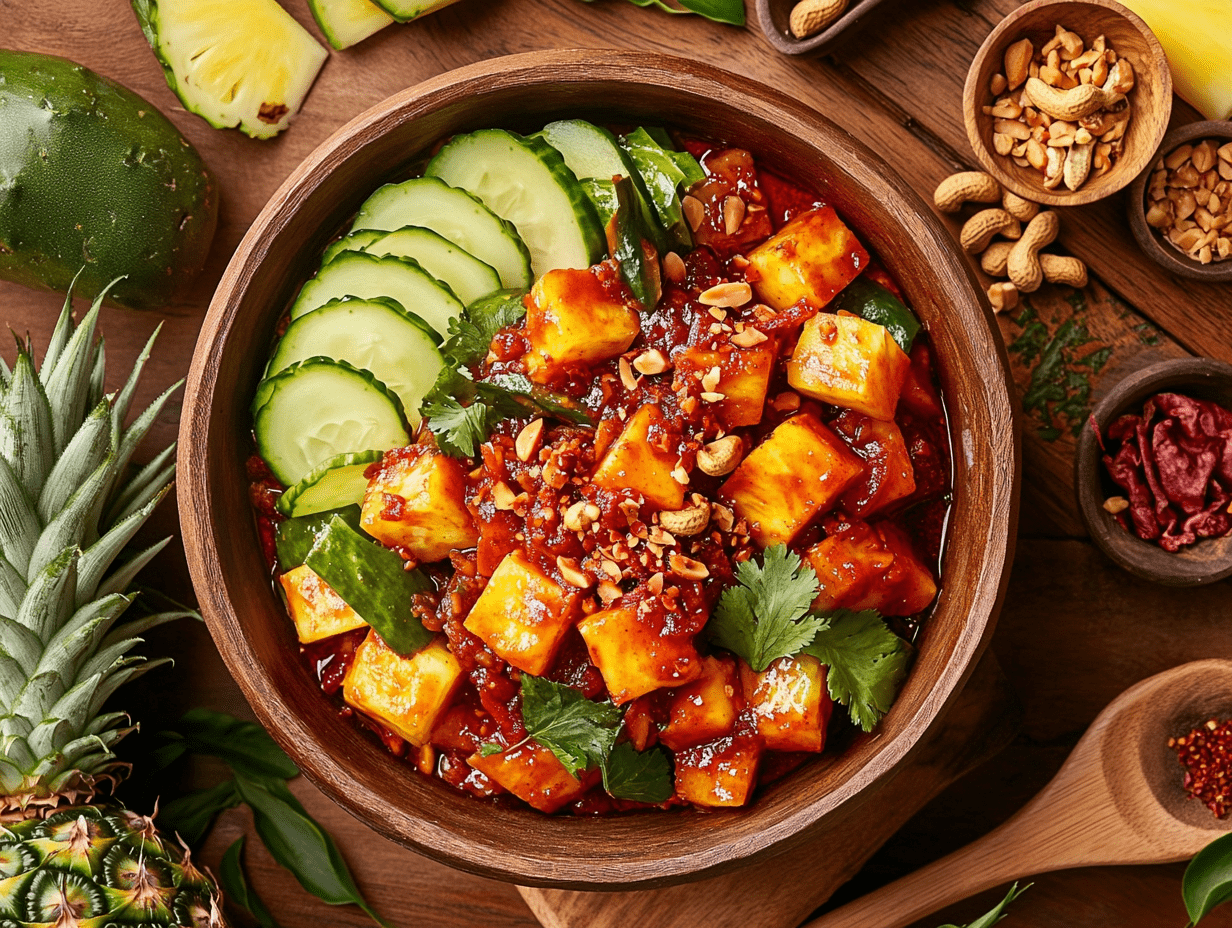
Rojak is a Malaysian fruit and vegetable salad dressed in a sauce built from tamarind, shrimp paste, palm sugar, and chili. The whole thing comes together in 30 minutes with no cooking required — just chopping and stirring. If you want something fresh and genuinely different that doesn’t heat up the kitchen, this is it.
Before you start
The one thing that matters here is the dressing. Tamarind paste varies a lot in concentration — some brands are thick and intensely sour, others are thin and mild. Taste it before you mix. If yours is very sour, start with half a tablespoon and adjust up. The other thing worth knowing: shrimp paste has a sharp, pungent smell straight from the jar, but once it’s stirred into the tamarind and sugar it mellows out considerably. Don’t let the smell put you off before the dressing comes together.
Ingredient notes
- Jicama: Sold in many Asian grocery stores and larger supermarkets. It looks like a brown turnip. If you can’t find it, water chestnuts (canned, drained and rinsed) give a similar crunch, or you can use an extra cup of cucumber.
- Mangosteen: Fresh mangosteen can be hard to track down outside of Asian markets. Canned mangosteen in syrup works — just drain it well and pat dry so it doesn’t water down the dressing. Lychee is a reasonable stand-in if mangosteen isn’t available at all.
- Palm sugar: Found in Asian grocery stores, usually in a solid disc or cylinder. Shave or grate it before measuring — it won’t dissolve easily in chunks. Regular granulated sugar works fine as a swap, though the flavor is slightly less rounded.
- Shrimp paste (belacan): Look for it in the Asian foods aisle or at an Asian market. It keeps for months in the fridge once opened. There is no truly equivalent substitute, but a small amount of fish sauce (about half a teaspoon) can stand in if needed — skip the garnish of extra shrimp paste and the dish still works.
Troubleshooting
- Dressing is too thick to coat the fruit evenly: Add water a teaspoon at a time and stir until it loosens to a pourable consistency. Tamarind paste thickness varies by brand, so this is common.
- Salad turns watery after sitting: Pineapple and cucumber release liquid quickly once cut. If you’re not serving immediately, keep the fruit and dressing separate and toss just before eating. Skip the idea of making this ahead by more than 20 minutes.
- Dressing tastes flat or one-dimensional: It needs all four components — tamarind (sour), palm sugar (sweet), chili paste (heat), and shrimp paste (savory depth). If any one is missing or too small, the balance falls apart. Taste and add the element that’s missing in small increments.
- Too spicy to serve to kids: Cut the chili paste to a quarter teaspoon or leave it out entirely. The dressing still has plenty of flavor from the tamarind and shrimp paste. You can serve chili paste on the side for adults.
- Peanuts go soft before you get to the table: Add them at the very last second, right as you’re carrying the bowl over. Even five minutes in the dressing softens them noticeably — save yourself the extra bowl and just crush them directly over each serving instead.
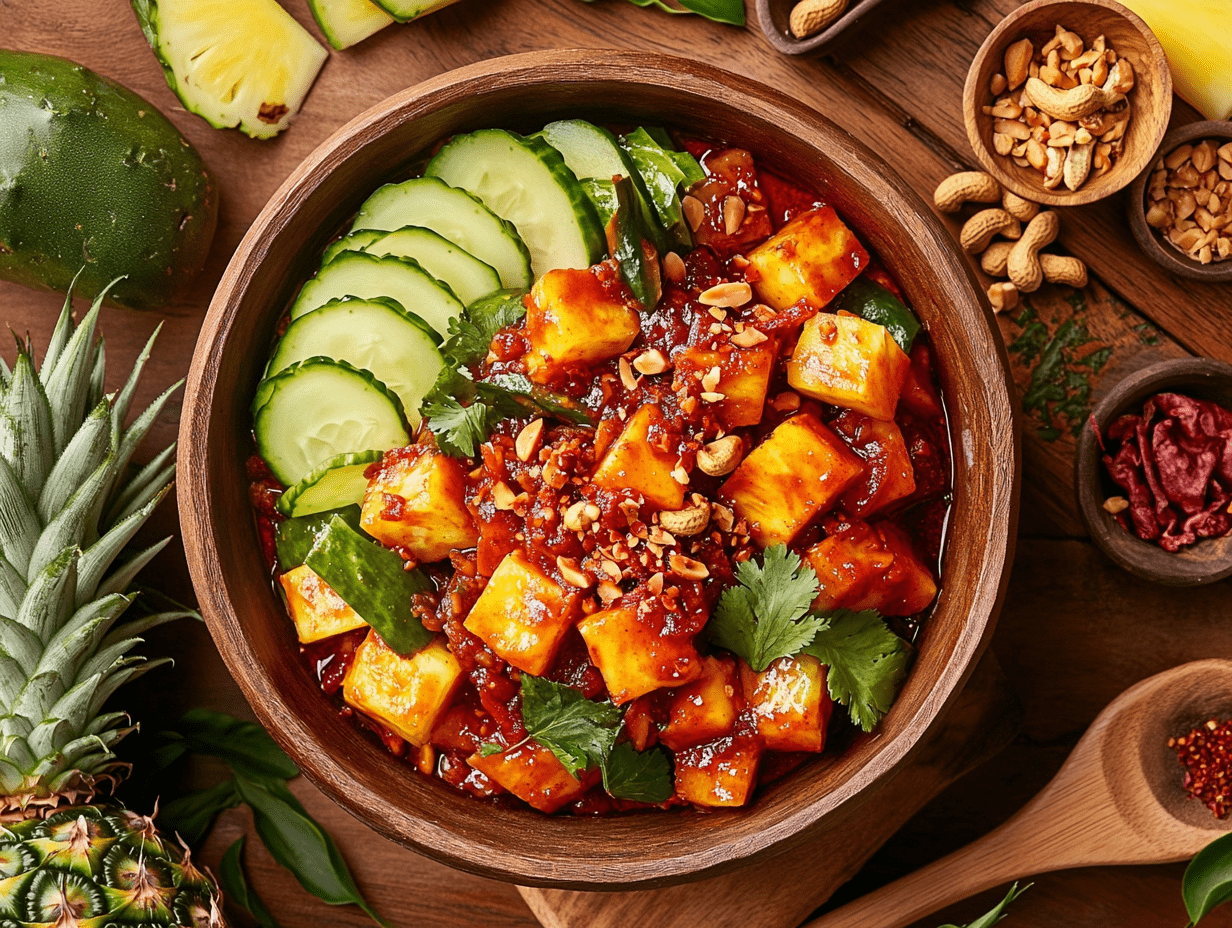
Authentic Malaysian Rojak

Equipment
- Knife
- Cutting board
- Large mixing bowl
- spoon
Ingredients
- 1 cup pineapple fresh, peeled and cut into bite-sized pieces
- 1 cup cucumber organic, sliced into thick rounds
- 1 cup jicama peeled and sliced into thin sticks
- 1 cup mangosteen fresh, deseeded and segmented
- 1 tablespoon tamarind paste ideally with no seeds for smoother texture
- 1 tablespoon sugar preferably palm sugar for authentic flavor
- 1 teaspoon chili paste adjust according to heat preference
- 1 teaspoon shrimp paste lightly roasted for an added depth of flavor
- 2 tablespoons roasted peanuts crushed, unsalted works best
Instructions
- Prepare the Fruits and Vegetables: Begin by slicing the pineapple, cucumber, jicama, and mangosteen into even, bite-sized pieces. Aim for a balance of textures and a visually appealing arrangement. The pineapple should be juicy yet firm, while the cucumber provides a crisp contrast.
- Create the Dressing: In a large mixing bowl, combine the tamarind paste, palm sugar, chili paste, and shrimp paste. Stir vigorously until the sugar dissolves, and the mixture becomes a harmonious blend of sweet, sour, and spicy aromas.
- Toss the Salad: Gently fold the prepared fruits and vegetables into the dressing using a large spoon. Be careful not to bruise the fruits, but ensure every piece is well-coated with the flavorful mixture.
- Finish with Peanuts: Garnish the salad with crushed roasted peanuts just before serving to retain their crunchy character.
Notes
- For an added crunchy texture, feel free to sprinkle additional toasted sesame seeds or add a few slices of green apples for an extra layer of tartness.
- Rojak is versatile and can adapt to available seasonal fruits.
Nutrition
Your questions, answered
Where do I find tamarind paste and shrimp paste?
Both are available at most Asian grocery stores and increasingly in the international aisle of larger supermarkets. If you’re ordering online, look for tamarind concentrate or paste (not tamarind powder) and shrimp paste labeled belacan or blachan.
Can I make this without shrimp paste to keep it vegetarian?
You can, but the dressing will taste noticeably less complex. A small amount of miso paste — about half a teaspoon — adds some savory depth and keeps it plant-based, though it’s not a perfect match.
Can I use canned or frozen fruit instead of fresh?
Yes, canned fruit works if you drain and dry it thoroughly before tossing. Excess syrup or liquid will dilute the dressing and make the salad watery fast, so patting the pieces dry with a paper towel is worth the extra minute.
What to cook next
- Fresh Vegetable Spring Rolls
- Crispy Golden Dosa
- Street Food Magic Crispy Potato Samosas
- Sweet and Tangy Grape Chicken Salad