








































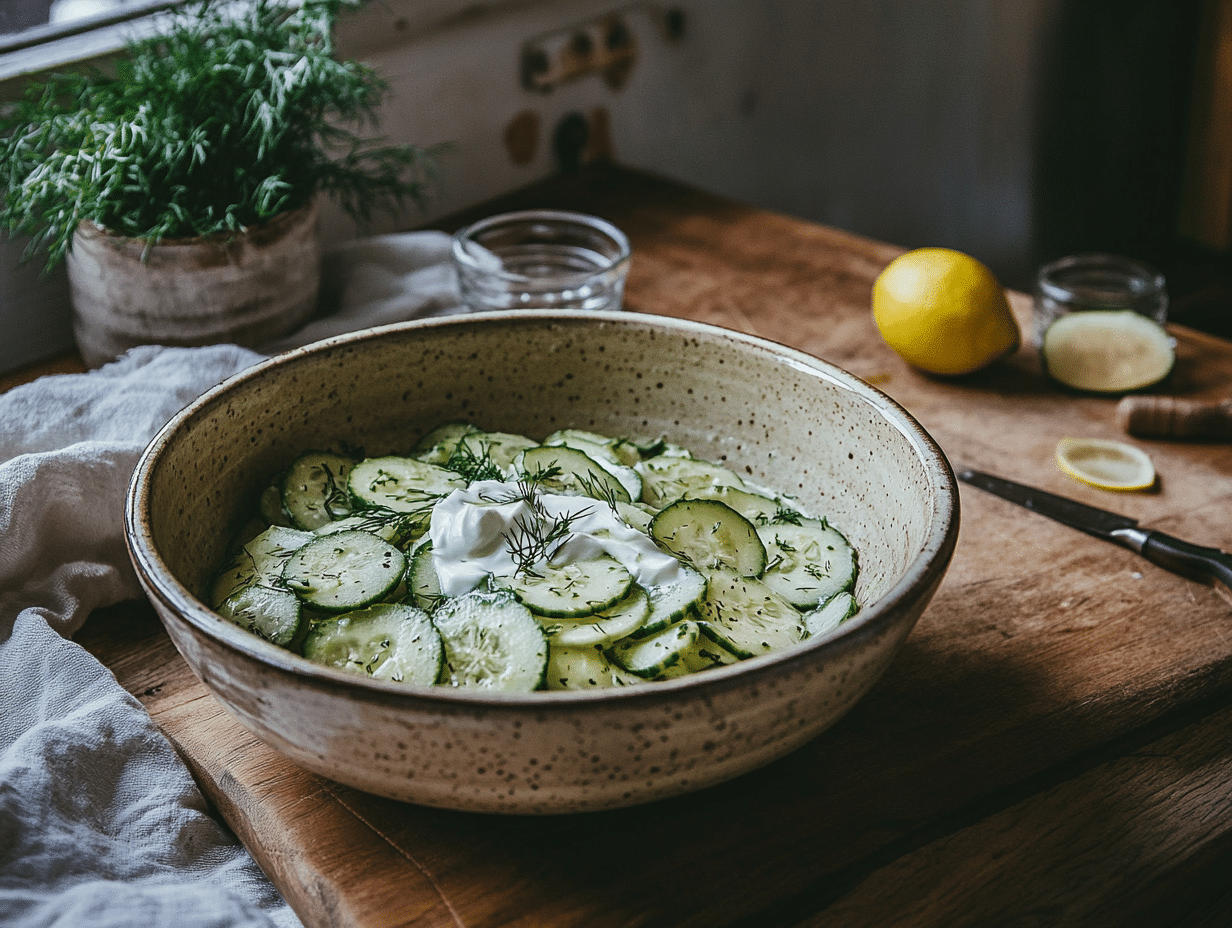
Mizeria is a Polish cucumber salad dressed with sour cream, lemon juice, and fresh dill — ready in 15 minutes with no cooking required. It keeps well in the fridge, which makes it genuinely useful on busy weeks when you need a cold side dish that’s already done. This version uses full-fat sour cream for a dressing that actually clings to the cucumbers instead of pooling at the bottom of the bowl.
Why this recipe works
Two things make or break this salad. First, slicing the cucumbers thin and uniform — a mandoline does this in under two minutes — gives you slices that absorb the dressing evenly rather than sitting in it. Second, the 10-minute rest before serving isn’t optional. That short wait lets the salt draw out just enough moisture from the cucumbers to loosen the dressing to the right consistency, so you get a creamy coating rather than a thick paste. Skip the rest and the dressing stays stiff; wait too long and the cucumbers go watery. Ten minutes is the window.
Mistakes to avoid
- Using waxy or seedy cucumbers without draining them. If you’re not using English cucumbers, slice and salt your cucumbers first, let them sit in a colander for 15 minutes, then pat dry before dressing. Skipping this step turns the salad soupy within an hour.
- Adding all the salt at once before the rest period. Salt the salad lightly first, then taste after the 10-minute rest. The cucumbers release liquid as they sit, which concentrates the saltiness — what tastes right before resting often tastes over-salted after.
- Using dried dill. Dried dill goes dusty and bitter here. Fresh dill is one of only five ingredients in this dressing; it’s worth buying. Skip the garnish of extra dill sprigs on top — not worth the extra dish.
- Dressing the salad too far ahead if serving at a party. The salad is best within two hours of dressing. If you’re making it for a gathering, keep the sliced cucumbers and the dressing in separate containers and combine them on-site.
Make-ahead notes
This salad is a strong candidate for batch cooking. Make a full batch on Sunday and it holds well in an airtight container in the fridge for up to two days — the cucumbers soften slightly but the flavor actually improves overnight as the dill and lemon work into the dressing. By day three the texture gets too watery, so don’t push it. This salad does not freeze. If you’re planning to stretch it across multiple meals, store the dressed salad in a fine-mesh strainer set over a bowl in the fridge; this slows the liquid buildup and keeps the texture better for longer. It works as a side alongside grilled chicken or fish just as well as it does next to heavier dishes, so a single batch can pull double duty across different dinners in the same week.

Mizeria

Equipment
- Mixing bowl
- Whisk
- Knife
- Cutting board
Ingredients
Ingredients
- 2 pieces organic English cucumbers thinly sliced
- 1 cups sour cream full-fat for richness
- 2 tablespoons lemon juice freshly squeezed
- 1 teaspoon sugar optional, for sweetness
- 1 teaspoon salt to taste
- 1 teaspoon freshly ground black pepper to taste
- 2 tablespoons fresh dill chopped
Instructions
- Begin by thinly slicing the cucumbers. For best results, use a mandoline slicer to achieve uniform slices.
- In a mixing bowl, whisk together the sour cream, fresh lemon juice, and sugar until smooth.
- Add the sliced cucumbers to the bowl and gently fold them into the sour cream dressing.
- Season with salt and freshly ground black pepper to enhance the flavors.
- Sprinkle the chopped fresh dill over the salad and mix until well combined.
- Let the salad sit for 10 minutes to allow the flavors to meld together before serving.
Notes
- For a lighter version, substitute Greek yogurt for sour cream.
- Consider adding thin slices of radish for an added peppery note.
Nutrition
Frequently asked questions
Can I use regular slicing cucumbers instead of English cucumbers?
Yes, but you need to remove the seeds and salt the slices first to draw out excess water. Halve the cucumbers lengthwise, scoop out the seeds with a spoon, slice thin, toss with a pinch of salt, and let them drain in a colander for 15 minutes before patting dry and dressing.
Can I make this without sugar?
Yes — the sugar is genuinely optional and the salad works fine without it. It’s there to balance the tartness of the lemon juice; if your lemon is mild or you prefer a sharper dressing, leave it out entirely.
My dressing looks too thick straight out of the bowl — is that normal?
It is, and it fixes itself during the 10-minute rest. The cucumbers release a small amount of liquid as they sit with the salt, which thins the sour cream dressing to the right consistency — don’t add water or extra lemon juice before that rest period is up.
If you liked this one
- Creamy Macaroni Salad
- Sweet and Tangy Grape Chicken Salad
- Creamy Grape Salad with Southern Charm
- Fresh Vegetable Spring Rolls