

























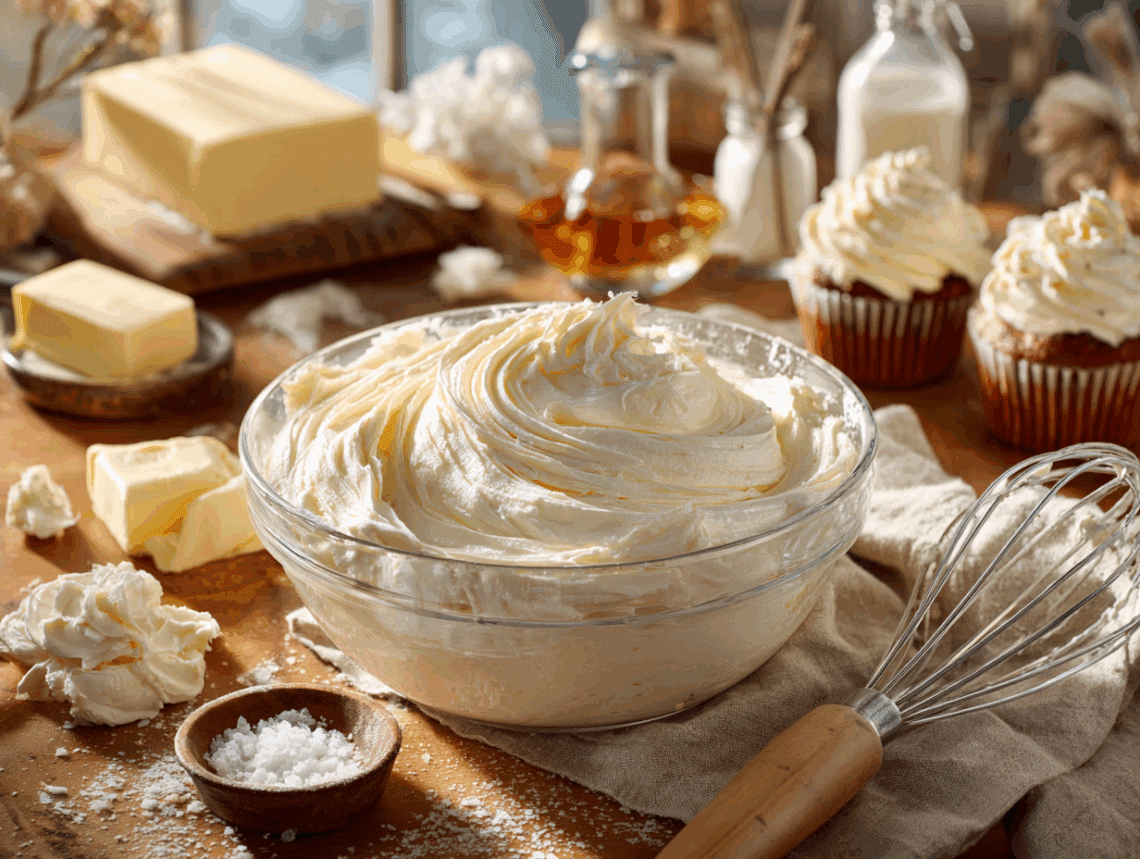
This is a straightforward American-style buttercream — butter, powdered sugar, heavy cream, vanilla, and a pinch of salt, done in 15 minutes with a hand or stand mixer. It pipes cleanly, spreads smoothly, and isn’t so sweet that kids ask for water after one bite. If you’ve ever ended up with gritty or greasy frosting, the steps here fix both problems.
Shopping notes
- Butter: Unsalted only — salted butter varies too much by brand and throws off the balance. Pull it out of the fridge at least an hour before you start; truly room-temperature butter is the difference between fluffy and greasy.
- Powdered sugar: The recipe calls for sifting, and it’s worth it. Bags often have small lumps that won’t beat out, especially in a quick mix.
- Vanilla extract: Pure extract, not imitation. Madagascar and Tahitian are both good; Madagascar is easier to find and works perfectly. Imitation vanilla has a slightly artificial aftertaste that’s more noticeable in a simple frosting like this than in a baked cake.
- Heavy cream: Don’t substitute milk — it makes the frosting too loose. If you need a dairy-free version, canned full-fat coconut cream works and holds up well.
The technique that matters
Beating the butter alone first — before any sugar goes in — is the step most people skip, and it’s the one that actually matters. Three to five minutes on medium-high turns the butter pale and airy, which gives the finished frosting its light texture instead of a dense, heavy one. Once the sugar is in, the second extended beat (another 3–4 minutes at the end) finishes the job by working out any remaining graininess and incorporating air. Rushing either of these stages is the most common reason homemade buttercream turns out dense or slightly gritty — skip the shortcut and let the mixer do the work.
What can go wrong
- Frosting looks curdled or separated: The butter was too cold. Stop the mixer, set the bowl over a pan of warm water for 30 seconds, then beat again. It will come back together.
- Too stiff to spread or pipe smoothly: Add heavy cream one teaspoon at a time and beat briefly between additions. Don’t dump in a large amount at once or you’ll overshoot.
- Tastes overwhelmingly sweet: A single pinch of salt isn’t always enough depending on your palate. Add another small pinch, beat for 30 seconds, and taste again before frosting anything.
- Air bubbles making piped swirls look rough: After the final beat, switch to the lowest mixer speed for one minute. This knocks out the larger bubbles and gives a smoother finish — skip the garnish on top, not worth the extra dish.
- Frosting melts or slides on a warm cake: The cake must be fully cool before frosting. Even slightly warm cake softens the butter fast. If your kitchen is above 75°F, chill the frosted cake for 15 minutes before serving.
Leftovers and make-ahead
Leftover buttercream keeps in an airtight container in the fridge for up to two weeks. Press a piece of plastic wrap directly against the surface before sealing to prevent a crust from forming. To use it again, let it sit at room temperature for 45–60 minutes, then beat it with a mixer for 2–3 minutes until it’s smooth and spreadable again — it will look broken at first but comes back together. For longer storage, freeze it for up to three months; thaw overnight in the fridge, then bring to room temperature and re-beat the same way. A batch made ahead and stored this way is just as good as fresh.
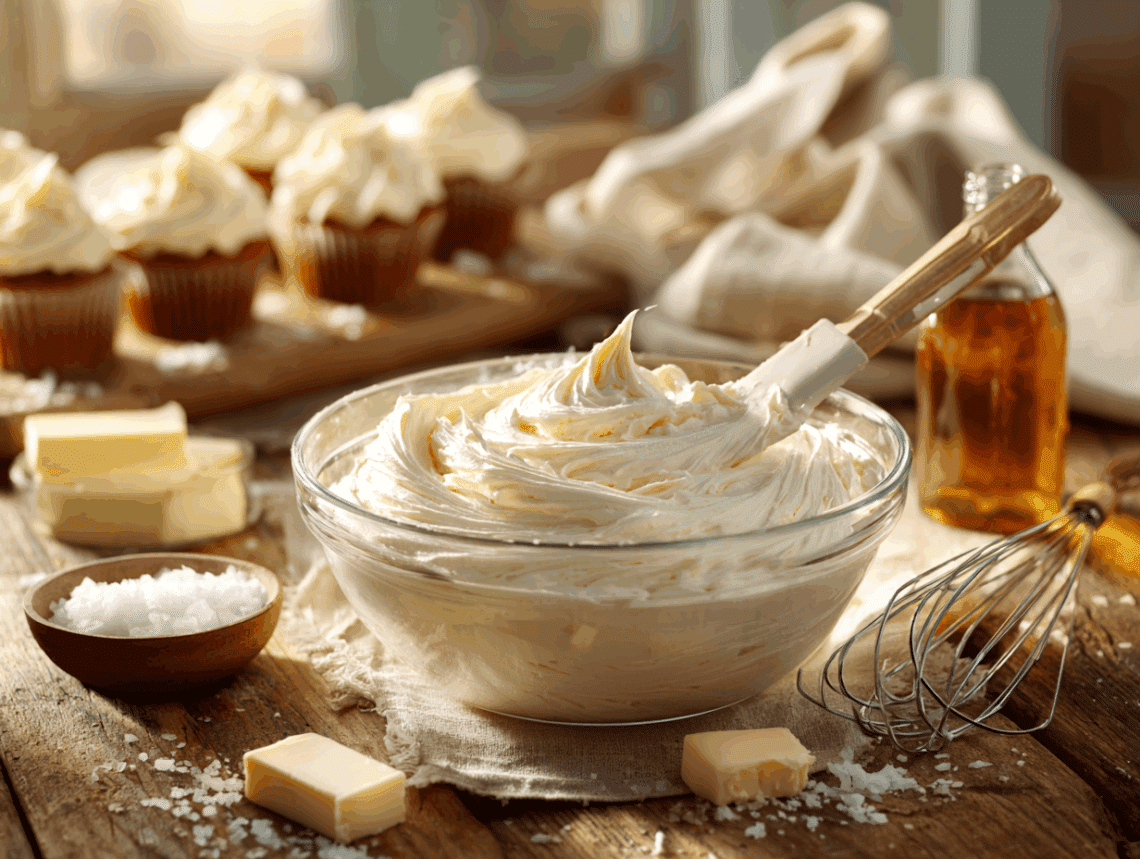
Velvety Vanilla Buttercream Icing

Equipment
- Stand mixer or hand mixer
- Mixing bowl
- Rubber spatula
- Measuring cups and spoons
Ingredients
- 1 cup unsalted butter at room temperature
- 4 cups powdered sugar sifted for smooth texture
- 2 tablespoons heavy cream use more for a lighter texture
- 2 teaspoons pure vanilla extract preferably Madagascar or Tahitian vanilla
- 1 pinch fine sea salt balances sweetness
Instructions
- In a large mixing bowl, beat the room temperature unsalted butter with a stand mixer or hand mixer on medium-high speed for 3–5 minutes until pale and fluffy. The butter should appear almost white when properly aerated.
- Reduce speed to low and gradually add in the sifted powdered sugar, one cup at a time. Mix until just incorporated before adding the next portion to avoid clouding the air with sugar. Scrape down the sides frequently with a spatula.
- Once all sugar is incorporated, pour in the heavy cream and vanilla extract. Add a pinch of sea salt to balance sweetness. Increase speed to medium-high and beat the mixture for another 3–4 minutes until light, smooth, and silky.
- Assess consistency: for piping, the icing should form stiff peaks. For spreading, add 1 additional tablespoon of cream if needed and mix until well-combined.
Notes
- For dairy-free icing, substitute butter with vegan butter and heavy cream with canned coconut cream.
- For chocolate buttercream, beat in 3/4 cup of sifted unsweetened cocoa powder during the final mixing stage.
- Adjust sweetness by reducing sugar by 1/2 cup, but be cautious—this may affect stiffness.
Nutrition
FAQ
Can I make this without a stand mixer?
Yes — a hand mixer works just as well for this recipe. Plan for the same beat times; just move the beaters around the bowl more actively to make sure everything gets incorporated evenly.
How much frosting does this make, and will it cover a two-layer cake?
One batch frosts a single 9-inch layer cake or 24 cupcakes. For a two-layer cake with frosting between the layers and a full coat on the outside, make 1.5 batches to be safe.
My kids don’t like frosting that’s too sweet — can I reduce the sugar?
You can reduce the powdered sugar by up to half a cup without the texture falling apart. Go below that and the frosting starts to lose structure and won’t hold a piped shape.
Can I color this frosting?
Gel food coloring works best — add it a little at a time after the final beat and mix on low until the color is even. Liquid food coloring can thin the frosting out and may require a bit more powdered sugar to compensate.
How far in advance can I frost a cake?
A frosted cake keeps well at room temperature for up to two days, covered loosely. If your kitchen is warm or you need more than two days, refrigerate it and bring it back to room temperature for about 30 minutes before serving so the frosting softens up.
Can I add flavors to change it up without starting a new recipe?
Yes — stir in 2–3 tablespoons of unsweetened cocoa powder for chocolate buttercream, or swap the vanilla for almond extract using half the amount since almond is stronger. A teaspoon of finely grated lemon or orange zest also works well and is an easy way to get kids interested in a new flavor.
Try these next
- Classic Soft Sugar Cookies Perfect for Every Occasion
- Indulgent Giant Chocolate Chip Cookie Cake for Celebrations
- Heavenly Strawberry Cake with Fresh Berries and Whipped Cream
- Melt-in-Your-Mouth Scottish Shortbread Cookies