










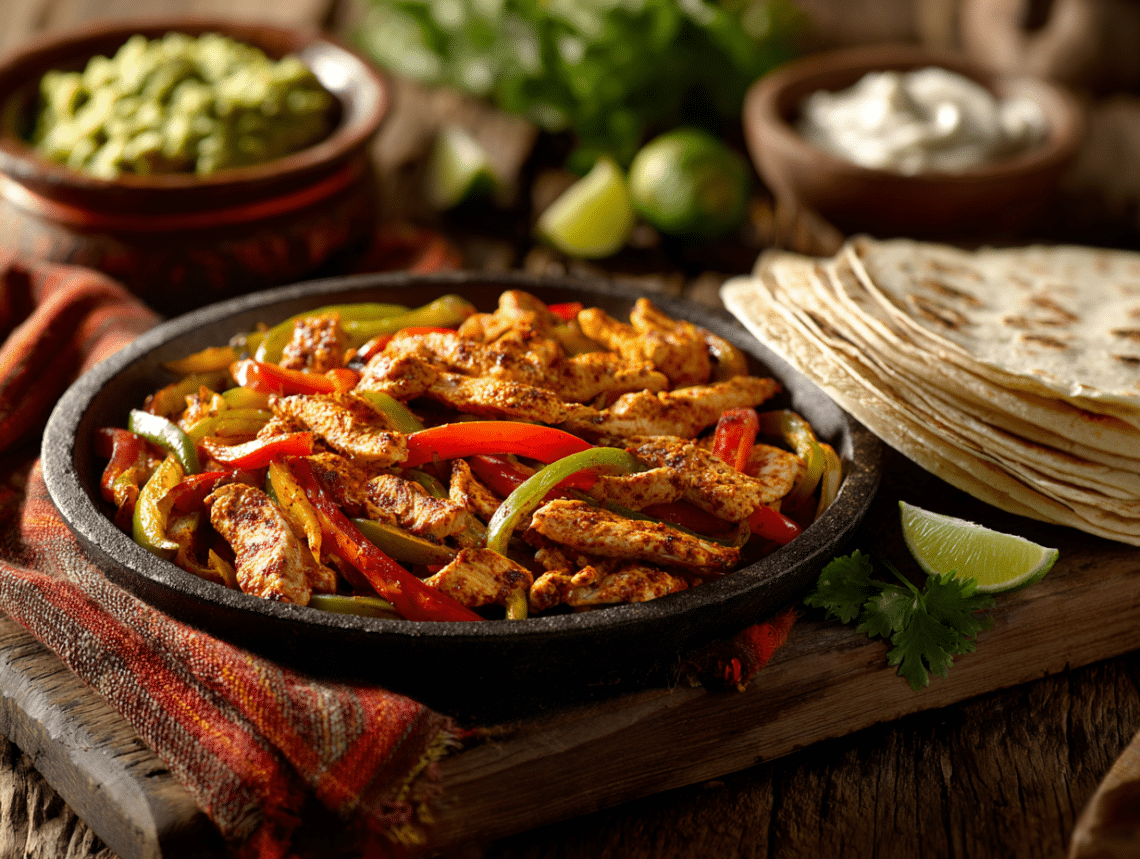
This recipe cooks chicken strips, bell peppers, and onions together on a single sheet pan at 400°F — no skillet, no batch cooking, no standing over the stove. The whole thing takes 55 minutes start to finish, and the oven does most of that work. If weeknight dinner feels like a production, this is the reset.
The technique that matters
Two things make this work. First, the pan size: a 13×9-inch baking pan keeps everything close enough together that the chicken and vegetable juices pool at the bottom and reduce into a concentrated, spiced sauce rather than evaporating off a wide sheet pan. Too big a pan and you lose that. Second, the cornstarch in the seasoning blend. It pulls a little moisture from the chicken’s surface during roasting, which is what gives the strips their lightly crispy edges instead of a steamed, pale exterior. Don’t skip it and don’t substitute flour — flour won’t behave the same way at this temperature.
About the ingredients
- Chili powder: Standard American chili powder (a pre-mixed blend) is what this recipe is built around — not pure ground dried chilies, which are much hotter. Check your label if you’re unsure.
- Cornstarch: It’s in the spice mix, not used separately. Most pantry staples sections carry it; it’s worth having around for sauces and coatings.
- Vegetable oil: Any neutral high-heat oil works — canola, sunflower, or avocado oil all behave the same here. Skip the extra-virgin olive oil; it smokes at 400°F.
- Flour tortillas: The 6-inch size is specified because larger tortillas make the filling-to-wrap ratio awkward. If you only have 8-inch, just use a little less filling per tortilla. Skip the garnish plate of sour cream and cheese on the table — not worth the extra dishes unless you’re feeding a crowd who’ll actually use them.
Leftovers and make-ahead
The cooked chicken and pepper mix keeps in an airtight container in the fridge for up to 4 days — store it separately from the tortillas so they don’t go soggy. To reheat, a dry skillet over medium heat for 3 to 4 minutes gives you better texture than the microwave, which tends to make the chicken rubbery; if you do use the microwave, cover the container loosely and go in 60-second intervals. The cooked mix also freezes well in zip-lock bags for up to 3 months — lay the bags flat so they stack easily. Thaw overnight in the fridge before reheating. If you want to get ahead before a busy night, the spice blend can be mixed and jarred up to 2 weeks in advance, and the peppers and onion can be sliced the night before and refrigerated uncovered on a plate lined with paper towel to stay dry.
What can go wrong
- The chicken releases a lot of liquid and everything steams instead of roasting. This usually means the chicken strips were too thick or the pan was overcrowded. Keep strips close to ½-inch wide and use a deep 13×9 pan — not a larger rimmed baking sheet, which spreads everything out too thin and lets moisture escape too fast in the wrong direction.
- The spice coating tastes raw or dusty. This happens when the seasoning isn’t tossed thoroughly enough before baking. Take an extra minute to coat every piece — the oil needs to be the bridge between the dry spices and the chicken surface, so if some strips look dry and pale going in, toss again.
- The peppers are mushy by the time the chicken is done. Thicker pepper strips (closer to ¼-inch, not paper thin) hold their texture better through 40 minutes of roasting. If your peppers are already very soft at the halfway stir, pull the pan out 5 minutes early and check the chicken temperature.
- The chicken reads 165°F on the outside but is still pink inside. An instant-read thermometer should go into the thickest strip, not a thin edge. If you don’t have a thermometer, cut the thickest piece open — the meat should be completely opaque with no translucent pink center.
- The seasoning clumps instead of coating evenly. If the cornstarch absorbs moisture from the air before you use it (common in humid kitchens), it can clump in the spice mix. Break up any clumps with a fork before sprinkling over the chicken, or sift the blend through your fingers as you scatter it.
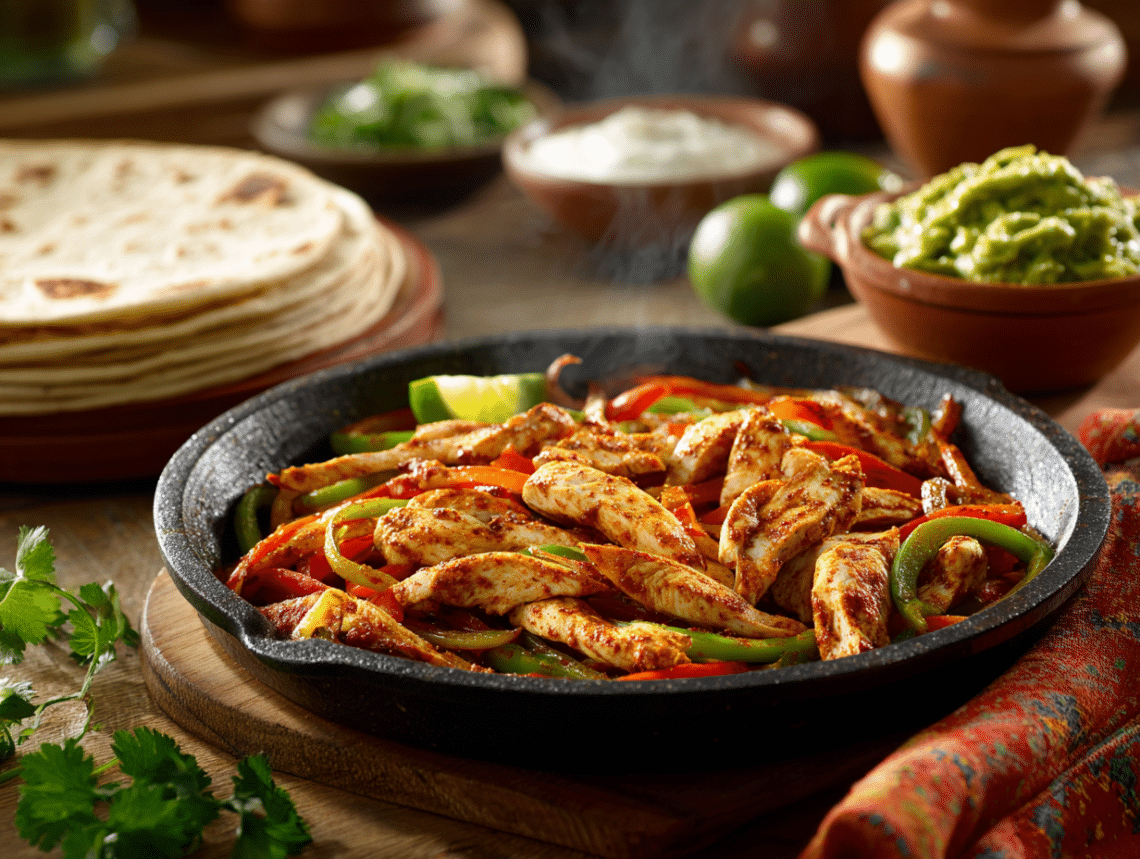
Oven-Baked Chicken Fajitas

Equipment
- 13x9 inch (33x23cm) deep baking pan
- Small mixing bowl
- Sharp chef’s knife
- Cutting board
- Instant-read thermometer
- Tongs or large spoon for stirring
Ingredients
Seasoning Ingredients
- 2 tablespoons chilli powder
- 1 tablespoon paprika
- 1 teaspoon onion powder
- 2 teaspoons granulated sugar
- 1 teaspoon garlic powder
- ½ teaspoon ground cumin
- 1 teaspoon salt
- 1 tablespoon cornstarch
Fajitas Ingredients
- 2 large green bell peppers sliced
- 2 large red bell peppers sliced
- 1 small onion sliced
- 2 pounds boneless skinless chicken breast sliced into strips
- 2 tablespoons vegetable oil
- 1 large lime juiced (approximately 2 tablespoons)
- 8-10 small flour tortillas 6-inch / 15cm, for serving
Instructions
- Preheat the oven to 400°F / 200°C (205°C fan-forced). While the oven heats, combine all seasoning ingredients in a small bowl and mix well. Set aside.
- Cut the bell peppers and onion into thin strips (about ¼-inch / 6mm wide). Slice the chicken breast into ½-inch (1cm) wide strips. Place everything into a deep 13x9 inch (33x23cm) baking pan.
- Drizzle the vegetable oil over the chicken and vegetables, then sprinkle the seasoning blend evenly over the top. Toss everything together with tongs or clean hands until every piece is well coated.
- Bake for 35 to 40 minutes, stirring once halfway through, until the chicken reaches an internal temperature of 165°F (74°C) and the peppers are tender with lightly charred edges. Remove the pan from the oven and squeeze the fresh lime juice over the fajita mix. Toss gently to combine.
- Warm the tortillas in a dry skillet over medium heat for 20-30 seconds per side, or wrap a stack in damp paper towel and microwave for 30 seconds. Spoon the fajita mix into the centre of each warm tortilla and serve immediately with your favourite toppings.
Notes
Notes
- Storage: Refrigerate cooked fajita mix in an airtight container for up to 4 days. Store tortillas separately to prevent sogginess.
- Freezer-friendly: Freeze the cooked chicken and pepper mix (without tortillas) in zip-lock bags for up to 3 months. Thaw overnight in the fridge and reheat in a skillet over medium heat.
- Make-ahead: Mix the seasoning blend up to 2 weeks in advance and store in a sealed jar. You can also slice the peppers and onions the night before and refrigerate.
- Substitutions: Swap chicken breast for boneless skinless thighs (reduce cook time by 5 minutes). Use any colour bell pepper you have on hand.
- Pro tip: Slice the chicken into evenly thin strips (about ½-inch wide) so every piece cooks at the same rate — no dry edges or undercooked centres.
Nutrition
Your questions, answered
Can I use chicken thighs instead of chicken breast?
Yes — boneless, skinless thighs work well here and are actually more forgiving if you accidentally overcook them. Reduce the bake time by about 5 minutes and still check for an internal temperature of 165°F.
Do I need to marinate the chicken first?
No marinating is needed. The cornstarch in the spice blend helps the seasoning cling directly to the chicken surface, so a thorough toss right before baking is enough. Marinating overnight would actually make the texture softer and less likely to develop crispy edges.
My oven runs hot — should I adjust anything?
Check the pan at the 30-minute mark instead of waiting for the halfway stir at 20 minutes. If the edges of the peppers are already darkening significantly, your oven likely runs 25°F or more above the set temperature — drop it to 375°F and add 5 minutes to the total time.
What to cook next
- Handmade Flour Tortillas
- Classic Mexican Guacamole
- Sizzling Chicken Quesadillas
- Creamy Cinnamon Horchata