



































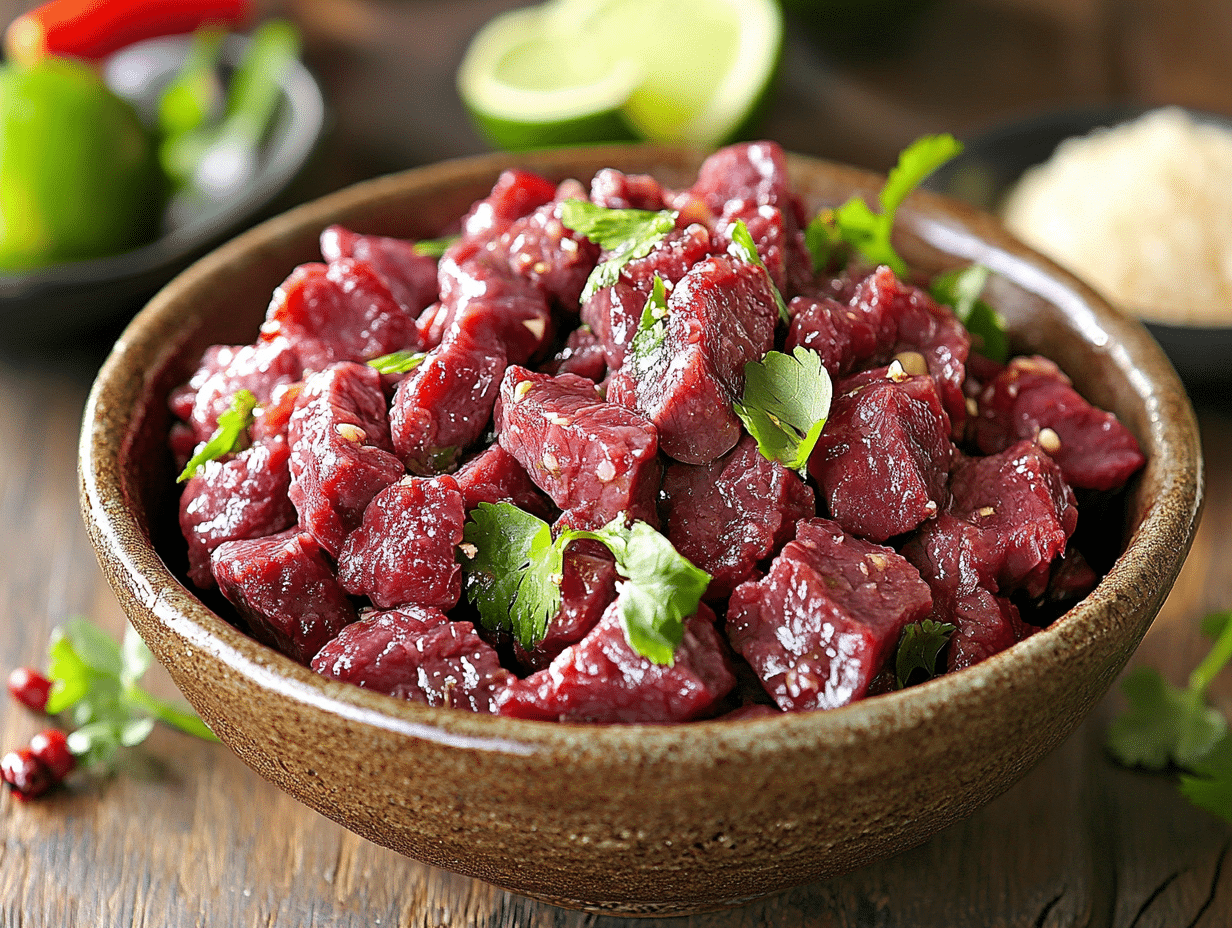
Pleah is a Cambodian beef dish where briefly cooked, thinly sliced beef gets tossed in a sharp lime-and-fish-sauce dressing with lemongrass, fresh herbs, cucumber, and chili. It comes together in about an hour, serves four, and scales up easily — which makes it a smart choice when you need something impressive on the table for a group without spending the whole day cooking.
Why this recipe works
Two things make this dish work. First, the beef is briefly blanched — just two minutes in boiling water — then immediately rinsed under cold water. That stops the cooking fast and keeps the slices tender rather than chewy. Second, the dressing does double duty: the lime juice continues to gently cure the beef during the 10–15 minute rest, while the fish sauce and palm sugar build the salty-sweet backbone that holds everything together. Neither step is complicated, but skipping the cold rinse or rushing the resting time will noticeably flatten the result.
What can go wrong
- Beef slices are too thick. Thick slices won’t absorb the dressing properly and end up chewy. Aim for slices no thicker than 3mm. Partially freezing the beef for 20–30 minutes before cutting makes this much easier.
- Lemongrass is woody and unpleasant to eat. Only the pale inner core of the bottom third of the stalk is tender enough to eat raw. If you use the outer layers or the green tops, the pieces will be fibrous and sharp in the mouth. Peel back the outer layers and chop only the soft inner part.
- The dressing is too sour or too salty with no way back. Taste the dressing before you add the beef. It’s much easier to adjust lime juice, fish sauce, and palm sugar at that stage than after everything is combined. Add sugar in small amounts — it dissolves quickly and the sweetness catches up.
- Herbs turn dark and wilted before serving. If you’re making this ahead for guests, keep the mint and coriander separate and toss them in right before serving. They bruise quickly once dressed.
- Doubling the recipe makes the bowl overcrowded. When scaling up, toss the beef and dressing in batches rather than piling everything into one bowl. Overcrowding means uneven coating and the cucumber releases too much water, diluting the dressing.
Storage and reheating
Pleah is best eaten the day it’s made. The lime juice keeps working on the beef in the fridge, and after about 24 hours the texture turns noticeably mushy. If you need to prep ahead, store the cooked beef and the dressing separately in the fridge for up to one day, then combine and rest for 10–15 minutes before serving — skip the garnish at that point and just add fresh herbs when you plate. Freezing is not recommended; the cucumber and fresh herbs don’t survive it, and the beef texture suffers. This dish is served at room temperature or chilled, so there’s no reheating involved.
Pleah

Equipment
- pot
- stove
- Knife
- Cutting board
Ingredients
- 500 grams beef sliced thinly
- 1 cup lime juice freshly squeezed
- 4 small shallots sliced thinly
- 2 cloves garlic minced
- 2 tablespoons fish sauce
- 2 tablespoons palm sugar
- 2 stalks lemongrass finely chopped
- 1 sprig mint leaves picked
- 1 bunch coriander leaves picked
- 1 medium cucumber julienned
- 2 small red chili thinly sliced
Instructions
- In a large pot, bring water to a boil over medium heat. Add the thinly sliced beef and cook it briefly for about 2 minutes until it turns opaque and just cooked through. Quickly strain and rinse under cold water to stop the cooking process.
- In a large mixing bowl, combine freshly squeezed lime juice, sliced shallots, minced garlic, fish sauce, and palm sugar. Stir until the sugar dissolves. This forms the tangy base of your soup.
- Add the cooked beef, finely chopped lemongrass, mint leaves, coriander leaves, julienned cucumber, and sliced red chili to the bowl. Toss everything together gently to combine.
- Let the mixture sit for about 10-15 minutes to allow the flavors to meld and the beef to marinate slightly in the lime and fish sauce mixture.
- Taste and adjust the seasoning with additional lime juice, fish sauce, or sugar as required, ensuring a balanced flavor profile.
Notes
- For an additional kick, consider adding a touch of toasted rice powder for a nutty aroma.
- Adjust the chili level to suit your spice tolerance.
Nutrition
Frequently asked questions
Can I use a different cut of beef?
Yes — sirloin, flank steak, or eye of round all work well here. Avoid cuts with a lot of connective tissue or fat marbling, since the brief cooking time won’t break those down and you’ll end up with chewy, greasy bites.
What if I can’t find palm sugar?
Light brown sugar is the most practical substitute and works well in the same quantity. Coconut sugar is another option and has a similar mild caramel flavor, though it’s slightly less sweet so you may need a touch more.
How much beef do I need if I’m serving this as a side dish for eight people?
Double the full recipe — 1kg of beef — and you’ll have enough for eight as a side alongside rice or other dishes. Make the dressing in one batch first, taste it, then scale it up so you’re not guessing on seasoning.
Is there a substitute for fish sauce?
Soy sauce works as a direct swap if you need to avoid fish sauce, though the flavor will be less complex. Use the same amount and add a small squeeze of extra lime to compensate for the missing brightness.
Can I prep this the night before a dinner party?
Partially, yes. Cook and chill the beef, and mix the dressing, storing both separately in the fridge overnight. Combine them with the lemongrass, cucumber, and chili about 15 minutes before you serve, then add the fresh herbs at the last moment.
How spicy is this with two small red chilies?
Mildly spicy — noticeable but not hot. If you’re cooking for people with low heat tolerance, remove the seeds before slicing the chilies, or use just one. The heat level is easy to control since the chili goes in raw and you can taste as you go.
Try these next
- Fresh Vegetable Spring Rolls
- Authentic Japanese Chicken Teriyaki
- Sweet and Tangy Grape Chicken Salad
- Quick and Delicious Homemade Chinese Fried Rice