

























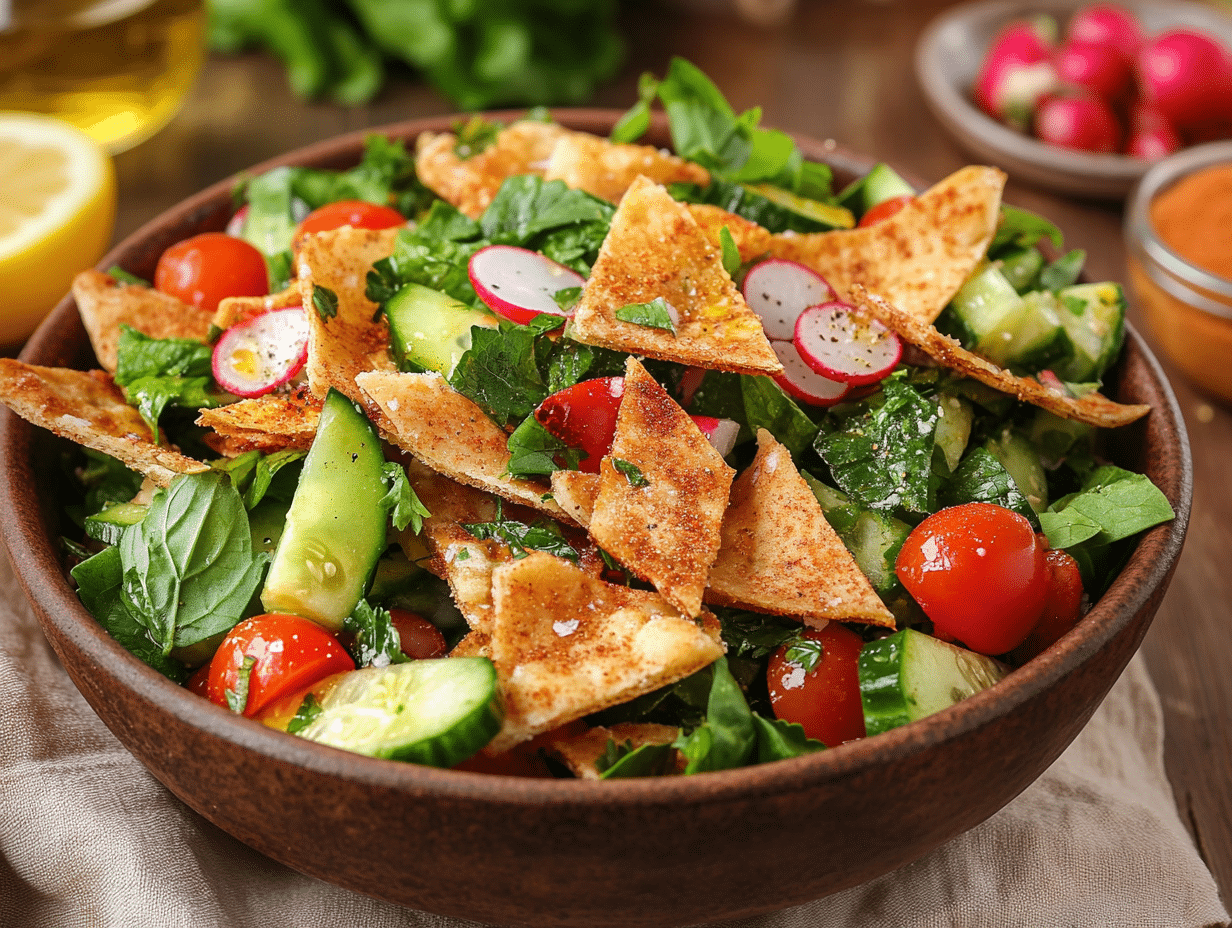
Fattoush is a chopped salad built around crispy baked pita and a sharp sumac dressing — it comes together in 30 minutes and uses vegetables most people already have on hand. The pomegranate molasses in the dressing is optional but genuinely worth tracking down. This is the kind of salad that works on a Tuesday night alongside grilled chicken or stands on its own as a light lunch.
What makes this version work
Two things matter most here. First, the pita gets seasoned with sumac before it goes in the oven — not after — so the spice toasts into the bread rather than sitting on top as a dusty coating. Second, the dressing uses sumac in addition to lemon juice, which gives you a layered tartness that lemon alone can’t produce. Sumac is fruitier and less sharp than straight citrus, and that combination is what makes the dressing taste distinctly like fattoush rather than a generic vinaigrette.
Troubleshooting
- Soggy pita chips: This almost always means the bread was added to the salad too early. Toss the chips in right before serving, not while the salad sits on the counter.
- Watery salad at the bottom of the bowl: Cucumbers and tomatoes release liquid once salted or dressed. If you’re not eating immediately, keep the dressing separate and combine just before serving.
- Dressing tastes flat: Sumac potency varies by brand and age. If the dressing seems dull, add a small squeeze of extra lemon juice and taste again before adding more sumac — too much can turn bitter.
- Pita chips burning before they crisp: Thinner pita dries out faster. Check at the 6-minute mark if yours is on the thinner side, and pull them as soon as they feel dry and firm rather than waiting for deep color.
- Red onion too sharp: Soak the sliced onion in cold water for 10 minutes, then drain and pat dry before adding to the bowl. It keeps the crunch but loses most of the bite.
Ingredient notes
- Sumac: Find it at Middle Eastern grocery stores, most international food aisles, or online. Buy it in small quantities — it loses its brightness within a few months of opening. Avoid substituting with lemon zest alone; the flavor profile is different enough that it changes the salad.
- Pomegranate molasses: This is thick, tart, and slightly sweet — not the same as grenadine. It’s worth buying a bottle since it keeps for a long time and works well in marinades and other dressings. Skip the garnish of extra molasses drizzled on top — not worth the extra dish.
- Pita bread: Day-old pita actually works better here than fresh because it’s drier and crisps up faster in the oven.
Storage and reheating
Store the dressed salad and the pita chips separately if you have leftovers. The vegetables will keep in an airtight container in the fridge for up to 2 days, though they’ll soften and release more liquid over time — give them a quick drain before serving again. The pita chips keep at room temperature in a sealed bag for 3 to 4 days; if they’ve gone soft, spread them on a baking sheet and toast at 350°F for 4 to 5 minutes to bring back the crunch. This salad does not freeze well.

Fattoush Salad with Sumac

Equipment
- Large Salad Bowl
- Mixing bowl
- Baking sheet
- Knife
- Cutting board
Ingredients
For the Salad Base:
- 2 pieces pita bread cut into bite-sized squares
- 2 tablespoons olive oil for toasting pita
- 1 teaspoon sumac for seasoning pita
- 2 cups romaine lettuce chopped
- 1 cup cherry tomatoes halved
- 1 cup cucumber diced
- ½ cup radishes thinly sliced
- ¼ cup red onion thinly sliced
- ¼ cup parsley chopped
- ¼ cup mint leaves chopped
For the Dressing:
- 3 tablespoons olive oil extra virgin preferred
- 2 tablespoons lemon juice freshly squeezed
- 1 tablespoon pomegranate molasses optional, adds a tangy sweetness
- 1 teaspoon sumac for bright citrusy depth
- ½ teaspoon salt adjust to taste
- ½ teaspoon freshly ground black pepper
- 1 clove garlic minced
Instructions
- Preheat the oven to 180°C (350°F). Spread the pita bread squares onto a baking sheet and drizzle with olive oil. Sprinkle with sumac and toss to coat evenly.
- Bake in the preheated oven for 8-10 minutes or until golden and crisp. Remove from oven and allow to cool.
- In a large salad bowl, combine romaine lettuce, cherry tomatoes, cucumber, radishes, red onion, parsley, and mint leaves.
- In a small mixing bowl, whisk together olive oil, lemon juice, pomegranate molasses (if using), sumac, salt, black pepper, and minced garlic to create the dressing.
- Drizzle the dressing over the salad and toss gently to combine.
- Just before serving, add the crispy pita chips on top to retain their crunch.
Notes
- For an extra burst of flavor, sprinkle additional sumac and a handful of crumbled feta cheese on top before serving.
- If you prefer a gluten-free version, replace pita chips with crispy chickpeas for a satisfying crunch.
Nutrition
Common questions
Can I make fattoush ahead of time?
You can prep all the components ahead, but don’t combine them until you’re ready to eat. Chop the vegetables and make the dressing up to a day in advance, store them separately in the fridge, and keep the pita chips at room temperature — then toss everything together right before serving.
Where do I find sumac if my regular grocery store doesn’t carry it?
Middle Eastern or Mediterranean grocery stores are your best bet and usually carry it at a lower price than specialty food shops. It’s also widely available online — search for ground sumac rather than whole berries, since that’s what this recipe uses.
Can I use a different type of lettuce or skip it entirely?
Yes — romaine is traditional because it holds up without wilting quickly, but chopped iceberg or even a mix of arugula and spinach works fine. Some versions of fattoush skip the lettuce altogether and lean heavier on the herbs and vegetables, which is a perfectly legitimate approach.
More recipes to try
- Authentic Chicken Shawarma
- Pistachio Baklava
- Gourmet Avocado Toast with Mediterranean Flair
- Classic Mexican Guacamole