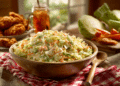

















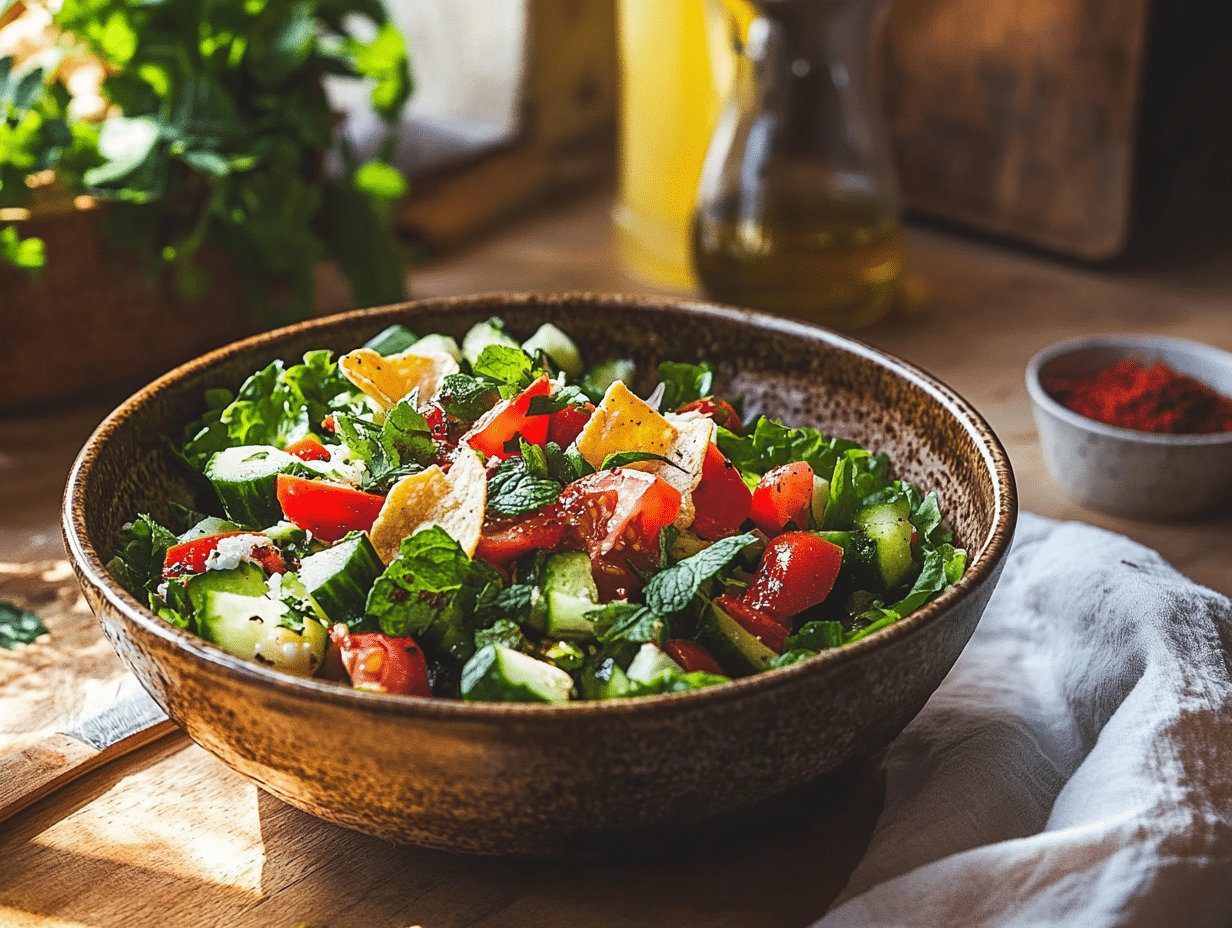
Fattoush is a Lebanese bread salad built around toasted pita, crisp vegetables, and a tangy sumac dressing — ready in 30 minutes and genuinely satisfying as a main or a side. The dressing comes together in one small bowl, the vegetables need no cooking, and the whole thing scales up easily for a crowd. If you have pita going stale on the counter, this is exactly where it belongs.
What makes this version work
Two things matter most here. First, toast the pita until it is fully dry and crisp all the way through — not just golden on the surface. Pita that still has any softness in the center will turn soggy within minutes of hitting the dressing. Ten minutes at 350°F usually does it, but pull a piece and snap it; if it bends, give it two or three more minutes. Second, the sumac in the dressing is doing real work. It brings a tart, slightly fruity edge that lemon juice alone cannot replicate — skip it and the dressing tastes flat. One tablespoon is the right amount for this batch; more and it overwhelms everything else.
Troubleshooting
- Pita goes soft before you serve it: Add the toasted pita pieces only at the very last moment — not while the dressed salad sits on the counter. If you are making this ahead, store the pita separately in an airtight container and toss it in right before the bowl hits the table.
- Dressing tastes too sharp: Lemon juice strength varies a lot. Start with 1½ tablespoons, taste the dressing on a piece of lettuce, and add more from there. A small pinch of sugar can also balance an unusually acidic lemon.
- Watery salad by the time it reaches the table: Cucumber and tomatoes release liquid once they are cut and salted. If you are prepping vegetables in advance, keep them undressed in the fridge and combine everything within 15 minutes of serving.
- Herbs turn dark and limp: Mint bruises quickly. Chop it just before assembling, not hours ahead. Parsley holds a little better but still benefits from being the last thing added before tossing.
- Salad tastes flat overall: This usually means it needs more salt, not more lemon. Dress the salad, toss, wait 60 seconds, then taste again — the sumac and salt need a moment to distribute before you judge the seasoning. Skip the garnish of extra sumac on top; it looks nice in photos but adds nothing once the salad is properly dressed.
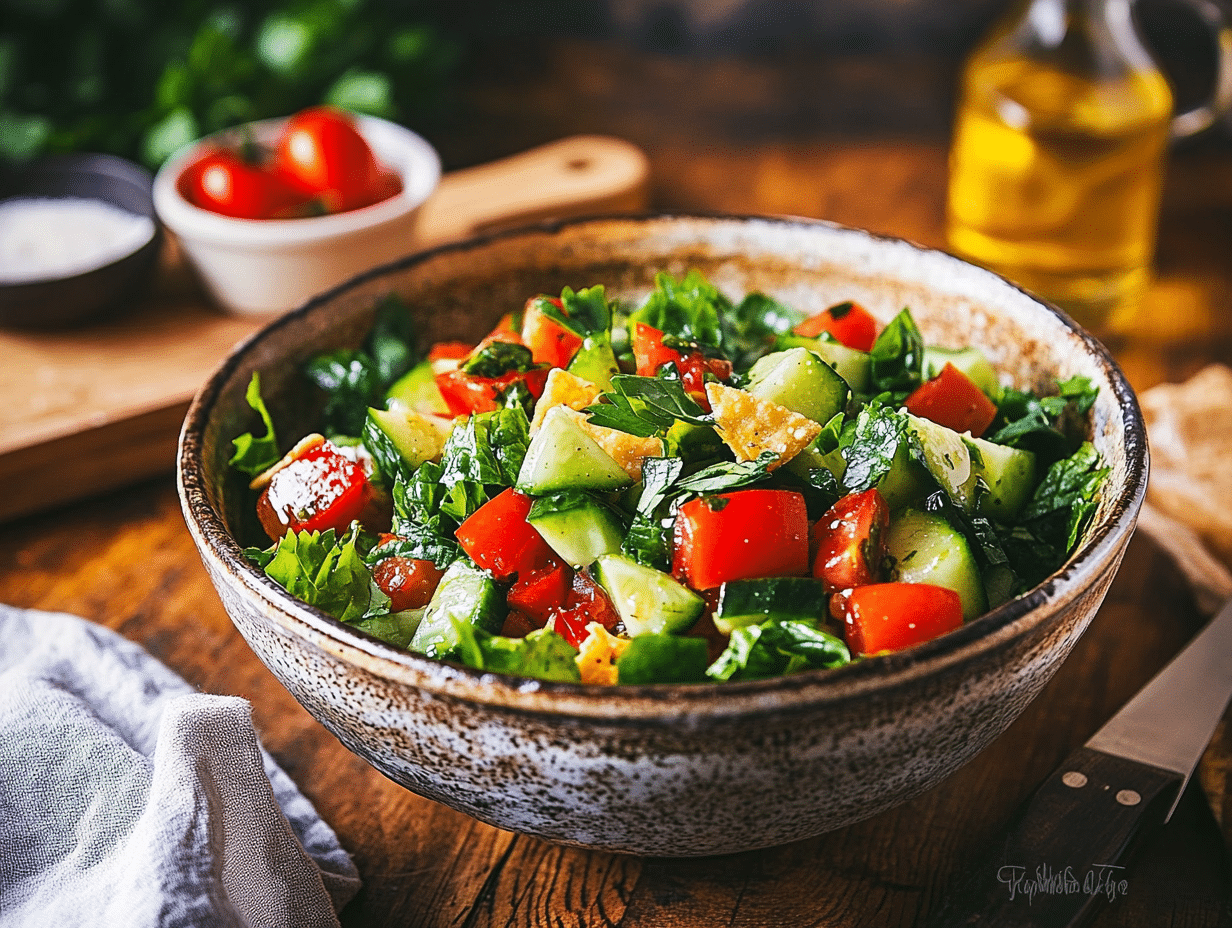
Classic Fattoush Salad

Equipment
- Knife
- Cutting board
- Salad bowl
- Small Saucepan
Ingredients
Salad Ingredients
- 2 pieces Stale Pita Breads Cut into small pieces
- 2 cups Romaine Lettuce Washed and torn into bite-sized pieces
- 1 cup Cherry Tomatoes Halved
- 1 piece Cucumber Diced
- 1 piece Red Bell Pepper Diced
- 5 sprigs Mint Leaves Coarsely chopped
- 5 sprigs Parsley Coarsely chopped
Dressing Ingredients
- ¼ cup Extra Virgin Olive Oil
- 2 tbsp Lemon Juice
- 1 tbsp Sumac
- 1 tsp Salt Adjust to taste
- ½ tsp Black Pepper Freshly ground
Instructions
- Begin by preheating your oven to 180°C (350°F). Place the stale pita bread pieces on a baking sheet and toast in the oven for about 10 minutes, or until they are golden and crispy. Allow them to cool to room temperature.
- In a large salad bowl, combine the romaine lettuce, cherry tomatoes, cucumber, red bell pepper, mint leaves, and parsley.
- In a small bowl, whisk together the extra virgin olive oil, lemon juice, sumac, salt, and black pepper to create the dressing.
- Pour the dressing over the salad ingredients and toss gently to combine, ensuring every piece is well-coated.
- Just before serving, add the crispy pita pieces to the salad and toss again lightly.
Notes
- For a gluten-free version, substitute the pita with toasted gluten-free bread.
- To add protein, consider including grilled chicken or chickpeas.
- Experiment with adding other vegetables like radishes or carrots for added color and crunch.
Nutrition
Frequently asked questions
Can I make fattoush ahead of time?
Yes — with one condition: keep the toasted pita completely separate until you are ready to serve. You can mix the vegetables, herbs, and dressing up to a few hours ahead and refrigerate them, then toss in the pita at the last minute so it stays crisp.
Where do I find sumac, and is there a substitute?
Most grocery stores carry sumac in the spice aisle, and Middle Eastern markets always stock it. If you genuinely cannot find it, a small amount of lemon zest added to the dressing gets you closer to the right flavor than any other swap — but the dressing will be noticeably less complex.
Does the pita have to be stale, or can I use fresh?
Fresh pita works fine — just toast it a few minutes longer since it has more moisture to drive off. Stale pita dries out faster in the oven and tends to get crispier more evenly, which is why it is traditionally used, but there is no flavor difference.
What to cook next
- Authentic Chicken Shawarma
- Pistachio Baklava
- Gourmet Avocado Toast with Mediterranean Flair
- Classic Mexican Guacamole