









































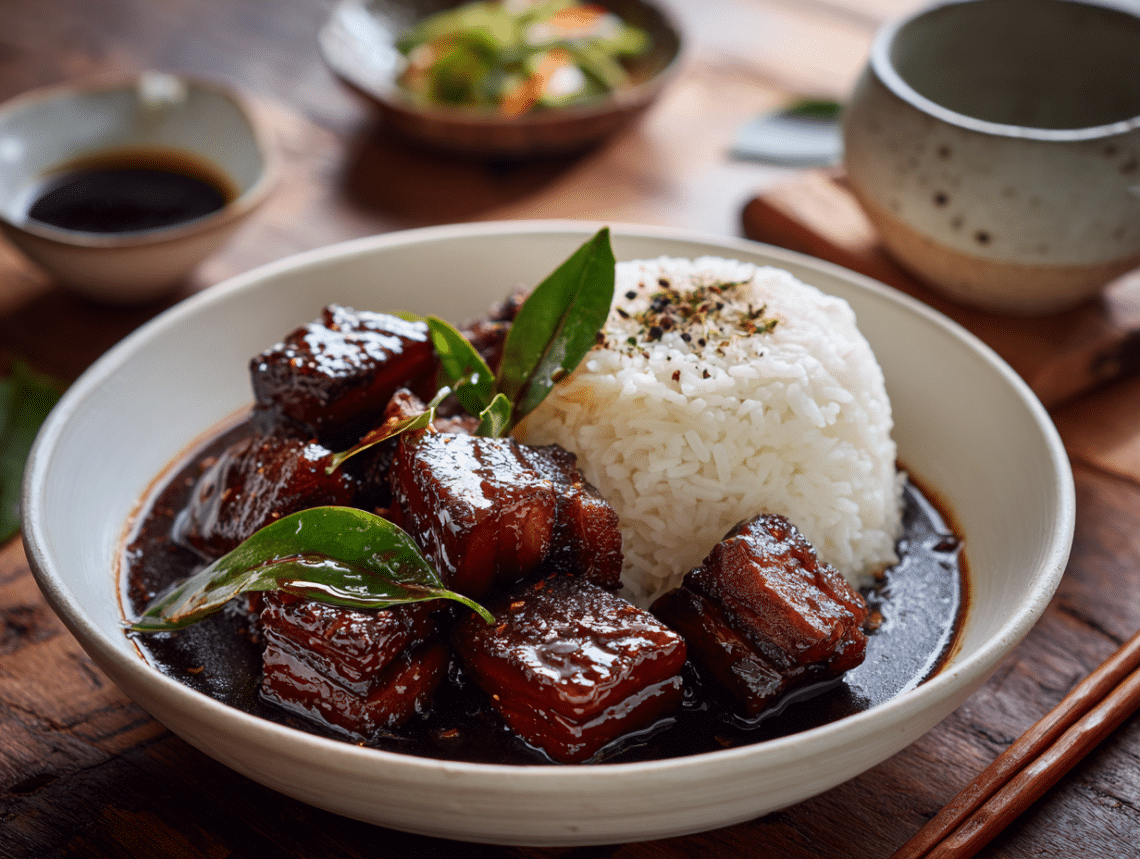
This is a braised pork belly adobo — pork belly cubes marinated in soy sauce and vinegar, seared hard, then cooked low and slow until the sauce turns glossy and the meat gives way without any effort. The honest reason to make it: it feeds a crowd with almost no active cooking time, and it’s genuinely better the next day, which means you can do all the work ahead and just reheat when people show up.
Smart swaps
- Vinegar: The recipe calls for white cane vinegar (sukang maasim), which is mild and slightly sweet. Distilled white vinegar works but is sharper — if that’s what you have, start with a little less and taste before adding more. Rice vinegar is a reasonable middle ground. Avoid balsamic or red wine vinegar; they’ll pull the flavor in the wrong direction entirely.
- Five-spice powder: This goes in with the pepper and brown sugar in step 10 — it’s easy to miss since it’s a small amount, but it adds a subtle warmth that rounds out the sauce. Don’t skip it. If you’re out, a small pinch of ground star anise is the closest single substitute.
- Soy sauce: Regular soy sauce (not low-sodium) is what the recipe is built around. Low-sodium versions will make the sauce taste flat.
- Pork belly: Skin-on gives you more collagen, which helps the sauce thicken naturally. Skinless works fine but the sauce may need a slightly longer reduction at the end.
What makes this version work
Two things matter most here. First, patting the pork completely dry before searing — if there’s marinade moisture on the surface, the pork steams instead of browns, and you lose the deep color that gives the finished sauce its body and depth. Second, the low-and-slow braise after the initial boil: keeping the heat genuinely low (a lazy simmer, not a rolling bubble) is what breaks down the fat and connective tissue in pork belly without toughening the meat. Rush the braise and you get chewy pork in a thin sauce. Give it the full two to three hours and the texture takes care of itself.
What can go wrong
- Sauce is too salty before the reduction step: The marinade is soy-heavy, and reducing it concentrates everything. If it tastes aggressively salty before you reduce, add a splash of water and taste again rather than pushing through — you can always reduce further, but you can’t pull salt back out.
- Pork releases a lot of liquid during the braise and won’t reduce properly: This happens with skin-on belly especially. Just extend the uncovered reduction time by a few minutes. The sauce will tighten up — it needs more time, not more heat.
- Garlic burns during the sauté step: After searing batches of pork, the pot is very hot. Thirty seconds is the maximum for the garlic at that temperature. Have the reserved marinade ready to pour in immediately so you can drop the heat fast.
- The braise runs dry: If you’re cooking at a higher simmer than intended, check the pot at the one-hour mark. If the liquid looks low, add water in small amounts — a quarter cup at a time — to keep the pork submerged by at least half.
- Doubling the batch and the sear takes too long: Skip the garnish — not worth the extra dish. Instead, spend that time searing in proper batches with a hot, dry pan. Crowding to save time is the one shortcut that actually hurts the final result.
Keeping and reheating
Stored in an airtight container with the sauce, leftovers keep in the fridge for up to four days — the flavor continues to develop overnight, so day-two portions are genuinely better. For longer storage, freeze in portions with plenty of sauce for up to three months; the sauce protects the meat from drying out during freezing. Reheat gently on the stovetop over low heat with a small splash of water to loosen the sauce, or microwave covered on medium power in two-minute intervals, stirring between each. High heat on reheating will tighten the sauce too quickly and can make the pork a little rubbery around the edges.
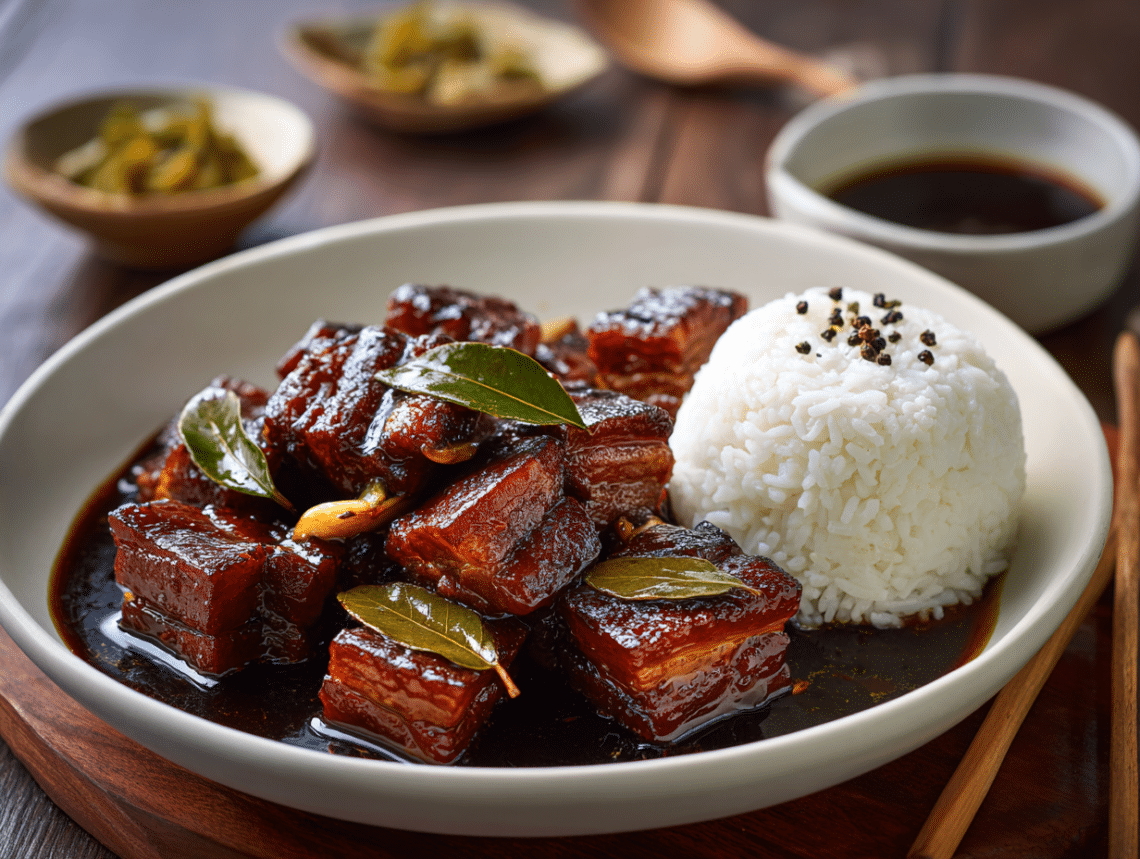
Filipino Pork Belly Adobo – Tender & Saucy

Ingredients
- 2 tablespoons olive oil or neutral oil such as vegetable or canola
- 2.2 pounds pork belly skin-on or skinless
- 1 head garlic crushed
- ½ cup white cane vinegar sukang maasim or distilled white vinegar
- ½ cup soy sauce
- 1½ teaspoon ground black pepper
- 1 teaspoon Chinese five-spice powder
- 3 tablespoons brown sugar packed
- 5 pieces bay leaves
- 1 cup water
Instructions
- Combine the soy sauce and vinegar in a bowl. Set aside.
- Cut the pork belly into 2cm (¾-inch) cubes.
- Place the pork cubes in a large bowl or resealable bag. Pour the soy sauce and vinegar marinade over the meat, ensuring all pieces are coated. Refrigerate for at least 2 hours or overnight for best results.
- Remove the pork from the marinade, reserving the marinade. Pat the pork dry with paper towels. Heat 2 tablespoons of oil in a large stockpot or Dutch oven over high heat until shimmering (approximately 400°F / 200°C surface temperature). Sear the pork in batches for 2–3 minutes per side until deep golden brown on all sides. Transfer the seared pork to a plate.
- Work in batches if needed to avoid crowding the pot — overcrowding will steam the pork rather than sear it.
- Reduce heat to medium-high. Add the crushed garlic to the pot and cook, stirring constantly, for 30–60 seconds until fragrant. Do not let it burn.
- Pour in the reserved marinade and add the seared pork back to the pot. Add 1 cup (240ml) of water.
- Add the ground black pepper, five-spice powder, and brown sugar. Stir to combine.
- Add the bay leaves, then leave to boil on high heat.
- After boiling, decrease the stove temp to low. Bring to a simmer. Then cover the pot with a lid. Slow cook for at least 2 to 3 hours.
- For a thicker sauce, remove the pork from the pot with tongs and set aside. Increase the heat to high and boil the sauce uncovered for 8–12 minutes, stirring occasionally, until it reduces to a glossy, syrupy consistency. Return the pork to the pot and toss gently to coat in the thickened sauce.
- Serve the pork adobo hot over steamed white rice, spooning extra sauce over the top.
Nutrition
Frequently asked questions
Can I make this the day before serving?
Yes — and it’s actually the better approach. The sauce thickens and the flavor deepens significantly after a night in the fridge. Cook it fully, let it cool, refrigerate overnight, then reheat gently on the stovetop before serving.
Can I double the recipe to feed more people?
Yes, doubling works well. The main adjustment is the searing: you’ll need more time and more batches to get proper color on a larger amount of pork, so plan for an extra 15–20 minutes at that stage. The braise time stays roughly the same.
Do I have to marinate overnight, or can I cook it the same day?
Two hours is the stated minimum and it works. Overnight marinating gives you deeper flavor penetration and a slightly richer sauce, but same-day is a reasonable option if you’re short on time.
What if I can’t find white cane vinegar?
Distilled white vinegar is the most widely available substitute and is listed in the recipe as an option. Use a touch less than the recipe calls for since it’s sharper, then taste and adjust before the braise starts.
Can I use a slow cooker instead of a stockpot?
You can transfer to a slow cooker after the searing and garlic steps, then cook on low for six to eight hours. The sauce won’t reduce on its own in a slow cooker, so you’ll still need to do the uncovered reduction step on the stovetop at the end to get the glossy consistency.
More recipes to try
- Quick and Delicious Homemade Chinese Fried Rice
- Sizzling Street-Style Grilled Chicken Tacos with Bold Flavors
- Authentic Japanese Chicken Teriyaki
- Handmade Flour Tortillas Fresh from Your Home Kitchen