






























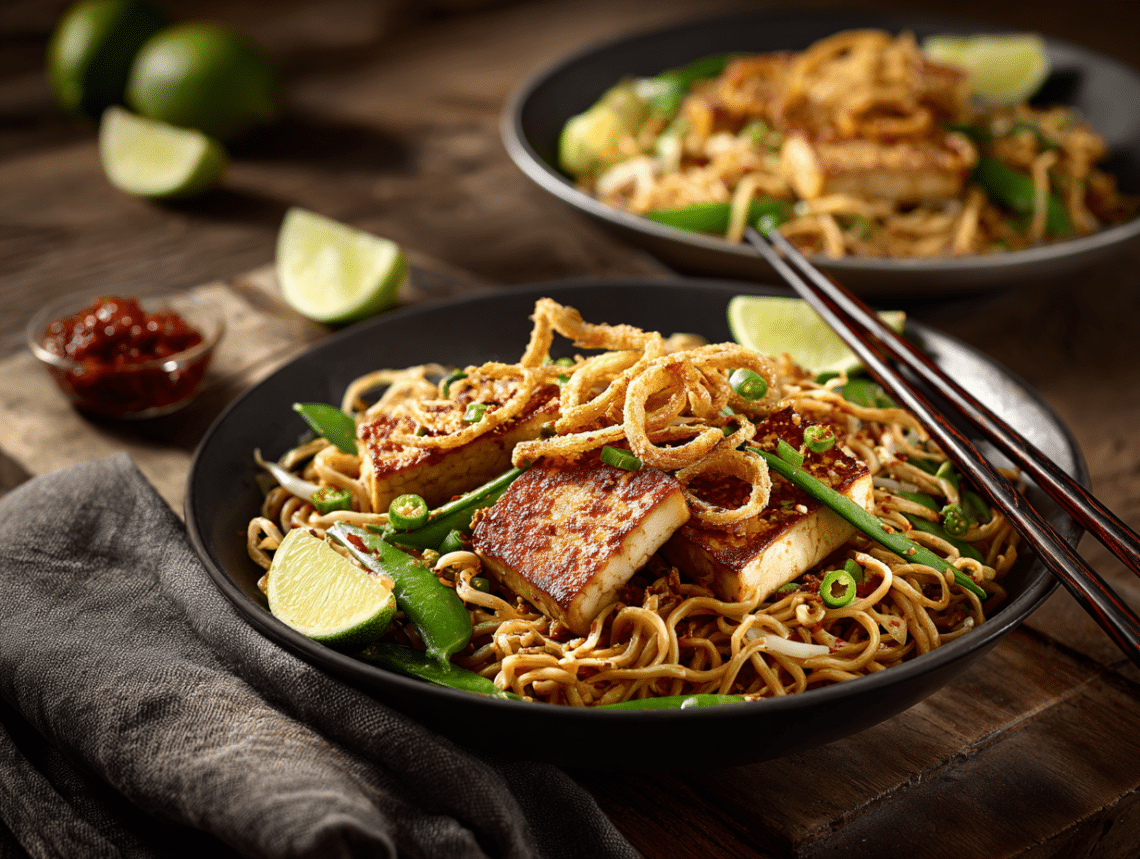
This is a tofu chow mein that comes together in 30 minutes on a single burner — wok for the shallots and stir fry, one pot for the noodles. The honest reason to make it on a weeknight: the prep can be done the night before, so when dinner time hits, you’re mostly just cooking.
What makes this version work
Two things matter here. First, the crispy fried shallots — they’re not a garnish you can skip, because they’re the main source of texture and savory depth in the finished bowl. Fry them low and slow at around 325°F, pull them out when they’re just light golden, and let the residual heat finish the job on the paper towel. Second, the tofu needs to be genuinely dry before it goes into the wok. Pat it well, press it if you have time, and don’t crowd the pan — wet tofu steams instead of browning, and you’ll end up with soft cubes that disappear into the noodles rather than holding their own against them.
Common problems and fixes
- Noodles clump together before they hit the wok: Toss the drained noodles with a small drizzle of oil immediately after draining. They’ll sit without sticking while you finish the stir fry.
- The sauce tastes flat: Sambal oelek and soy sauce vary a lot by brand. Taste before serving and adjust — a few extra drops of soy or a squeeze of lime can pull the whole dish together fast.
- Tofu breaks apart during stir frying: Add it to the wok after the vegetables and noodles are mostly done, and fold gently rather than tossing. Firm tofu holds up, but extra-firm is more forgiving if you’re not confident with the timing.
- Snow peas turn dull and limp: They only need 1 to 2 minutes of heat. If your wok isn’t hot enough when they go in, they’ll steam rather than sear — make sure the oil is shimmering before you add anything in that final stir fry stage.
- Shallots turn bitter: This happens when the oil is too hot or they’re left in even 30 seconds too long. Work in small batches, watch them constantly, and remember they keep cooking after you pull them out. Skip the garnish of extra raw shallot on top — not worth the extra prep when the fried ones do the job.
Make-ahead notes
This recipe is well suited to breaking into stages across two days. The tofu can be pressed, cubed, and refrigerated up to 24 hours ahead in a covered container. All the vegetables — shallots sliced into rings, snow peas trimmed, jalapeño and garlic prepped — can be stored together in a sealed bag in the fridge overnight. The fried shallots are the one exception: fry them the day you’re serving, ideally within a few hours, and store them uncovered at room temperature on a paper towel so they stay crisp. If you fry them the night before and refrigerate them, they’ll go soft. Leftover noodles keep in the fridge for up to 3 days; they’ll absorb most of the sauce overnight, so plan to add a splash of soy sauce and a little sesame oil when reheating. This dish does not freeze well — the noodles turn mushy.
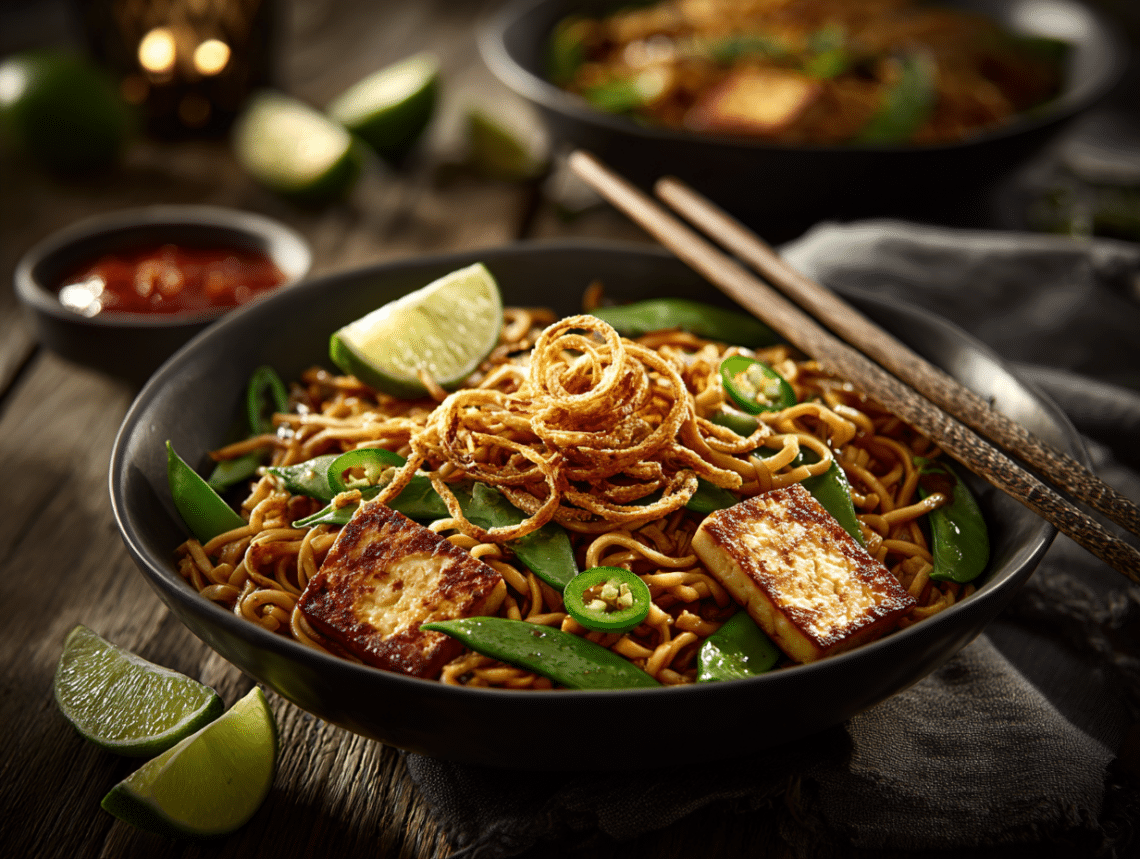
Tofu Stir Fry Noodles – Easy 30-Minute Chow Mein

Ingredients
- 2 tablespoons peanut oil for stir-frying
- 2 cups neutral oil (peanut or vegetable oil) for deep-frying shallots
- 2 medium shallots sliced into thin rings
- 10 oz chow mein noodles
- 1 medium onion sliced
- 2 large garlic cloves coarsely chopped
- 1 medium jalapeño sliced into rings, seeds removed for less heat
- 1 block firm or extra-firm tofu, (14 oz) sliced into ½-inch slices and patted dry
- 4 oz snow peas trimmed
- 1 teaspoon ground cumin
- 1 teaspoon ground coriander
- 1 tablespoon sambal oelek or sriracha
- 1 tablespoon soy sauce
- 2 medium limes or lemons cut into wedges, for serving
Instructions
- Heat about ½ inch (1.25 cm) of oil in a wok or large sauté pan over medium heat until the oil shimmers and a small piece of shallot sizzles immediately when dropped in (approximately 325°F / 165°C). Fry the shallot rings in batches, stirring gently, until light golden brown — about 2–3 minutes. Remove with a spider strainer or slotted spoon and drain on a paper towel-lined plate. They will continue to darken as they cool.
- Meanwhile, boil a medium pot of water. Add the prepared chow mein noodles and cook according to package instructions, stopping a bit shy of completely done. Drain and rinse with cool water using a colander.
- Drain all but two tablespoons of oil from the pan. Saute onion until translucent, then add garlic and jalapeño. Cook until softened but not brown. Add tofu and allow to cook for a few minutes to slightly brown the tofu. Add the snow peas and drained noodles, stirring gently until the snow peas are bright green and just tender-crisp, about 1 to 2 minutes. Try not to break up the tofu.
- Stir in the ground cumin, ground coriander, sambal oelek, and soy sauce. Toss everything together for 30 seconds until the noodles are evenly coated.
- Serve immediately by dividing among four bowls. Top with the crispy fried shallots and serve with fresh lime or lemon wedges and additional sambal oelek on the side.
Nutrition
Common questions
Can I use a regular skillet instead of a wok?
Yes — a 12-inch stainless or cast iron skillet works fine for the stir fry. For the shallot frying step, a wok or deep sauté pan is safer because the higher sides reduce splatter when you add the shallot rings to the hot oil.
Do I need to press the tofu?
Pressing gives you better browning and a firmer texture, so it’s worth doing if you have time. Even 15 to 20 minutes under a heavy pan makes a noticeable difference — the tofu holds its shape better in the wok and doesn’t release water into the sauce.
What can I use instead of sambal oelek?
Sriracha is the most direct swap and is easy to find. It’s a little sweeter and thinner than sambal, so start with slightly less and taste as you go.
Can I make this for more than four people?
Double the recipe works, but cook it in two separate batches in the wok rather than crowding everything in at once. Overcrowding drops the pan temperature and the noodles and tofu will steam rather than stir fry properly.
If you liked this one
- Quick and Delicious Homemade Chinese Fried Rice
- Fresh Vegetable Spring Rolls
- Authentic Japanese Chicken Teriyaki
- Spicy North Indian Soya Chunks Curry