

















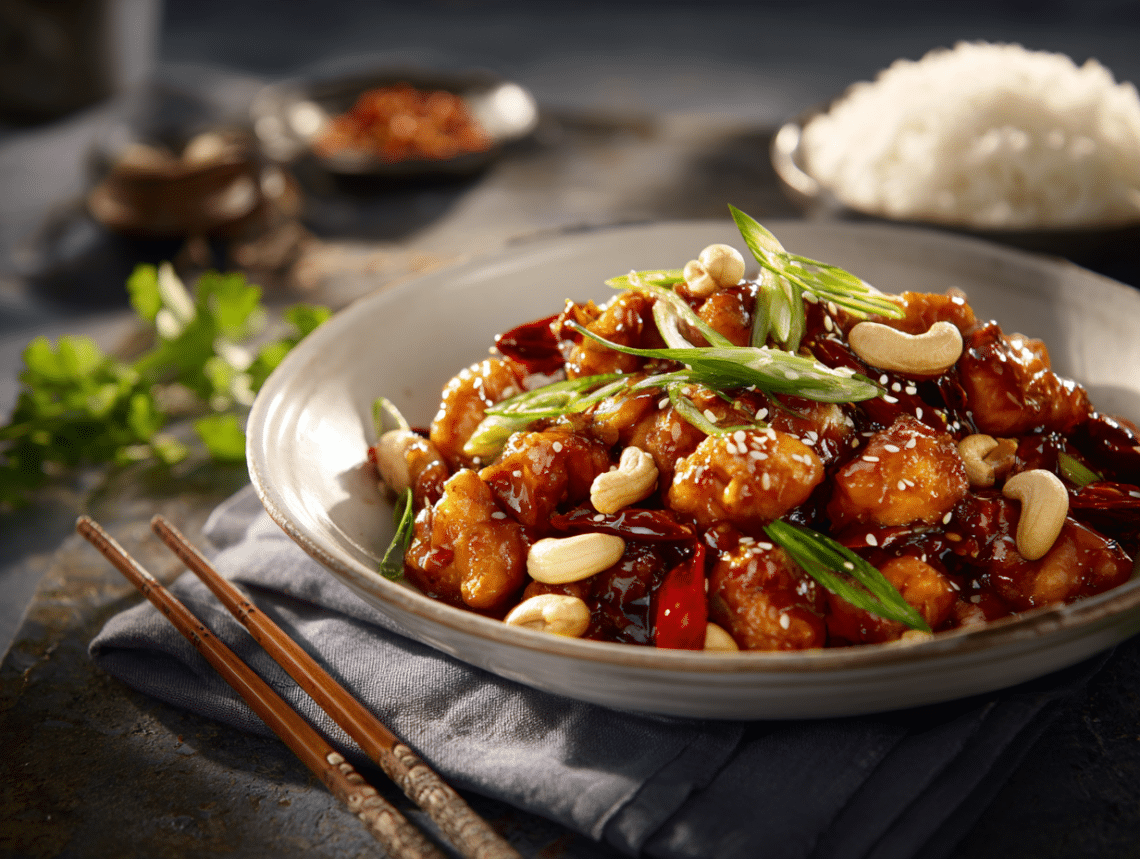
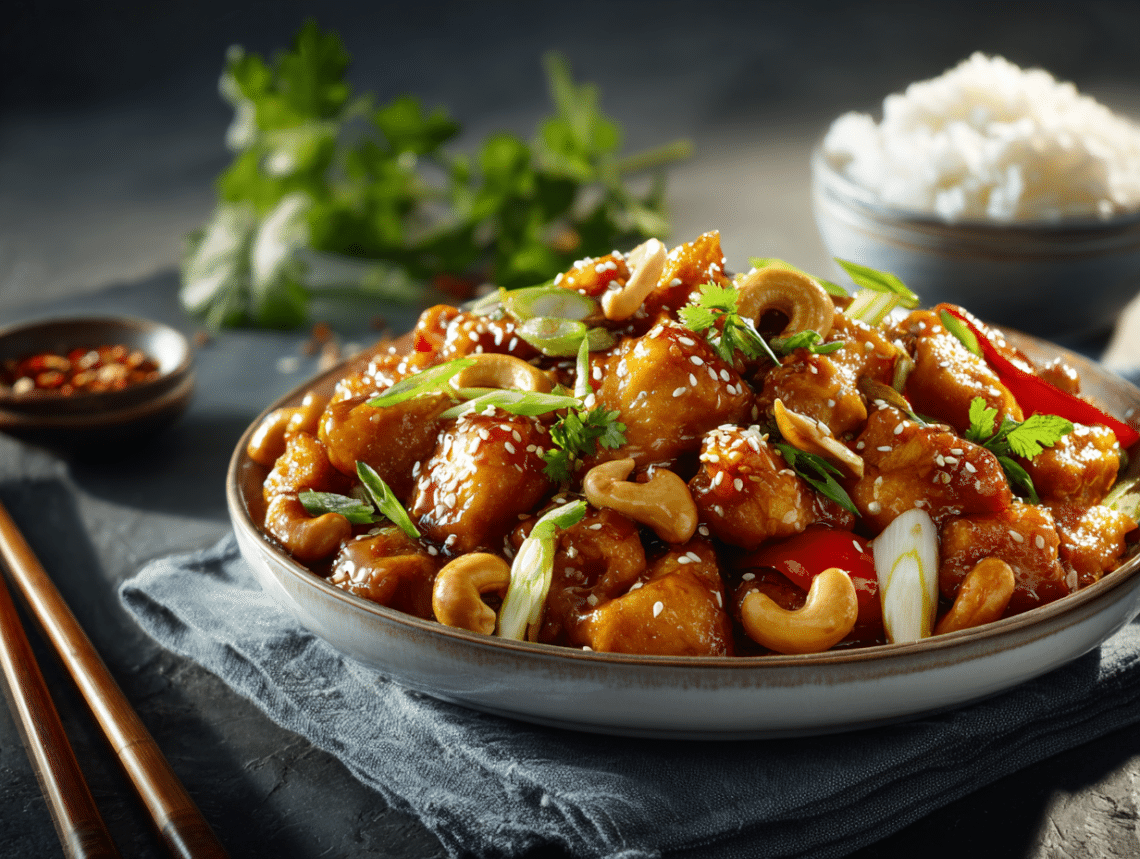
This cashew chicken comes together in one skillet in 30 minutes — marinated chicken breast seared until golden, crisp vegetables, and a glossy sauce built from soy sauce, oyster sauce, honey, and sesame oil. It tastes like a solid takeout order, costs less, and leaves you with almost nothing to wash up.
Substitutions that actually work
- Dry sherry or Shaoxing wine: These are the only ingredients you might not already have. Shaoxing wine is worth buying — a bottle lasts months and works in dozens of stir-fries. Dry sherry from the grocery store is a genuine substitute, not a compromise. Skip cooking wine; it’s loaded with salt.
- Oyster sauce: If you need a vegetarian swap, hoisin sauce works in the same quantity. The flavor is sweeter and less briny, but the sauce still clings and coats properly.
- Cashews: Roasted unsalted is the right call here. Salted cashews tip the whole dish too salty given the soy sauce load. Raw cashews stay soft and don’t add much.
Why this recipe works
Two things make this better than a basic stir-fry. First, the cornstarch in the marinade does double duty — it tenderizes the chicken slightly and forms a thin coating that browns in the hot skillet instead of steaming. That browning is where most of the flavor comes from, so don’t crowd the pan or rush this step. Second, the sauce uses cornstarch as a thickener, which means it goes from thin liquid to glossy and clingy in about 90 seconds once it hits the hot pan — no reduction time needed, and the chicken doesn’t overcook waiting around.
Common problems and fixes
- Sauce stays thin and watery: The pan wasn’t hot enough when you added the sauce. Make sure the skillet is back up to medium-high heat before pouring it in, and stir constantly — the cornstarch needs direct heat to activate.
- Chicken is rubbery: It was cut too thick or cooked past 165°F. Aim for true 1-inch pieces and pull the chicken the moment it’s cooked through. Carryover heat will finish the job.
- Vegetables turn soggy: Two to three minutes over medium-high heat is all they need. If your skillet runs cool, go three minutes; if it runs hot, two. You want them crisp-tender, not soft.
- Sauce tastes flat: The sesame oil goes in off the heat at the very end — if you add it earlier it loses its flavor entirely. Check that step before assuming the recipe needs more salt.
- Everything sticks to the pan: A nonstick skillet or well-seasoned wok matters here. If you’re using stainless, let the pan get fully hot before adding oil, and let the chicken release naturally before flipping — it will, once it’s properly seared.
Leftovers and make-ahead
Leftovers keep in an airtight container in the fridge for up to 3 days. Skip the garnish — not worth the extra dish — and store the cashews separately so they stay crisp. To reheat, a skillet over medium heat with a splash of water or chicken broth works better than the microwave, which tends to toughen the chicken. The dish freezes well for up to 2 months; leave out the cashews and green onions before freezing, and thaw overnight in the fridge rather than on the counter. The sauce may look broken when it first comes out of the freezer but comes back together once it’s heated through and stirred.
Easy Cashew Chicken (Better Than Takeout!)

Equipment
- Large nonstick skillet or wok (12-inch / 30 cm)
- Large mixing bowl
- Small mixing bowl
- Sharp chef’s knife
- Cutting board
- Wooden spoon or spatula
Ingredients
- 5 tablespoons soy sauce divided — 3 tablespoons for marinade, 2 tablespoons for sauce
- 2 tablespoons dry sherry or Shaoxing wine
- 4 teaspoons cornstarch divided
- 1 pound boneless, skinless chicken breast cut into 1-inch pieces
- 1 cup chicken broth
- 1 tablespoon oyster sauce
- 1 tablespoon honey
- 2 teaspoons toasted sesame oil
- 1 teaspoon neutral oil for cooking chicken
- 1 teaspoon neutral oil for vegetables
- ¾ cup yellow onion chopped (about 1 small onion)
- ½ cup celery chopped (about 1–2 stalks)
- ½ cup red bell pepper chopped (about ½ large pepper)
- 1 tablespoon fresh ginger grated
- 2 cloves garlic minced (about 2 teaspoons)
- ½ cup green onions chopped (about 4–5 stalks)
- ½ cup roasted unsalted cashews
- 1 teaspoon sesame seeds optional garnish
Instructions
- In a large bowl, combine 3 tablespoons soy sauce, dry sherry, and 2 teaspoons cornstarch. Add the chicken pieces and toss until evenly coated. Set aside to marinate while you prepare the vegetables.
- In a small bowl, whisk together the remaining 2 tablespoons soy sauce, remaining 2 teaspoons cornstarch, 1 cup chicken broth, 1 tablespoon oyster sauce, and 1 tablespoon honey. Set the sauce aside.
- Heat 1 teaspoon neutral oil in a large nonstick skillet or wok over medium-high heat until shimmering. Add the chicken in a single layer and cook for 4–5 minutes, turning once, until golden brown on the outside and cooked through (internal temperature of 165°F / 74°C). Transfer to a plate and set aside.
- Add the remaining 1 teaspoon oil to the same skillet. Sauté the onion, celery, red bell pepper, ginger, and garlic over medium-high heat for 2–3 minutes until the vegetables are crisp-tender and fragrant. Return the chicken to the skillet. Pour in the sauce mixture and stir to combine. Bring to a boil and cook for 1–2 minutes until the sauce thickens and coats the chicken. Remove from heat and drizzle with sesame oil. Garnish with cashews, green onions, and sesame seeds if desired. Serve immediately over steamed rice.
Notes
- Storage: Refrigerate leftovers in an airtight container for up to 3 days. Cashews will soften overnight — add a fresh handful when reheating for crunch.
- Freezing: Freeze without the cashews and green onion garnish for up to 2 months. Thaw overnight in the fridge and reheat in a skillet.
- Make-ahead: Marinate the chicken and prep the sauce and vegetables up to 24 hours in advance. Store separately in the fridge and stir-fry when ready.
- Substitutions: Swap chicken thighs for breast for juicier results (increase cook time by 1–2 minutes). Use tamari in place of soy sauce for a gluten-free version.
- Pro tip: Toast the cashews in a dry skillet for 2–3 minutes before garnishing — this intensifies their flavour and restores crunch if they've been sitting in your pantry.
Nutrition
Frequently asked questions
Can I use chicken thighs instead of chicken breast?
Yes, and thighs are actually more forgiving. They stay juicy even if you cook them a minute or two past done, which is useful in a fast stir-fry. Cut them into 1-inch pieces the same way and add 1–2 minutes to the searing time.
Do I have to use oyster sauce — can I just leave it out?
You can leave it out, but the sauce will taste noticeably thinner and less savory. If you don’t have it, replace it with an equal amount of hoisin sauce rather than skipping it entirely — that keeps the depth in the sauce.
My grocery store doesn’t carry Shaoxing wine. Is there something I already have at home?
Dry sherry is the closest substitute and most liquor stores carry it. In a pinch, a tablespoon of rice vinegar plus a tablespoon of water will keep the acidity without adding off-flavors, though the result is slightly less complex.
Can I double the recipe for a larger group?
You can double the ingredients, but cook the chicken in two batches rather than one. Crowding the pan causes the chicken to steam instead of sear, and you’ll end up with pale, soft pieces instead of golden ones.
Is there a way to make this gluten-free?
Swap all the soy sauce for tamari in the same quantities — it’s a direct 1:1 replacement and behaves identically in both the marinade and the sauce. Also check your oyster sauce label, since some brands contain wheat; there are certified gluten-free versions available.
Try these next
- Quick and Delicious Homemade Chinese Fried Rice
- Authentic Japanese Chicken Teriyaki
- Fresh Vegetable Spring Rolls
- Elegant Chicken Marsala with Mushrooms and Marsala Wine