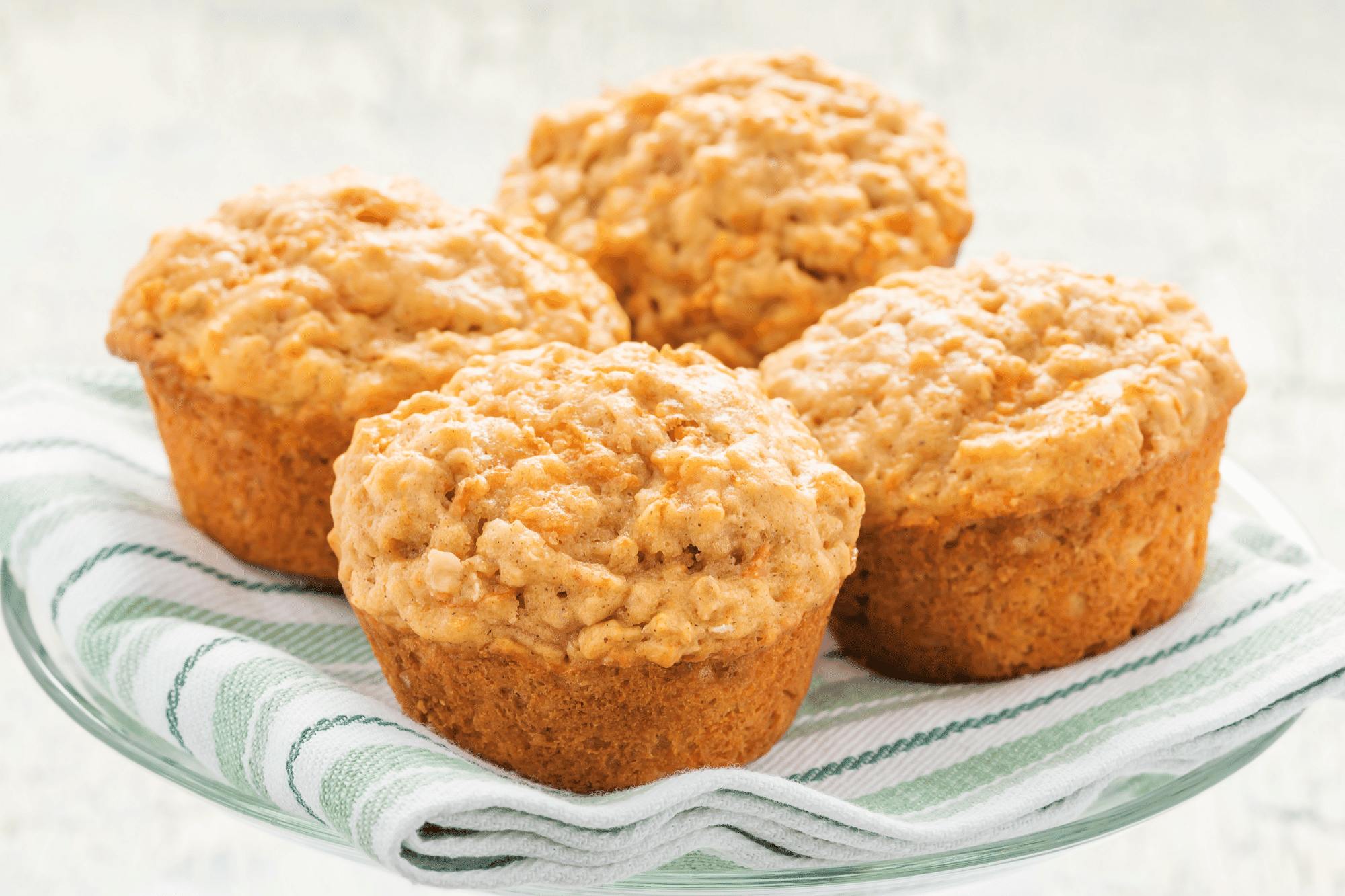




I love a breakfast that actually keeps me full until lunch, and these oatmeal muffins deliver every time. They are soft and tender on the inside with a satisfying oat-and-walnut crunch on top — the kind of muffin that feels wholesome without tasting like health food.
The secret here is sour cream. It keeps the crumb incredibly moist while adding a subtle tang that balances the sweetness perfectly. Combined with pre-soaked oats and finely ground walnuts, you get a muffin with real texture and substance.
What I appreciate most about this recipe is how forgiving it is:
- Flexible flour options — use rice flour for a gluten-free version or swap in all-purpose flour
- Adaptable sweetener — coconut sugar, brown sugar, or white sugar all work beautifully
- Freezer-friendly — make a batch on Sunday and reheat all week
Whether you are meal-prepping breakfasts or need a satisfying afternoon snack, these oatmeal muffins with walnuts and sour cream are worth every minute of the 40 minutes they take to make.
Oatmeal Muffins Recipe – Soft, Hearty & Easy
Ingredients
- 1 ¾ cups rolled oats pre-soaked and dried
- ½ cup walnuts pre-soaked, dried, and finely ground
- ⅓ cup rice flour or all-purpose flour (see notes)
- ½ cup coconut sugar or brown/white sugar (see notes)
- ½ cup sour cream
- ¼ cup unsalted butter softened
- 2 large eggs room temperature
- 1 teaspoon baking powder
- 1 pinch salt
- 1 pinch vanilla powder or ½ tsp vanilla extract
Instructions
- Preheat the oven to 350°F / 180°C (160°C fan-forced). Prepare a 12-cup muffin tin with silicone muffin cups or paper liners lightly sprayed with non-stick spray.
- In a medium bowl, sift the flour together with the salt, baking powder, and vanilla powder. Add the oats and ground walnuts and stir until evenly combined. Set aside.
- In a large bowl, beat the softened butter and sugar together until light and fluffy, about 2–3 minutes. Add the eggs one at a time, beating well after each addition. Mix in the sour cream until smooth. Gently fold the dry ingredients into the wet ingredients until just combined — do not overmix.
- Divide the batter evenly among the 12 muffin cups, filling each about three-quarters full. Bake for 20–25 minutes, or until the tops are golden and a toothpick inserted into the centre comes out clean. Let the muffins cool in the tin for 5–10 minutes, then transfer them to a wire cooling rack to cool completely.
Nutrition
What Makes These Oatmeal Muffins Special
Most muffin recipes rely entirely on flour for structure, which can leave you with a fluffy but ultimately unsatisfying baked good. These oatmeal muffins flip the ratio — 150g of oats to just 50g of flour — so you get a muffin with real body and chew.
Three things set this recipe apart:
- Pre-soaked oats soften enough to blend into the batter while still keeping their texture after baking. You get that signature oatmeal bite without dry, raw-tasting flakes.
- Finely ground walnuts act as a second flour, adding richness, healthy fats, and a subtle toasty flavour that pairs beautifully with oats.
- Sour cream in the batter creates an incredibly moist crumb with a gentle tang that prevents the muffins from tasting one-dimensionally sweet.
The result is a muffin that is soft and tender inside, slightly crunchy on top, and filling enough to actually work as breakfast — not just a vehicle for butter.
Equipment You’ll Need
- 12-cup muffin tin or 12 silicone muffin cups — silicone cups release these oat-heavy muffins cleanly without greasing; a metal tin with paper liners works too but spray lightly with non-stick spray.
- Large mixing bowl — you need room to cream the butter and sugar and then fold in the dry ingredients without batter spilling over the sides.
- Medium mixing bowl — for sifting and combining the flour, baking powder, salt, oats, and ground walnuts before adding to the wet ingredients.
- Fine-mesh sieve — essential for sifting the flour and baking powder together so you avoid pockets of leavener that create uneven rise.
- Wire cooling rack — letting the muffins cool on a rack prevents the bottoms from steaming and going soggy in the tin.
Nice to have: an electric hand mixer makes creaming the butter and sugar faster and gives a lighter crumb, though a wooden spoon and some elbow grease work fine.
Tips for Best Results
- Pre-soak the oats properly. Soak them in water for at least 30 minutes, then drain and spread on a baking sheet to dry before using. This hydrates the oats so they do not steal moisture from your batter during baking.
- Grind the walnuts finely but not to a paste. Pulse in short bursts in a food processor — you want walnut flour, not walnut butter. A few slightly larger pieces are fine and add texture.
- Soften the butter fully. It should dent easily when pressed but not be melting. Cold butter will not cream properly, and melted butter changes the texture entirely.
- Do not overmix once you add the dry ingredients. Fold gently until you no longer see dry streaks. Overmixing develops gluten (even in small amounts) and makes the muffins tough and gummy.
- Fill each cup three-quarters full, not to the top. These muffins rise moderately — filling too high means batter spilling over and flat, mushroom-shaped tops.
- Rotate the muffin tin halfway through baking if your oven has hot spots. This ensures even browning across all 12 muffins.
Substitutions and Variations
- Flour: The original recipe uses rice flour for a lighter, slightly gluten-free-friendly muffin. All-purpose flour works perfectly — reduce the eggs from 2 to 1 since AP flour binds more strongly. Wholemeal spelt flour is another excellent option for extra nuttiness.
- Sugar: Coconut sugar gives a deeper caramel flavour. Brown sugar adds moisture and a mild molasses note. White sugar produces the lightest, most neutral-tasting muffin. All are interchangeable at the same weight.
- Sour cream: Full-fat Greek yoghurt is the closest swap — same tang, same moisture. Avoid low-fat versions as they make the crumb drier.
- Walnuts: Ground pecans or almonds work well. For a nut-free version, substitute sunflower seed meal and add an extra pinch of salt to compensate for the milder flavour.
- Add-ins: Fold in 50g of raisins, dried cranberries, or dark chocolate chips for variety. A teaspoon of cinnamon in the dry mix pairs beautifully with the oats.
- Eggs: For a single-egg version (when using all-purpose flour), one large egg is sufficient. The sour cream provides enough moisture and binding.
Storage and Reheating
- Room temperature: Store in an airtight container for up to 1 day. The sour cream content means they turn stale faster than drier muffins at room temperature.
- Refrigerator: Sealed in an airtight container, these keep well for 2–3 days. Bring to room temperature for 15 minutes before eating, or warm briefly.
- Freezer: Wrap each cooled muffin individually in cling film, then place in a resealable freezer bag. They freeze well for up to 3 months with no loss of texture.
- Reheating from frozen: Wrap the frozen muffin in aluminium foil and bake at 350°F / 180°C for 15–20 minutes until warmed through. Remove the foil for the last 3 minutes to restore the slightly crunchy top.
- Microwave shortcut: Remove cling film, wrap in a damp paper towel, and microwave on medium for 30–40 seconds. The texture will not be as good as oven-reheated, but it is fast.
What to Serve With This
These oatmeal muffins are substantial enough on their own, but here are some pairings that make them feel like a complete meal:
- Fresh fruit and yoghurt: A bowl of Greek yoghurt with berries alongside one of these muffins is a balanced, protein-rich breakfast.
- Nut butter: Split a warm muffin in half and spread with almond or peanut butter. The oats and nuts in the muffin pair naturally with more nut flavour.
- Honey or maple drizzle: If you prefer a sweeter breakfast, a light drizzle of honey or maple syrup on a warm muffin is excellent.
- Strong coffee or chai tea: The earthy, nutty flavour of these muffins stands up well to bold drinks. A milky chai is particularly good.
- Soft cheese: A smear of cream cheese or mascarpone on a halved muffin adds richness and makes this feel more like a treat.
Frequently Asked Questions
Why does the recipe say 2 servings when it makes 12 muffins?
This is a yield error in the original recipe card. The instructions clearly state dividing the batter into 12 muffin cups. The correct yield is 12 muffins. The nutrition information should be calculated per muffin, which brings the calories down from 682kcal to approximately 113kcal per muffin.
What does pre-soaking the oats and walnuts do?
Pre-soaking the oats hydrates them so they soften during baking rather than absorbing all the moisture from your batter and leaving you with a dry muffin. Pre-soaking walnuts removes some of the tannins that cause bitterness, resulting in a milder, sweeter walnut flavour. Make sure to dry both thoroughly before using — excess water will throw off the batter consistency.
Can I use instant oats instead of rolled oats?
You can, but the texture will change significantly. Instant oats dissolve almost completely into the batter, so you lose the distinctive oatmeal chew that makes these muffins special. If you only have instant oats, skip the pre-soaking step entirely and expect a softer, more cake-like muffin.
How do I know when the muffins are done?
Insert a toothpick into the centre of one muffin at the 20-minute mark. If it comes out clean or with just a few moist crumbs (not wet batter), they are done. The tops should be golden and feel springy when gently pressed. Overbaking these even by a few minutes dries them out because of the relatively low flour content.
Can I make these muffins dairy-free?
You would need to replace both the butter and the sour cream. Use 60g of coconut oil (solid, at room temperature) in place of butter, and 100g of coconut cream or a thick dairy-free yoghurt in place of sour cream. The flavour will shift slightly but the texture remains very close to the original.
Why did my muffins sink in the middle?
The most common cause is overfilling the muffin cups. Fill each cup only three-quarters full. Another possibility is opening the oven door too early — the sudden temperature drop causes the partially set batter to collapse. Wait until at least the 18-minute mark before checking.
A Little History: Oats in Baking
Oats have been cultivated for over 3,000 years, originating in the fertile crescent before becoming a staple grain across Northern Europe and Scotland in particular. While oat-based breads and porridge have ancient roots, oat muffins as we know them are a relatively modern creation — emerging in American home baking during the health food movement of the 1960s and 70s when bakers started looking for ways to add whole grains to familiar recipes. The combination of oats with nuts and sour cream in this recipe draws from Eastern European baking traditions where sour dairy products have long been used to tenderise heavy grain batters. It is a small recipe with centuries of baking wisdom behind it.
If you make these oatmeal muffins, I would love to hear how they turned out — leave a star rating and a comment below to help other bakers find this recipe!