






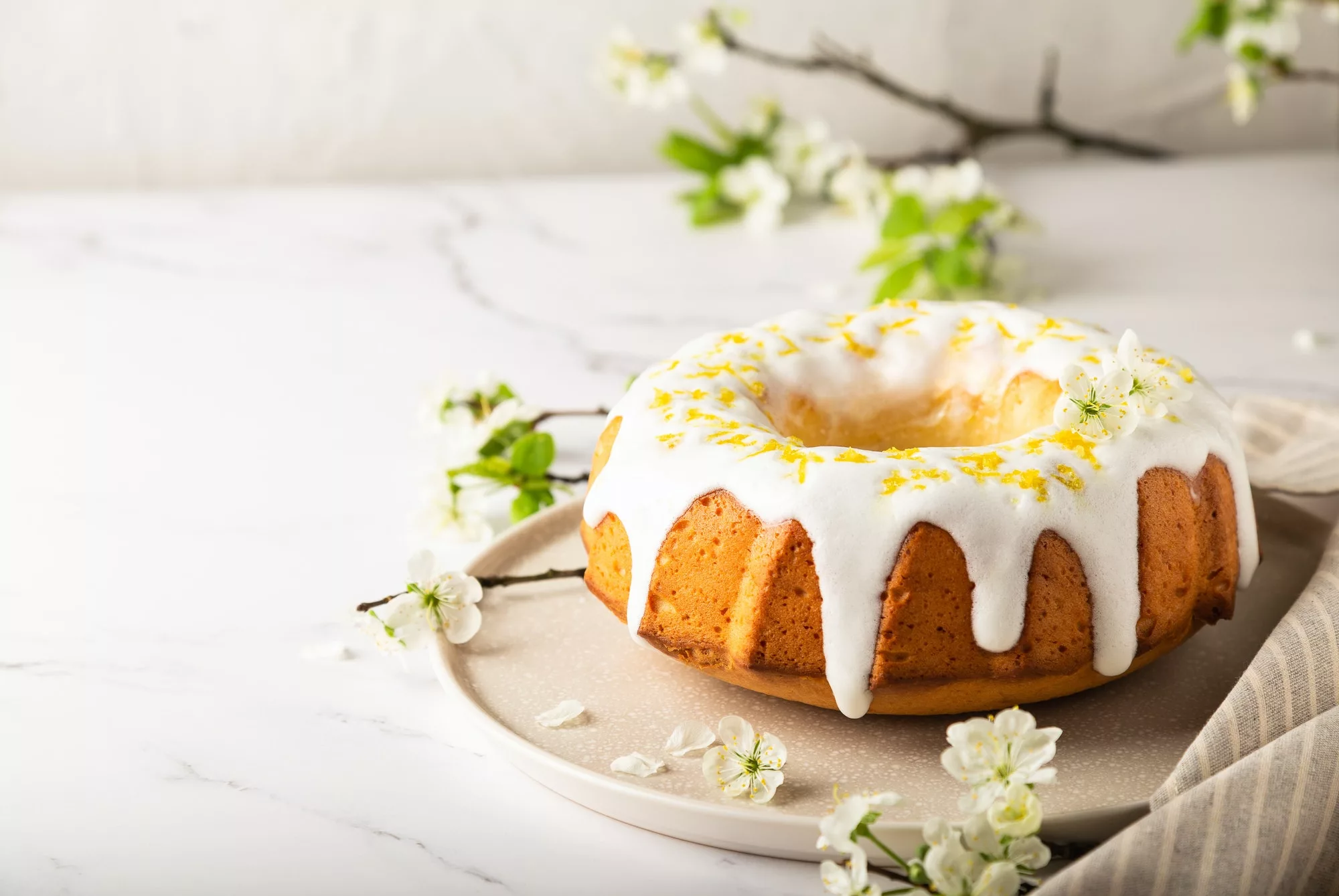
I’ve been on an oil-free baking kick lately, and this vegan lemon pound cake might be my proudest creation yet. It uses coconut butter instead of oil or vegan butter, and the result is a tender, rich crumb that rivals any traditional pound cake I’ve ever had.
What makes this recipe special is the triple lemon hit — fresh lemon juice in the batter, a warm lemon syrup that soaks into every pore of the cake, and a thick lemon glaze drizzled over the top. The combination creates a cake that’s bright, tangy, and sweet all at once.
I use chia eggs as the binder here, and they work beautifully to hold everything together without any heaviness. The cake is dense in the best pound-cake way but still light enough to feel like a summer dessert.
The best part? This cake gets even better overnight as the syrup continues to soak in and the flavours meld together — so make it the day before your brunch and you’ll be rewarded with the most incredible slice.
Plant-Based Lemon Pound Cake
Ingredients
Lemon Cake Ingredients
- 1 ½ cup all-purpose flour
- 2 teaspoons baking powder
- ¼ teaspoon salt
- ¾ cup granulated sugar
- ⅔ cup coconut butter softened to room temperature
- 2 teaspoons vanilla extract
- ⅓ cup unsweetened plant milk
- ⅓ cup fresh lemon juice (about 2-3 lemons)
2 Chia Eggs
- 1 tablespoon ground chia seeds
- 3 tablespoons water
Lemon Syrup Ingredients
- ½ cup fresh lemon juice
- ½ cup granulated sugar
Lemon Glaze Ingredients
- 1 cup confectioners' sugar (powdered sugar)
- 2 tablespoons fresh lemon juice
- 1 tablespoon lemon zest (from about 2 lemons), for garnish
Instructions
Cake Instructions
- Preheat the oven to 350°F / 175°C (160°C fan-forced).
- Sift together flour, baking powder, and salt. Then, set aside.
- Cream together the coconut butter and sugar using a stand mixer, hand mixer, or even a whisk.
- Add the vanilla extract, chia eggs, and plant milk and mix thoroughly.
- Add the dry ingredients and lemon juice and gently mix just until all the ingredients are combined.
- Line the bottom and sides of a 9×5 inch (23x13cm) loaf pan with parchment paper, leaving an overhang on the long sides for easy removal. Pour the batter into the prepared pan, smooth the top, and bake for 40-50 minutes at 350°F / 175°C (160°C fan-forced), or until a toothpick inserted in the centre comes out clean.
- Remove the cake and let it cool for 10 minutes in the pan.
- Place the cake on a baking rack and poke small holes in the top of the cake with a toothpick, so the syrup gets deep into the cake.
Lemon Syrup Instructions
- Bring the lemon juice and sugar to a boil in a small saucepan.
- Remove from heat and pour the syrup over the cake.
- Let the cake cool completely–at least 3 hours, but overnight is even better! If cooling overnight, cover tightly with plastic wrap.
Lemon Glaze Instructions
- Combine the lemon juice and confectioners’ sugar until a thick icing has formed. Put more sugar or lemon juice to get the desired consistency.
- Drizzle the glaze over the cake and make sure some drips down the sides.
- Sprinkle the top with lemon zest and serve!
Nutrition
What Makes This Vegan Lemon Pound Cake Special
Most vegan pound cakes rely on vegetable oil or vegan butter to achieve that classic dense, rich crumb. This recipe takes a completely different approach by using coconut butter — the whole-food, blended coconut flesh — as the primary fat. Coconut butter has a natural richness and slight sweetness that pairs beautifully with the tartness of fresh lemon juice.
The other standout element is the triple lemon treatment. Lemon juice goes into the cake batter itself, then a hot lemon syrup is poured over the warm cake to soak deep into every crevice, and finally a thick lemon glaze is drizzled on top. This layered approach means every single bite delivers bright citrus flavour from top to bottom — not just a hint of lemon but a full lemon experience.
Using chia eggs instead of flax eggs gives this cake a lighter texture. Chia seeds create a more neutral-flavoured gel that doesn’t compete with the lemon, whereas flax can sometimes add an earthy undertone that muddies bright flavours.
Tips for Best Results
- Soften your coconut butter properly. If it’s solid from the jar, gently warm it in a bowl over hot water or microwave in 10-second bursts. It should be the consistency of softened dairy butter — spreadable but not liquid. If it’s melted, the cake will be greasy and flat.
- Don’t overmix after adding the flour. Once the dry ingredients and lemon juice go in, fold gently just until no streaks of flour remain. Overmixing develops gluten and turns your pound cake into a tough bread.
- Poke generous holes for the syrup. Use a toothpick or wooden skewer to poke at least 30-40 holes across the top of the warm cake. The more holes, the more syrup penetrates, and the moister your final cake will be.
- Pour the syrup while the cake is still warm. Warm cake absorbs liquid much more readily than cool cake. Pour slowly and let each addition soak in before adding more.
- Let it rest. This cake genuinely improves after sitting for several hours or overnight. The syrup continues to distribute and the crumb firms up to the perfect sliceable texture.
Substitutions and Variations
- Coconut butter substitute: If you can’t find coconut butter, you can use vegan butter (such as Miyoko’s or Earth Balance) at the same quantity. The cake will no longer be oil-free but will still be delicious and vegan.
- Chia egg substitute: Use 2 flax eggs (1 tablespoon ground flaxseed plus 3 tablespoons water per egg) if you don’t have chia seeds. Note that flax adds a slightly nuttier flavour.
- Gluten-free version: Replace the all-purpose flour with a 1:1 gluten-free baking flour blend (such as Bob’s Red Mill). Add 1/4 teaspoon xanthan gum if your blend doesn’t already contain it.
- Orange or lime variation: Swap the lemon juice and zest for fresh orange juice and orange zest for a sunny orange pound cake, or use lime for a tropical twist. Keep the quantities the same.
- Lemon poppy seed: Fold 2 tablespoons of poppy seeds into the batter along with the dry ingredients for a classic lemon poppy seed variation.
- Reduce the sugar: You can reduce the cake sugar to 1/2 cup (100g) for a less sweet cake, but do not reduce the syrup sugar or it won’t form a proper syrup.
Storage and Reheating
Room temperature: Store the glazed cake in an airtight container or tightly wrapped in plastic wrap at room temperature for up to 3 days. The syrup keeps it moist, so it actually holds up better than most cakes at room temp.
Refrigerated: Wrap tightly and refrigerate for up to 5 days. Bring slices to room temperature for about 20 minutes before serving — cold pound cake can taste dense and muted.
Frozen: For best results, freeze the cake after the syrup soak but before glazing. Wrap tightly in plastic wrap, then in aluminium foil, and freeze for up to 3 months. Thaw overnight in the fridge, then add the glaze fresh before serving.
Reheating: Individual slices can be gently warmed in a 300°F / 150°C oven for 5-8 minutes or microwaved for 15-20 seconds. Warming it slightly makes the coconut butter crumb even more tender.
What to Serve With This
- Fresh berries: A handful of fresh raspberries, blueberries, or sliced strawberries alongside each slice adds colour and a fruity contrast to the tangy lemon.
- Coconut whipped cream: Chill a can of full-fat coconut milk overnight, scoop out the solid cream, and whip with a touch of vanilla and powdered sugar. Dollop on each slice.
- Vegan vanilla ice cream: For a warm-weather dessert, serve a slice with a scoop of vegan vanilla ice cream and let the glaze melt slightly into it.
- Tea or coffee: This cake is a perfect companion for afternoon tea — particularly Earl Grey, which has bergamot notes that complement the lemon beautifully.
- Brunch spread: Serve sliced on a platter alongside fresh fruit, scones, and mimosas for an impressive plant-based brunch centrepiece.
Frequently Asked Questions
What is coconut butter and where do I find it?
Coconut butter (sometimes sold as coconut manna) is made from puréed whole coconut flesh — it includes both the fat and the fibre, unlike coconut oil which is just the extracted fat. You can find it in the natural foods aisle of most grocery stores near the nut butters, or make your own by blending unsweetened shredded coconut in a food processor for 10-15 minutes until completely smooth.
Can I taste the coconut in the finished cake?
There is a very subtle coconut undertone, but the lemon syrup and glaze are so punchy that they dominate the flavour. Most people who taste this cake don’t identify the coconut at all — they just notice a pleasant richness.
Why did my cake sink in the middle?
The most common cause is opening the oven door too early. Don’t open the oven for at least the first 30 minutes of baking. Another possibility is that the coconut butter was too warm (fully melted rather than softened), which can cause the structure to collapse. Finally, make sure your baking powder is fresh — if it’s been open for more than 6 months, it may have lost its leavening power.
Can I use bottled lemon juice instead of fresh?
Fresh lemon juice makes a significant difference in this recipe because it provides brighter, more complex citrus flavour. Bottled juice tends to taste flat and slightly bitter. Since lemon is the star ingredient in all three components — cake, syrup, and glaze — it’s worth using fresh here. You’ll need roughly 5-6 medium lemons for the entire recipe.
How do I know when the cake is done?
Insert a toothpick or thin skewer into the centre of the cake. It should come out clean or with just a few dry crumbs — no wet batter. The top should be golden and firm to a gentle touch. If the top is browning too quickly but the centre is still raw, tent loosely with aluminium foil for the remaining bake time.
Is this cake actually better the next day?
Yes — this is one of those rare cakes that genuinely improves overnight. The lemon syrup continues to distribute through the crumb as it sits, making each slice more uniformly moist and flavourful. If you can resist eating it immediately, give it at least 6-8 hours after the syrup soak before slicing.
The History of Pound Cake
Traditional pound cake gets its name from the original recipe ratio: one pound each of butter, sugar, flour, and eggs. This simple formula dates back to Northern Europe in the early 1700s, with the first known printed recipe appearing in a 1747 British cookbook. The beauty of the recipe was its simplicity — in an era before standardised measuring cups, anyone could remember the ratio.
Over the centuries, bakers began adding flavourings like vanilla, lemon, and almond to the base recipe, and adjusted the ratios for lighter textures. American Southern baking embraced pound cake wholeheartedly, making it a staple at potlucks and church suppers. This plant-based version honours that tradition while making it accessible to those who avoid eggs and dairy — the coconut butter and chia eggs replicate the richness and binding of the originals surprisingly well.
If you make this vegan lemon pound cake, I’d love to hear how it turned out — drop a star rating and leave a comment below to let me know!


