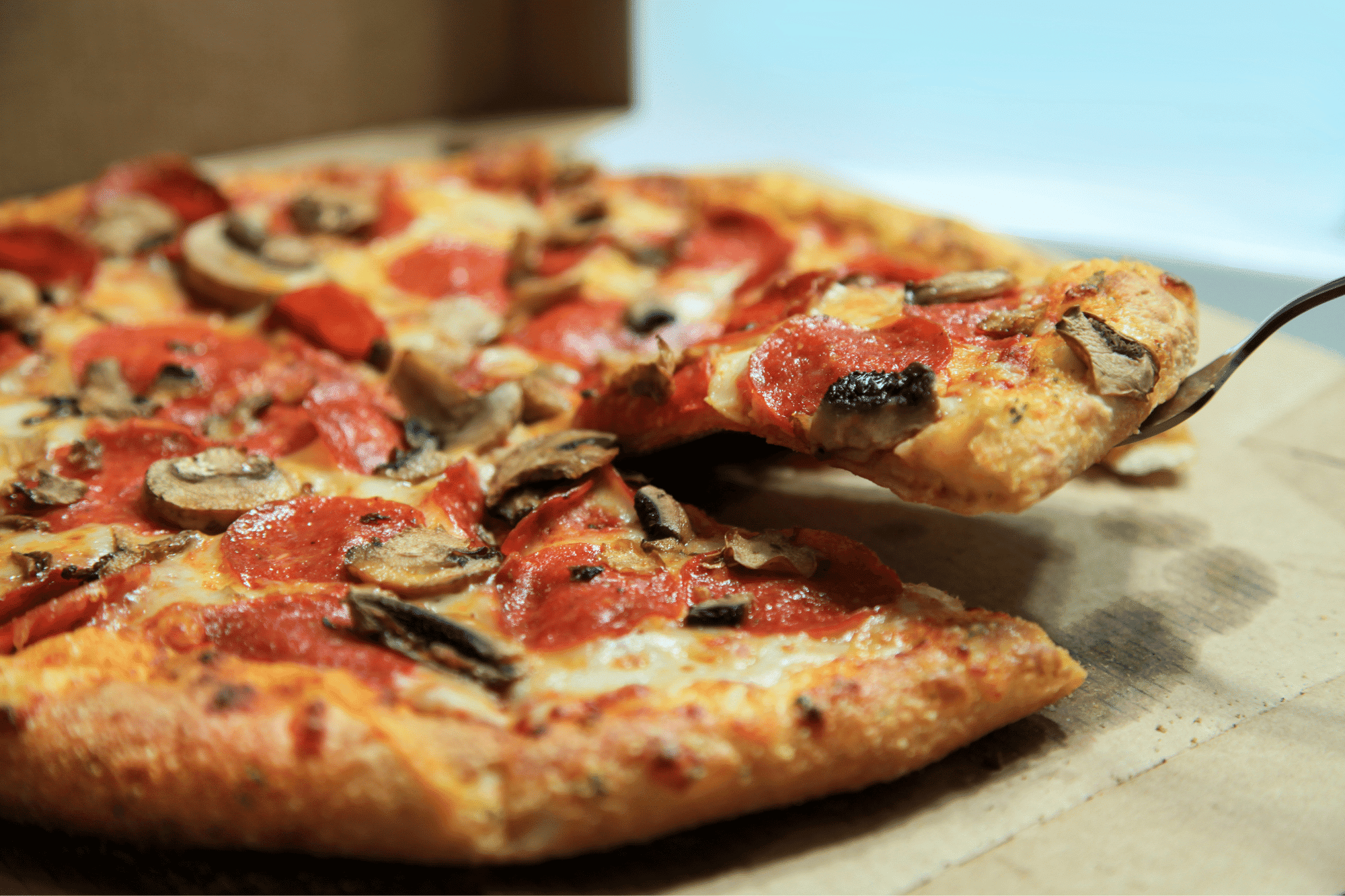
This is the recipe that started our entire grain-free cooking journey. About a year and a half ago, my husband and I were craving pizza but dreading how we’d feel after eating it. That night, we dove into research, hit the market, and created our first-ever grain-free pizza with a crispy, crunchy crust — and we’ve never looked back.
This crust is hands-down the best grain-free pizza crust we’ve ever encountered. Honestly, we prefer it to regular pizza dough. The combination of tapioca flour and coconut flour creates a texture that’s:
- Golden-brown and crispy on the outside
- Sturdy enough to hold one-handed without flopping
- Slightly chewy in the centre — not cracker-dry
The technique is simple: you cook the tapioca flour in boiling water and coconut oil (like making choux pastry), then knead in eggs and coconut flour. The result is a pliable dough that bakes into something genuinely special.
If you’ve been missing pizza night, this grain-free crust will make you forget you ever ate the regular kind.
Grain-Free Pizza Recipe: Crispy Crust That Won’t Flop
Equipment
- Large rimmed baking sheet (18×13 inch / 46x33cm)
- Medium saucepan
- Rolling Pin
- Parchment paper
- Wooden spoon
- Mesh strainer or colander
- Blender or food processor (for pureeing tomatoes)
Ingredients
- ½ cup coconut oil (extra-virgin)
- 1 cup water
- 1 teaspoon salt
- 1 teaspoon garlic powder
- 1 ½ cups tapioca flour
- ½ cup coconut flour
- 2 medium eggs
- 2 cups fire-roasted tomatoes (pureed and then strained through a mesh colander)
- 2 ½ cups mozzarella cheese (shredded)
- ¼ cup pepperoni (sliced)
- ⅓ cup yellow pepper (sliced)
- 1 cup mushrooms (sliced)
- ⅓ cup onions (sliced)
- ¼ cup fresh basil leaves
- 2 tablespoons olive oil
- 1 pinch salt to taste
- 1 pinch freshly ground black pepper to taste
Instructions
- Preheat the oven to 350°F / 175°C (160°C fan-forced).
- Line a large rimmed baking sheet (18×13 inch / 46x33cm) with parchment paper.
- In a medium saucepan over medium-high heat, combine the water, coconut oil, and salt. Bring to a rolling boil.
- Once the mixture is boiling, turn off the heat and quickly add garlic powder and tapioca flour to the saucepan. Stir together with a wooden spoon until thoroughly combined. The dough will feel a bit gummy and won’t look like regular pizza dough; that’s perfectly normal!
- Set the saucepan away from heat and cool the dough mixture for 5 minutes.
- Once the mixture is cool enough to handle (about 5 minutes), add the eggs one at a time, stirring vigorously with a wooden spoon after each addition until fully incorporated. Use your hands to knead if needed.
- Add coconut flour to the mixture, kneading the dough for about 4 minutes until it feels more like regular dough.
- Knead dough into a large, smooth ball and place it on the parchment paper-lined baking sheet.
- Using a rolling pin, roll out the dough on the parchment paper until it covers a large rimmed baking sheet (18×13 inch / 46x33cm). This dough can be spread extremely thin; the thinner, the better. Don’t worry about any small holes or transparency in the dough. It will be crispier that way.
- Bake the dough for 30-35 minutes, or until the edges are golden brown and the centre feels slightly crisp to the touch. If the centre still looks pale, bake for an additional 3-5 minutes.
- While the dough bakes, take all vegetable toppings (except for fresh basil leaves) and toss them in olive oil, seasoning to taste with salt and freshly ground black pepper. Set aside.
- Remove dough from the oven and spread fire-roasted tomato puree over the dough, all the way up to the edge of the crust.
- Top tomato sauce with cheese and other toppings.
- Return the pizza to the oven, move the rack to the upper-third position, and broil on high (500°F / 260°C) for 3-5 minutes, checking every 60 seconds, until the cheese is bubbly and golden with lightly charred spots.
- Remove pizza from the oven and garnish immediately with fresh basil leaves. Enjoy!
Nutrition
What Makes This Grain-Free Pizza Special
Most grain-free pizza crusts fall into one of two camps: cracker-thin and fragile, or dense and doughy. This recipe avoids both problems entirely by borrowing a technique from French pastry.
The method is essentially a choux-style dough. You boil water and coconut oil together, then dump in tapioca flour all at once — exactly how you’d make profiteroles or éclairs. This creates a pre-gelatinised starch base that becomes incredibly pliable and stretchy when warm, then crisps up beautifully in the oven.
The coconut flour added afterward absorbs excess moisture and gives the crust structure without making it heavy. The result is a crust that’s:
- Crispy and golden on the outside with an audible crunch when you bite through
- Slightly chewy inside — not dry or crumbly like many grain-free alternatives
- Sturdy enough to hold one-handed without flopping, even loaded with toppings
This isn’t a cauliflower crust pretending to be pizza. It’s a legitimate, satisfying pizza crust that happens to be completely grain-free.
Equipment You’ll Need
- Large rimmed baking sheet (18×13 inch / 46x33cm) — the dough gets rolled out to fill the entire sheet, so size matters. A smaller sheet means thicker crust and longer bake times.
- Medium saucepan — used to boil the water-coconut oil mixture and incorporate the tapioca flour. A saucepan with high sides prevents splattering during the rolling boil.
- Rolling pin — essential for rolling the dough thin enough to get that signature crispiness. The thinner you go, the crunchier the result.
- Parchment paper — prevents the sticky tapioca dough from bonding to your baking sheet. Do not skip this.
- Wooden spoon — sturdy enough to stir the thick, gummy dough when tapioca flour hits boiling liquid. A flimsy silicone spatula may flex too much for the initial mix.
- Mesh strainer or colander — needed to strain the pureed fire-roasted tomatoes into a thick sauce. Without straining, excess liquid will make your crust soggy.
Nice-to-have: A blender or food processor makes quick work of pureeing the fire-roasted tomatoes. You can use an immersion blender directly in the can if you prefer less cleanup.
Tips for Best Results
- Roll the dough as thin as possible. Small holes and semi-transparency are perfectly fine — they actually help the crust crisp up. Thick spots stay doughy.
- Let the dough cool before adding eggs. If the dough is too hot, the eggs will scramble on contact instead of incorporating smoothly. Five minutes off the heat is the minimum.
- Pre-bake the crust fully. The crust needs to be genuinely crisp before adding wet toppings. If the edges are golden but the centre is still pale, give it another 3-5 minutes. An under-baked crust will turn soggy under the sauce.
- Strain your tomato sauce thoroughly. Fire-roasted tomatoes contain a lot of liquid. Puree them, then strain through a mesh colander until the sauce is thick and spreadable. Watery sauce is the number one cause of soggy grain-free pizza.
- Watch the broiler carefully. Broiling goes from perfectly golden to burnt in seconds. Check every 60 seconds and pull the pizza as soon as the cheese has bubbly, golden-brown spots.
Substitutions and Variations
- Dairy-free: Use a plant-based mozzarella that melts well (such as Violife or Miyoko’s) and skip the pepperoni or use a dairy-free alternative.
- Vegetarian: Omit the pepperoni and load up on vegetables — roasted courgette, artichoke hearts, sun-dried tomatoes, and kalamata olives all work beautifully.
- Different proteins: Swap pepperoni for cooked Italian sausage, prosciutto added after baking, or grilled chicken strips.
- Sauce variations: Try pesto instead of tomato sauce, or a garlic-infused olive oil base with fresh tomato slices on top.
- Coconut oil substitute: If you dislike the faint coconut flavour, use refined coconut oil (which is flavourless) or ghee for a richer taste.
- Egg-free: This recipe relies on eggs for binding and structure. Replacing them is difficult — two flax eggs (2 tablespoons ground flaxseed + 6 tablespoons water, rested 5 minutes) will work but the crust will be less sturdy and more crumbly.
Storage and Reheating
- Fridge: Store leftover pizza slices in an airtight container in the fridge for up to 3 days.
- Reheat for crispiness: Place slices on a baking sheet and reheat at 375°F / 190°C for 5-7 minutes until the crust is crispy again. Avoid the microwave — it turns the tapioca-based crust rubbery and soggy.
- Freezer (crust only): Bake the crust without toppings, cool completely, then wrap tightly in cling film followed by aluminium foil. Freeze for up to 2 months. Thaw overnight in the fridge, then add toppings and broil.
- Freezer (assembled pizza): Fully topped leftover slices can be frozen individually on a parchment-lined tray, then transferred to a freezer bag. Reheat from frozen at 375°F / 190°C for 10-12 minutes.
What to Serve With This
- Simple side salad — arugula with lemon vinaigrette, shaved Parmesan, and toasted pine nuts cuts through the richness of the cheese and coconut oil.
- Roasted garlic broccolini — tossed with olive oil and a squeeze of lemon, this adds a fresh green element to the meal.
- Italian-style antipasto platter — marinated olives, roasted red peppers, prosciutto, and fresh mozzarella make this pizza feel like a proper Italian dinner.
- Soup pairing — a bowl of tomato basil soup or minestrone (made with grain-free pasta or extra vegetables) is the classic pizza companion.
Frequently Asked Questions
Can I make the dough ahead of time?
Yes. You can prepare the dough, roll it out on the parchment-lined baking sheet, cover it with cling film, and refrigerate for up to 4 hours before baking. Let it sit at room temperature for 10 minutes before putting it in the oven. Do not refrigerate the dough in a ball — it becomes very stiff and difficult to roll once cold.
Why is my crust not crispy?
The three most common reasons are: the dough wasn’t rolled thin enough, the crust wasn’t pre-baked long enough (it needs to be genuinely golden and firm before adding toppings), or the tomato sauce was too watery. Make sure to strain your pureed tomatoes thoroughly until the sauce is thick.
Can I use cassava flour instead of tapioca flour?
No — they behave very differently. Tapioca flour (also called tapioca starch) is extracted starch that creates the stretchy, chewy texture this crust relies on. Cassava flour is made from the whole root and will produce a much denser, less crispy result. Stick with tapioca flour for this recipe.
Is this crust actually sturdy enough to pick up?
Yes, when made correctly. The key is rolling the dough thin and pre-baking it fully before adding toppings. If your crust is rolled to about 3mm thickness and baked until golden-brown and firm, it will absolutely hold up to one-handed eating — even with generous toppings.
Can I make this on a pizza stone instead of a baking sheet?
You can, but it requires a slight technique change. Pre-bake the crust on parchment paper on the baking sheet first (the dough is too sticky and soft to slide onto a hot stone). Once pre-baked, you can carefully transfer the crust to a preheated pizza stone for the topping and broiling stage, which will give you an even crispier bottom.
Why does the dough feel gummy and sticky?
That’s completely normal for tapioca-based dough. When tapioca flour hits boiling liquid, it gelatinises immediately and creates a gummy, stretchy mass. The coconut flour added in step 7 absorbs moisture and firms everything up. If the dough still feels overly sticky after kneading, add coconut flour one tablespoon at a time until it’s workable.
The Story Behind Grain-Free Pizza
Grain-free baking has roots in multiple culinary traditions. Tapioca flour has been a staple in Brazilian cooking for centuries — pão de queijo (Brazilian cheese bread) uses an almost identical technique of combining tapioca starch with hot liquid and eggs to create chewy, stretchy dough. This grain-free pizza crust is essentially the same concept flattened into pizza form.
Coconut flour, meanwhile, became widely available in Western kitchens only in the early 2000s as interest in grain-free and paleo diets grew. Combining these two flours — one for stretch and chew, one for structure and moisture absorption — turned out to be one of the most successful grain-free dough formulas ever developed. It’s a genuinely delicious crust in its own right, not just a compromise for people who can’t eat wheat.
If you try this grain-free pizza, we’d love to hear how it turned out — leave a star rating and a comment below to let us know!