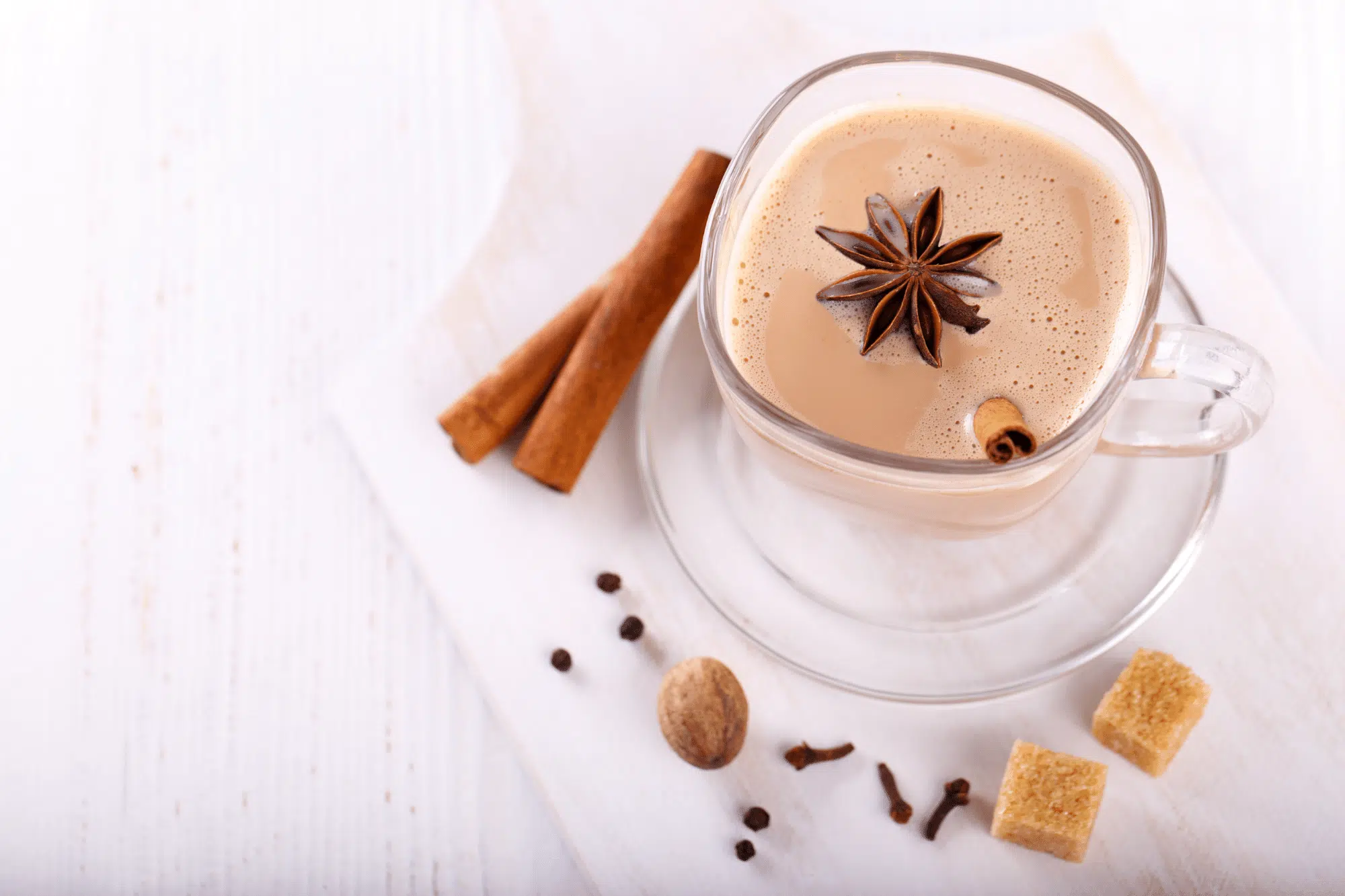





I started making spiced chai lattes at home after spending far too much on coffee shop versions that never quite had enough spice. This homemade version is aromatic, warming, and genuinely easy — just 10 minutes from kettle to cup.
What makes this chai latte special is the way whole cinnamon and freshly ground spices infuse directly into the milk, creating a depth of flavour you simply cannot get from a syrup or powder mix. The combination of cardamom, ginger, nutmeg, and cinnamon gives you that classic chai warmth without any one spice overpowering the others.
I use almond milk here for its natural sweetness and subtle nutty undertone, but you can swap in any milk you prefer. A drizzle of honey rounds everything out beautifully.
If you want a genuinely comforting drink that tastes like it came from your favourite café, this spiced chai latte is the one to make tonight.
Spiced Chai Latte Recipe (Ready in 10 Minutes)
Equipment
- Kettle or small pot (for boiling water)
- Small saucepan (1–2 quart)
- Fine mesh strainer or tea strainer
- Mug or heatproof cup
- Milk frother or small whisk
- Mortar and pestle (for crushing spices)
Ingredients
- 1½ cups almond milk or milk of choice
- 2 teaspoons loose-leaf black tea such as Assam or CTC, or 2 tea bags
- 1 stick cinnamon stick about 3 inches / 7.5 cm
- ½ teaspoon ground nutmeg or freshly grated
- ¼ teaspoon ground cardamom or 2–3 cardamom pods, lightly crushed
- ¼ teaspoon ground ginger or ½ inch / 1 cm fresh ginger, thinly sliced
- 1-2 teaspoons honey or maple syrup, to taste
- ¾ cup hot water for steeping the tea
Instructions
- Place the loose-leaf black tea (or tea bags) in a heatproof cup. Pour ¾ cup (180ml) of freshly boiled water over the tea and let it steep for 5 minutes. Strain and set the brewed tea aside.
- In a small saucepan, combine the almond milk, cinnamon stick, ground nutmeg, ground cardamom, ground ginger, and honey. Pour in the strained brewed tea and stir to combine.
- Set the saucepan over low heat and warm the mixture gently, stirring occasionally, for 3-4 minutes until it just begins to simmer. Do not let it reach a rolling boil or the milk may scald.
- Remove from the heat. Strain the chai latte through a fine mesh strainer into two mugs, discarding the cinnamon stick and any whole spices. Serve immediately, topped with a light dusting of ground cinnamon or nutmeg if desired.
Notes
- Storage: Best enjoyed fresh. If needed, refrigerate in a sealed jar for up to 24 hours and reheat gently on the stovetop — do not microwave or it may separate.
- Make-ahead: Brew a concentrated chai spice tea base (double the spices, half the water) and refrigerate for up to 3 days. Reheat with warm milk when ready to serve.
- Substitutions: Use oat milk for extra creaminess, coconut milk for a tropical twist, or regular whole milk for a richer, more traditional chai latte.
- Pro tip: Lightly crush the cinnamon stick and cardamom pods before simmering to release more essential oils and intensify the spice flavour.
- Sweetener: Adjust honey to taste, or substitute maple syrup for a vegan option. Start with 1 teaspoon per cup and add more as needed.
Nutrition
What Makes This Spiced Chai Latte Special
Most homemade chai latte recipes either use pre-made chai concentrate or throw a tea bag into warmed milk and call it done. This version takes a different approach: you brew a strong black tea base separately, then simmer it with whole spices and almond milk so each flavour develops properly.
The separate steeping step is key. Black tea needs boiling water to release its full tannin depth — something it cannot do when added directly to milk. By combining the brewed tea with spice-infused almond milk, you get two layers of flavour: the robust tea backbone and the aromatic warmth of cinnamon, cardamom, ginger, and nutmeg.
Using almond milk adds a subtle nuttiness and natural sweetness that complements the spices beautifully. The result is a chai latte that tastes more complex and more satisfying than anything you will get from a powder or syrup.
Equipment You’ll Need
- Kettle or small pot — You need freshly boiled water to steep the black tea properly. A kettle gives you the most control over the pour.
- Small saucepan (1-2 quart) — Essential for gently simmering the spiced milk and tea together. A smaller pan keeps the liquid deeper, which helps the spices infuse more effectively.
- Fine mesh strainer or tea strainer — Crucial for catching loose tea leaves, cinnamon stick fragments, and any ground spice sediment before serving. Without one, you will end up with gritty chai.
- Mug or heatproof cup — For steeping the tea initially and then for serving.
- Milk frother or small whisk (nice-to-have) — If you want that café-style frothy top layer, a handheld milk frother transforms the presentation. A small whisk works in a pinch — just whisk the hot chai vigorously for 30 seconds before pouring.
- Mortar and pestle (nice-to-have) — Lightly crushing whole cinnamon and cardamom pods before simmering releases significantly more aromatic oils than using pre-ground spices alone.
Tips for Best Results
- Use strong black tea. Assam or CTC (crush, tear, curl) black tea works best for chai because it holds its flavour against the spices and milk. Delicate teas like Darjeeling or Earl Grey will get lost.
- Do not boil the milk. Bring the spiced milk mixture to a gentle simmer only. Boiling almond milk can cause it to separate, and boiling dairy milk creates a skin and a slightly burnt flavour.
- Steep the tea in water first. Adding tea leaves directly to milk prevents proper extraction. The tannins in black tea need the high temperature and neutral pH of water to fully develop.
- Crush your whole spices. If using a cinnamon stick or whole cardamom pods, crack them open or lightly crush them before adding to the pan. This dramatically increases the surface area exposed to the hot liquid.
- Taste before serving. Chai is deeply personal. Taste the finished latte and adjust the honey — you may want more sweetness, or you may prefer it unsweetened to let the spices shine.
Substitutions and Variations
- Milk: Oat milk creates the creamiest dairy-free chai latte. Coconut milk adds a tropical richness. Whole dairy milk gives you the most traditional, full-bodied result.
- Sweetener: Replace honey with maple syrup for a vegan version, or use brown sugar or coconut sugar for a deeper caramel note. Jaggery is the traditional Indian sweetener for chai and adds a complex, earthy sweetness.
- Spices: Add 2-3 whole black peppercorns for a subtle heat that builds slowly. A single star anise adds a warm liquorice note. A tiny pinch of ground cloves intensifies the warming effect — use sparingly as clove can overpower.
- Stronger chai: Use 3 teaspoons of loose-leaf tea or add an extra tea bag for a bolder tea flavour that stands up to extra milk.
- Iced chai latte: Brew the chai as directed, let it cool to room temperature, then pour over a glass filled with ice. Add a splash of extra almond milk on top.
- Vanilla chai: Add ½ teaspoon of pure vanilla extract to the milk while simmering for a subtle vanilla-spice fusion.
Storage and Reheating
Spiced chai latte is best enjoyed immediately after making it, when the spices are most aromatic and the milk is freshly warmed. However, if you have leftover chai or want to prepare ahead:
- Refrigerate in a sealed glass jar or airtight container for up to 24 hours.
- Reheat gently on the stovetop over low heat, stirring frequently. Avoid the microwave — it tends to heat unevenly and can cause almond milk to separate.
- Make-ahead concentrate: Brew a double-strength chai spice tea (double the tea and spices with the same amount of water, no milk). Refrigerate this concentrate for up to 3 days. When ready to serve, warm your milk of choice separately and combine with the concentrate in a 1:1 ratio.
- Do not freeze the finished chai latte. The milk will separate and the texture becomes grainy when thawed.
What to Serve With This
A spiced chai latte pairs beautifully with foods that complement its warm, aromatic profile:
- Biscotti or shortbread cookies — The buttery crunch is perfect for dipping into the warm chai.
- Banana bread or pumpkin bread — Warm spiced quick breads echo the cinnamon and ginger in the chai.
- Croissants or pain au chocolat — The flaky, buttery pastry contrasts nicely with the spiced milk.
- Granola bars or oat bars — A wholesome mid-morning pairing that makes chai feel like a complete breakfast.
- Indian snacks like samosas or pakoras — For an authentic pairing, chai is traditionally served alongside savoury fried snacks in India.
Frequently Asked Questions
What is the difference between chai and chai latte?
Traditional chai (also called masala chai) is brewed by simmering tea leaves and spices directly in a mixture of water and milk, often on the stovetop. A chai latte is a Western adaptation that typically uses a chai concentrate or spiced tea combined with a larger proportion of steamed or frothed milk, resulting in a creamier, milder drink. This recipe falls somewhere between the two — it uses the latte ratio of milk to tea but infuses the spices directly for a more authentic flavour.
Can I use tea bags instead of loose-leaf tea?
Yes. Use 2 standard black tea bags (Assam or English Breakfast work well) in place of the 2 teaspoons of loose-leaf tea. Steep them in the hot water for 5 minutes, then squeeze and discard the bags before combining the brewed tea with the spiced milk. Loose-leaf tea generally produces a slightly stronger, more nuanced brew, but tea bags are perfectly acceptable.
Why does my chai latte taste weak or watery?
The most common reason is not steeping the tea long enough or using too much water relative to tea. Make sure you steep for a full 5 minutes — do not shortcut this step. Also ensure you are using a robust black tea variety like Assam or CTC. Delicate teas do not have enough body to stand up to the milk and spices. If it still tastes weak, add an extra teaspoon of tea leaves next time.
Can I make this chai latte vegan?
This recipe is already very close to vegan as written with almond milk. Simply replace the honey with maple syrup or agave nectar, and you have a fully vegan spiced chai latte with no compromise on flavour.
Is chai latte caffeinated?
Yes. Black tea contains approximately 40-70mg of caffeine per cup, depending on the variety and steeping time. This is roughly half the caffeine of a standard cup of coffee. If you want a caffeine-free version, substitute the black tea with rooibos tea — it has a naturally sweet, slightly malty flavour that works well with chai spices.
Can I use pre-ground spices or do I need whole spices?
Pre-ground spices work perfectly in this recipe and are what the ingredient list calls for. Whole spices (cinnamon sticks, cardamom pods, fresh ginger) will give you a slightly more aromatic result, but the convenience of ground spices is worth the minor trade-off. If using whole spices, crush them lightly before simmering to maximise flavour extraction.
The Story Behind Chai
Chai has been a cornerstone of Indian culture for centuries, though the spiced milk tea version most of us know — masala chai — became widespread in India during the early 20th century. British colonial tea companies promoted tea consumption in India, and local vendors (chai wallahs) began adding spices, milk, and sugar to make the often low-grade tea leaves more palatable and flavourful.
Each region of India developed its own spice blend. In Kashmir, chai is made with almonds and saffron. In Gujarat, it is lightly spiced with just ginger. The Western chai latte emerged in the 1990s when American coffee chains began adapting the concept with steamed milk and sweetened concentrates. This homemade version brings you closer to the real thing — whole spices simmered gently in milk and strong black tea, the way chai wallahs have been making it for generations.
If you try this spiced chai latte recipe, I would love to hear how it turned out! Leave a star rating and a comment below — your feedback helps other readers find recipes worth making.