


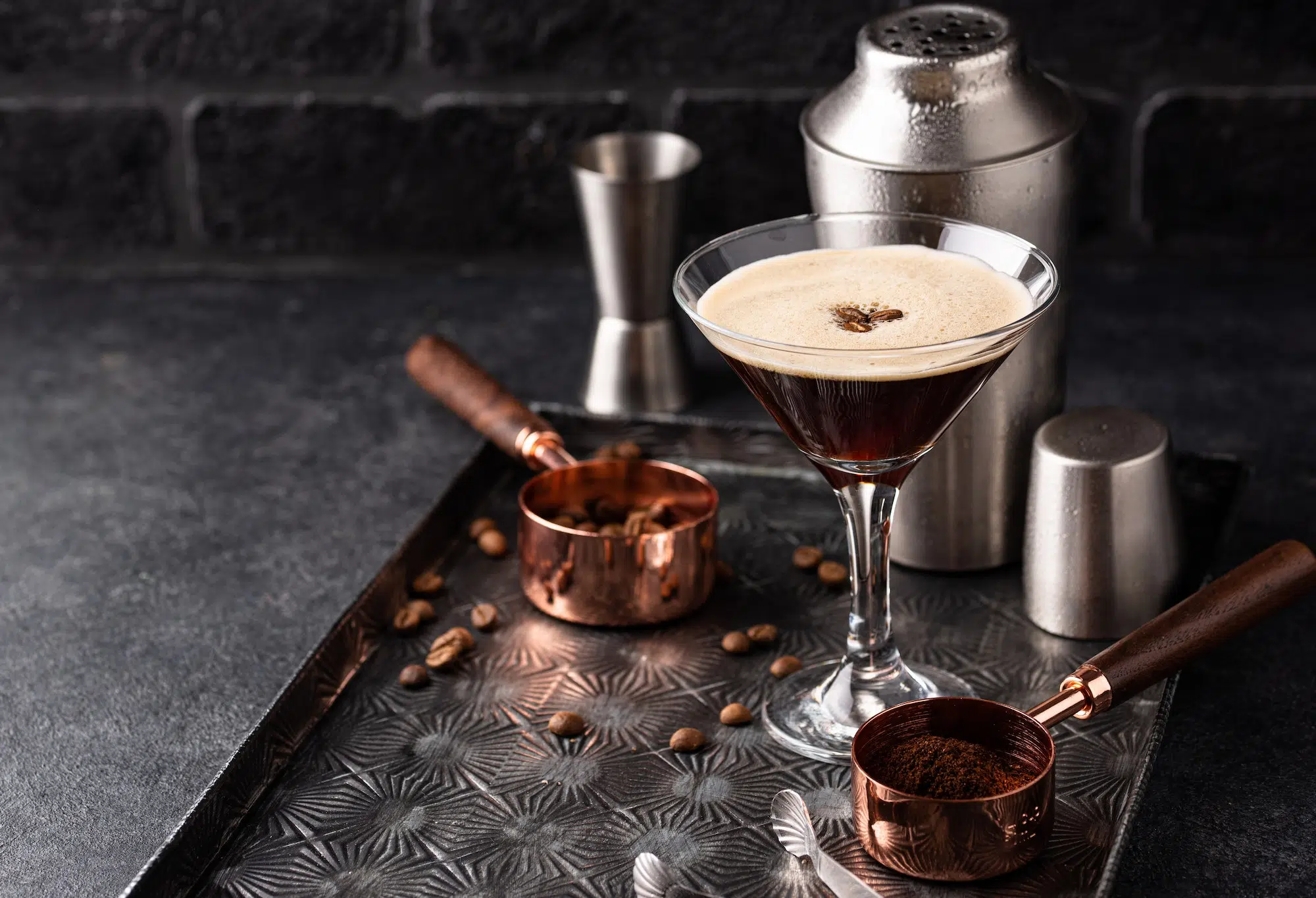

The espresso martini is hands-down my favourite cocktail to shake up at home. There’s something deeply satisfying about pouring that jet-black liquid into a chilled glass and watching the crema rise to form a perfect foam top — it feels like you’ve just pulled off a bar-quality trick in your own kitchen.
This recipe is the version I’ve made dozens of times for friends and dinner parties. It’s dead simple — five minutes, four ingredients, one shaker — but the details matter. Fresh espresso (not instant, not cold brew) is what gives you that thick, frothy crema. The ratio of vodka to Kahlúa to espresso is balanced so you get sweetness without it tasting like dessert, and a proper coffee hit without bitterness taking over.
A few things that make this version reliable every time:
- The espresso is brewed fresh and added while still hot — this creates more foam when shaken with ice
- The sugar syrup rounds out any harsh edges without making it cloying
- A hard 15-second shake is all it takes to build that signature crema
If you love coffee and you love cocktails, this is the recipe that brings both together perfectly.
Espresso Martini
Equipment
- Cocktail shaker
- Hawthorne strainer or fine mesh strainer
- Jigger or measuring cup
- Coupe glass or martini glass
- Espresso machine, Moka pot, or AeroPress
Ingredients
- 3 fl oz vodka
- 1 fl oz Kahlúa
- 1 fl oz espresso freshly brewed
- ½ fl oz sugar syrup or 1 teaspoon white sugar dissolved in 1 teaspoon hot water
- 1¼ cups ice cubes
- 3 whole coffee beans for garnish
Instructions
- Fill a cocktail shaker halfway with ice cubes.
- Add the vodka, Kahlúa, freshly brewed espresso, and sugar syrup to the shaker. Seal and shake vigorously for 15 seconds until the outside of the shaker feels ice-cold and you can hear the ice breaking down.
- Strain through a Hawthorne strainer (or fine mesh strainer) into a chilled coupe or martini glass. Pour slowly to allow the crema to rise to the top.
- Gently place 3 coffee beans on the crema in a triangular pattern. Serve immediately while the foam is at its peak.
Notes
- Storage: Espresso martinis are best served immediately — the crema begins to collapse within minutes. Do not batch and refrigerate.
- Make-ahead: Brew espresso up to 30 minutes ahead and leave at room temperature. Do not refrigerate it, as cold espresso produces less foam when shaken.
- Substitution: No Kahlúa? Use Tia Maria or any coffee liqueur. For a dairy-free sweet option, swap sugar syrup for vanilla syrup.
- Sweetness control: Start with ¼ fl oz sugar syrup and taste after shaking — add more if needed. Kahlúa already contributes significant sweetness.
- Pro tip: Shake hard for a full 15 seconds — the vigorous shaking with hot espresso and ice is what creates the signature thick crema layer on top.
Nutrition
What Makes This Espresso Martini Special
The espresso martini lives or dies on two things: the quality of the espresso and the shake technique. This recipe uses freshly brewed espresso — not instant coffee, not cold concentrate — because the natural oils and crema in fresh espresso are what create that thick, velvety foam layer on top of the glass.
The ratio here is deliberately spirit-forward at 3:1:1 (vodka to Kahlúa to espresso). This keeps the cocktail from becoming too sweet or syrupy, which is the most common mistake with espresso martinis. The half ounce of sugar syrup is just enough to smooth out the bitterness without masking the coffee flavour.
What you end up with is a cocktail that’s rich, aromatic, and properly caffeinated — the kind that makes your guests ask for the recipe every single time.
Equipment You’ll Need
- Cocktail shaker — essential for building the crema. A Boston shaker or cobbler shaker both work, but you need a proper seal to shake hard without leaking.
- Hawthorne strainer or fine mesh strainer — keeps ice shards and any espresso grounds out of your glass. A fine mesh strainer gives you the cleanest pour.
- Jigger or measuring cup — the balance of this cocktail depends on accurate measurements. Eyeballing the vodka will throw off the sweetness ratio.
- Coupe glass or martini glass — the wide, open shape shows off the crema layer beautifully. Chill it in the freezer for 10 minutes before serving for the best result.
- Espresso machine, Moka pot, or AeroPress — you need a method that produces concentrated, crema-rich espresso. A Moka pot is the most affordable option that still delivers proper results.
Tips for Best Results
- Use hot espresso, not cold: Freshly brewed espresso straight from the machine produces significantly more foam when shaken with ice. The temperature contrast is what aerates the cocktail.
- Shake hard for a full 15 seconds: A gentle swirl will not cut it. You want the ice to break down partially, diluting the drink slightly while whipping air into the espresso oils to create that crema.
- Chill your glass in advance: A warm glass will melt the crema faster. Pop your coupe or martini glass in the freezer for at least 10 minutes before you start making the cocktail.
- Double strain for a clean finish: Pour through both the shaker’s built-in strainer and a fine mesh strainer to catch any tiny ice chips or espresso sediment.
- Serve immediately: The crema starts to collapse within 2-3 minutes. Make this cocktail last and serve it first — never let it sit on the bench while you prep other drinks.
Substitutions and Variations
- No Kahlúa? Tia Maria or Mr Black coffee liqueur both work well. Mr Black is less sweet, so you may want to increase the sugar syrup to ¾ fl oz.
- No espresso machine? A Moka pot or AeroPress produces espresso-strength coffee that works perfectly. Avoid drip coffee or French press — it’s too weak and won’t create foam.
- Want it sweeter? Add an extra ¼ fl oz of sugar syrup or use vanilla syrup for a slightly different flavour profile.
- Want it stronger? Reduce the Kahlúa to ¾ fl oz and increase the espresso to 1.5 fl oz. This shifts the balance towards a drier, more coffee-forward drink.
- Decaf version: Use decaf espresso beans. The technique and result are identical — you just won’t be wired at midnight.
- Salted caramel espresso martini: Replace the sugar syrup with salted caramel syrup and add a tiny pinch of flaky sea salt on top of the crema.
Storage and Reheating
An espresso martini cannot be stored — the crema collapses within minutes and the ice dilution changes the balance if it sits. Always make this cocktail fresh and serve immediately.
If you’re making multiple espresso martinis for a party, you can pre-batch the vodka, Kahlúa, and sugar syrup in a bottle or jug and refrigerate it for up to 24 hours. When you’re ready to serve, brew the espresso fresh, add the pre-mixed spirits and espresso to a shaker with ice, and shake. This cuts your per-drink time to about 30 seconds.
What to Serve With This
The espresso martini is a natural after-dinner cocktail — its caffeine kick and rich sweetness pair beautifully with desserts. Try it alongside:
- Tiramisu — the coffee-on-coffee pairing is indulgent without being redundant
- Dark chocolate truffles — the bitterness of dark chocolate mirrors the espresso notes
- Salted caramel brownies — the salt and caramel cut through the cocktail’s sweetness
- A cheese board with aged cheddar or Manchego — the savoury contrast is unexpectedly brilliant
- Vanilla panna cotta — the creamy, delicate texture lets the cocktail be the star
Frequently Asked Questions
Can I use instant coffee instead of espresso?
You can, but the result will be noticeably different. Dissolve 2 teaspoons of instant coffee in 1 fl oz (30ml) of hot water and let it cool slightly. It will produce a thinner crema and less complex flavour than freshly brewed espresso, but it works in a pinch.
Why doesn’t my espresso martini have foam on top?
The three most common reasons are: using cold or old espresso (fresh and hot creates the most foam), not shaking hard or long enough (you need a full 15 seconds of vigorous shaking), or using too little espresso relative to the other ingredients. Make sure your ratio is correct and shake like you mean it.
What vodka is best for an espresso martini?
Use a clean, neutral vodka — this is not the cocktail for a heavily flavoured or botanical vodka. A mid-range vodka like Absolut, Ketel One, or Smirnoff works perfectly. Premium vodka makes very little difference here because the espresso and Kahlúa dominate the flavour profile.
Why are there three coffee beans on top?
The three coffee beans garnish is a tradition borrowed from the Italian custom of serving sambuca con la mosca (sambuca with the fly). The three beans are said to represent health, wealth, and happiness. Beyond symbolism, they add a subtle aroma as you bring the glass to your lips.
Can I make espresso martinis in a batch for a party?
You can pre-mix the vodka, Kahlúa, and sugar syrup up to 24 hours ahead and refrigerate. However, the espresso must be brewed fresh for each round of drinks — pre-brewed espresso loses its oils and won’t produce crema. Shake each serving individually with fresh espresso and ice for the best foam.
Is an espresso martini actually a martini?
Not in the traditional sense. A classic martini is gin and vermouth. The espresso martini was invented by London bartender Dick Bradsell in 1983 when a customer asked for a drink that would “wake me up and then mess me up.” It’s called a martini simply because it’s served in a martini glass.
The Story Behind the Espresso Martini
The espresso martini was created in 1983 by legendary London bartender Dick Bradsell at the Soho Brasserie. The story goes that a young model (widely rumoured to be Naomi Campbell, though Bradsell never confirmed it) walked up to the bar and asked for a cocktail that would “wake me up and then mess me up.” Bradsell combined vodka with freshly brewed espresso from the bar’s new coffee machine, added coffee liqueur and sugar, and the Vodka Espresso was born.
The drink was later renamed the Espresso Martini as the cocktail world’s obsession with the martini glass grew through the 1990s. It became a staple in London cocktail bars before crossing the globe. In Australia, the espresso martini found its spiritual home — a nation of dedicated coffee drinkers embraced it as the go-to after-dinner cocktail, and it has dominated bar menus across Sydney, Melbourne, and beyond for over a decade. Today it’s one of the most ordered cocktails in the world.
If you give this espresso martini a try, I’d love to hear how it turned out — drop a star rating and leave a comment below to let me know!


