





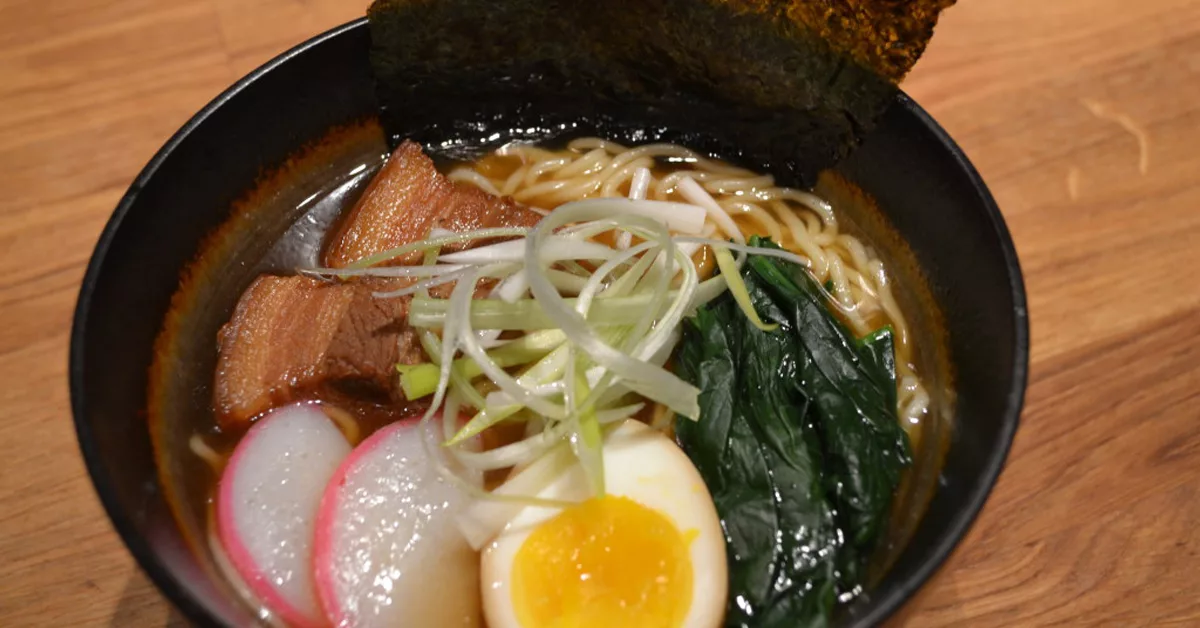
This classic shoyu ramen is my go-to when I want a bowl of soup that feels like a warm hug from the inside out. Unlike the heavier, opaque tonkotsu style, shoyu ramen lets the soy-seasoned broth shine — clear, deeply savoury, and impossibly layered in flavour.
What makes this version special is that you’re building two separate stocks — a slow-simmered chicken and pork bone broth and a delicate kombu-bonito dashi — then combining them for a broth that hits every umami note. The braised pork belly is cooked low and slow until it practically melts on your tongue, and the overnight marinated eggs add that perfect jammy richness.
Yes, this is a weekend project. The bones simmer for four hours, the pork belly braises for three, and the eggs need time in their marinade. But every single component can be made ahead, which means assembly day is a breeze — just heat, ladle, and top. If you’ve ever wanted to make restaurant-quality ramen at home, this is the recipe to start with.
Classic Shoyu Ramen with Braised Pork Belly
Ingredients
Braised Pork Belly:
- 1 pound pork belly cut into eight equal pieces
- 4 cloves garlic lightly smashed
- 1 piece ginger rinsed, halved, and lightly smashed
- 4 stalks scallions washed and trimmed
- ½ cup sake
- 1 ½ cups warm water
- 1 piece dried kombu (2×2 inch)
- 2 tablespoons brown sugar
- 4 tablespoons soy sauce
- 1 tablespoon mirin
Soup Base:
- 2 pounds chicken bones or wings
- 2 pounds pork spareribs
- 2 bunches scallions cleaned and trimmed
- 1 piece ginger (about 2 inches / 5cm), halved and lightly smashed
- 1 head garlic halved horizontally
- ½ cup soy sauce
- ¼ cup sake
- 2 tablespoons brown sugar
Marinated Eggs:
- 2 large eggs
- 1 tablespoon sake
- 1 tablespoon soy sauce
- 1 tablespoon mirin
Dashi Stock:
- 2 pieces dried kombu (6×5 inch)
- 1 ½ ounces bonito flakes
- 8 cups water
Assembly:
- 4 portions Ramen noodles (approximately 5 oz / 140g each)
- Toppings such as thinly sliced scallion, sliced fish cake, toasted nori, and boiled spinach
- Seasonings such as chilli oil and shichimi togarashi
Instructions
Marinated Eggs
- Bring a small pot of water to a boil. Add the eggs and cook for 7 minutes on low heat. Remove and place in a dish of ice water. Peel the eggs and put them in a small plastic bag.
- In a small pot over medium heat, warm the sake, soy sauce, and mirin until the mixture just begins to simmer — about 1 minute. This cooks off the raw alcohol. Allow to cool for 5 minutes before pouring into the bag with the eggs.
- Seal the bag tightly, making sure the eggs have adequate contact with the marinade. Allow to settle in the refrigerator overnight or at room temperature for 4-5 hours.
- Remove the eggs from the marinade and cut them in half lengthwise when ready to use.
Soup Base
- In a large pot, combine pork and chicken bones and fill them with water. Bring the water to a boil over high heat.
- When the water begins to boil, drain it through a colander or mesh strainer. Remove the water. Freshwater should be used to rinse the bones thoroughly.
- Return the bones, scallions, garlic, and ginger to a large clean pot. Add enough fresh water to cover the bones by about 2 inches (5cm).
- Reduce the heat to medium-low and continue to simmer for 4 hours, or until the stock has reduced to about 1 quart.
- Using a fine-mesh strainer, strain the broth into a clean pot and discard the solids. Add the soy sauce, sake, and brown sugar to the broth. Bring to a boil over high heat, stir to dissolve the sugar, then remove from the heat. Allow to cool before refrigerating — the broth will keep for up to 5 days or can be frozen for up to 3 months.
Braised Pork Belly
- In a pot, combine the pork belly, smashed garlic, garlic, and scallions. Add enough water to cover and bring to a boil over high heat.
- Reduce the heat to medium-low and simmer gently for about 2-2.5 hours, skimming any scum that rises to the surface, until the pork belly is very tender when pierced with a chopstick. Add warm water as needed to keep the pork submerged.
- Transfer the pork to a clean pot and add the sake, water, kombu, brown sugar, and soy sauce. Bring to a boil over high heat, then reduce to medium-low heat and simmer until most of the liquid has been reduced, turning the pieces occasionally.
- Add mirin, and cook another minute until absorbed. Remove pork from heat and reserve until ready to use.
Dashi Stock
- Soak the kombu in water for 30 minutes. Bring to a boil over high heat, then remove the kombu.
- Remove from the heat and top with bonito flakes. Allow for a 15-minute steep before straining the stock. Solids must be discarded and reserve stock until ready to use.
Assembly
- In a large pot, combine the soup base broth and dashi stock in a roughly 1:1 ratio (about 1 cup / 240ml of each per bowl). Heat over medium-high until steaming hot. Taste and adjust soy sauce or salt as needed. Cook the noodles according to the package directions, drain well, and divide among warmed bowls. Ladle the hot broth over the noodles.
- Serve with chosen toppings.
Nutrition
What Makes This Shoyu Ramen Special
Most shortcut ramen recipes rely on a single stock, but this classic shoyu ramen builds its broth from two separate foundations — a rich, collagen-heavy chicken and pork bone stock and a clean, oceanic kombu-bonito dashi. When you combine them, you get a broth with extraordinary depth: meaty and full-bodied from the bones, but lifted and aromatic from the dashi. That layered quality is what separates a truly great bowl of shoyu ramen from a merely good one.
The braised pork belly is another level entirely. Rather than the typical chashu roll, this recipe slow-simmers thick-cut belly pieces until they’re spoon-tender, then glazes them in a soy-sake-mirin reduction. Each piece absorbs that sweet-savoury lacquer and practically melts into the hot broth when you serve it.
And then there are the marinated eggs — soaked overnight in a warm sake-soy-mirin bath until the whites turn amber and the yolks stay perfectly jammy. Every component earns its place in the bowl.
Tips for Best Results
- Keep the bone broth at a gentle simmer, never a rolling boil. A shoyu broth should be clear and golden. If you boil it hard, the fat emulsifies into the liquid and you’ll end up with a cloudy, greasy result closer to tonkotsu.
- Skim the scum religiously during the first 30 minutes. The grey foam that rises contains impurities from the bones. Removing it early keeps the final broth clean-tasting.
- Use a timer for the marinated eggs. Exactly 7 minutes in gently boiling water gives you a set white with a custardy, slightly runny yolk. Even 30 seconds too long pushes you into hard-boiled territory.
- Warm your serving bowls. Ramen cools quickly. Rinse your bowls with boiling water just before ladling the broth — this keeps everything piping hot while you eat.
- Cook noodles last, and only when everything else is ready. Fresh ramen noodles take 60-90 seconds. They start absorbing broth immediately, so every second counts between draining and serving.
Substitutions and Variations
- Pork belly: Boneless pork shoulder works well if you prefer a leaner cut — braise it the same way but allow an extra 30 minutes for it to become fully tender.
- Chicken bones: A whole chicken carcass from a roast dinner makes an excellent substitute and adds a slightly deeper roasted flavour to the broth.
- Sake: Dry sherry is the closest substitute if sake is unavailable. Avoid cooking wine labelled “sake” — it often contains salt and additives.
- Mirin: If you can’t find hon-mirin (true mirin), use 1 tablespoon of sake mixed with 1 teaspoon of sugar as a replacement per tablespoon of mirin called for.
- Noodles: Fresh ramen noodles from a Japanese grocery are ideal, but dried ramen noodles (not instant) or even thick Chinese wheat noodles work. For a gluten-free option, try rice noodles — the texture differs but the broth carries the dish.
- Vegetarian version: Skip the pork and chicken bones entirely. Double the dashi, add dried shiitake mushrooms to the dashi soak, and use firm tofu or roasted king oyster mushrooms as toppings.
Storage and Reheating
Broth: Cool completely and store in an airtight container in the fridge for up to 5 days. For longer storage, freeze in portion-sized containers for up to 3 months. The fat will solidify on top when chilled — leave it as a protective layer and stir it back in when reheating.
Braised pork belly: Store in its reduced glaze in a sealed container in the fridge for up to 4 days. Reheat gently in a small pan with a splash of water or directly in the hot broth.
Marinated eggs: Keep in the fridge in their marinade for up to 3 days. The longer they sit, the deeper the colour and flavour penetrate. Do not freeze.
Dashi stock: Refrigerate for up to 3 days or freeze for up to 2 months. Dashi loses its delicate aroma over time, so use it sooner rather than later.
Noodles: Always cook fresh at serving time. Cooked ramen noodles stored in broth become mushy and swollen. If you must prep ahead, cook, drain, toss lightly with a drop of sesame oil, and refrigerate in a sealed bag for up to 1 day. Reheat by dunking briefly in boiling water.
What to Serve With This
Shoyu ramen is a complete meal in itself, but a few sides complement it beautifully:
- Gyoza (Japanese pan-fried dumplings) — the crispy bottoms and juicy pork filling are a classic ramen-shop pairing.
- Edamame with flaky sea salt — a light, protein-rich snack to munch while the ramen cools to eating temperature.
- Japanese pickled vegetables (tsukemono) — the tangy crunch of pickled daikon or cucumber cuts through the richness of the pork belly.
- Karaage (Japanese fried chicken) — if you want to go all-in on a Japanese feast, karaage alongside ramen is a combination that never disappoints.
- A cold Japanese beer or chilled barley tea — both cleanse the palate between rich, savoury slurps.
Frequently Asked Questions
Can I use store-bought broth instead of making the bone stock from scratch?
You can, but the result will be noticeably thinner. If you go this route, use a high-quality unsalted chicken stock and reduce it by half before combining with the dashi and seasonings. The homemade bone broth contributes collagen and body that boxed broth simply cannot replicate.
Why do I need both a bone broth and a dashi stock?
The bone broth provides richness, body, and meaty depth. The dashi adds a clean umami hit from the kombu and bonito that rounds out the flavour. Combining them creates the signature layered taste of a proper shoyu ramen — something neither stock can achieve alone.
How do I get the perfect jammy egg yolk?
The key is exactly 7 minutes in gently boiling water followed by an immediate ice bath to stop the cooking. Start timing from the moment the eggs go into the boiling water. Use eggs straight from the fridge — room temperature eggs will overcook with this timing.
Can I make this ramen the same day instead of marinating eggs overnight?
Yes. If you’re short on time, marinate the eggs at room temperature for 4-5 hours. The colour and flavour won’t penetrate as deeply, but you’ll still get a noticeable soy-mirin seasoning on the whites and a beautiful soft yolk inside.
My broth turned cloudy — what went wrong?
A cloudy shoyu broth usually means the stock boiled too vigorously. Shoyu ramen broth should simmer gently with only small bubbles breaking the surface. High heat emulsifies the fat into the liquid, turning it opaque. You can partially rescue a cloudy broth by straining it through cheesecloth, but prevention is easier than correction.
How many noodles should I use per serving?
A standard portion of fresh ramen noodles is about 5 ounces (140g) per bowl. If using dried noodles, about 3.5 ounces (100g) per serving is equivalent since they expand during cooking.
Can I freeze assembled bowls of ramen?
No — noodles, eggs, and toppings do not freeze well once assembled. Instead, freeze the broth and braised pork belly separately. When you want ramen, thaw the broth, reheat it, make fresh dashi if possible, cook fresh noodles, and assemble. This approach gives you ramen-shop quality in about 15 minutes on a weeknight.
The History of Shoyu Ramen
Shoyu ramen is widely considered the original style of Japanese ramen, with roots tracing back to the early 1900s in Tokyo. The word “shoyu” simply means soy sauce, and this style developed when Japanese cooks began seasoning Chinese-influenced wheat noodle soups with their own local soy sauce, creating something entirely new.
The clear, soy-seasoned broth became the standard across Tokyo ramen shops for decades before regional variations like miso ramen (Sapporo), tonkotsu (Hakata), and shio ramen emerged. To this day, when many Japanese people say “ramen” without any qualifier, they’re picturing a bowl of shoyu ramen — golden broth, wavy noodles, a few slices of pork, a halved marinated egg, and a sheet of nori leaning against the rim.
Making it at home is a labour of love, but it connects you to over a century of Japanese culinary tradition — and the result is leagues beyond anything that comes in a packet.
If you give this classic shoyu ramen a try, I’d love to hear how it turned out — drop a star rating and leave a comment below to let me know!


