




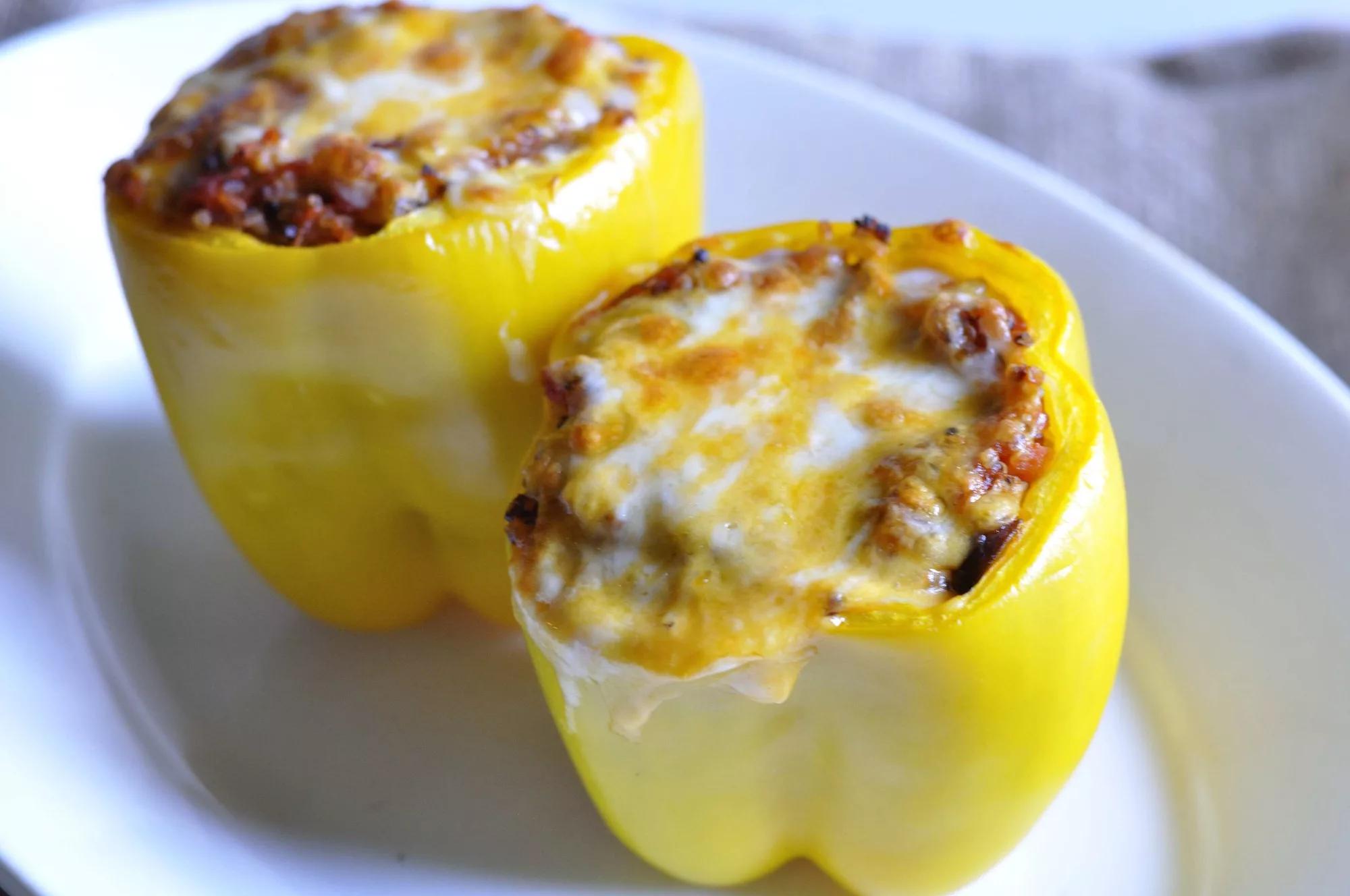
These stuffed peppers swap the usual dinner filling for breakfast sausage, scrambled eggs, sautéed mushrooms and onions, and melted cheddar — all baked inside a softened bell pepper. The recipe makes 14 peppers at once, which is the real reason to make it: one cooking session covers breakfast for a full week, or feeds a hungry crowd without any last-minute scrambling.
Before you start
Two things make or break this recipe. First, the boiling time on the peppers is not a suggestion — it directly affects how the finished pepper eats. Peppers going straight to the table need only 2–3 minutes; they’ll stay firm enough to hold without going limp. Peppers destined for the fridge and microwave later need a full 5 minutes so they soften properly on reheat rather than tasting raw. Second, pull the scrambled eggs off the heat while they still look slightly underdone. They go into a hot filling and then into a 350°F oven, so any eggs that are fully set at the skillet stage will be rubbery by the time the cheese melts. Slightly soft eggs going in means perfectly cooked eggs coming out.
Storage and reheating
Cooked stuffed peppers keep well in the fridge for up to 4 days in an airtight container. For longer storage, freeze them individually on a baking sheet until solid, then transfer to freezer bags — they’ll hold for up to 2 months. Reheat refrigerated peppers in the microwave for 90 seconds to 2 minutes, checking at the halfway point. Frozen peppers reheat best if thawed overnight in the fridge first; from frozen, microwave on 50% power for 3–4 minutes to avoid a cold center. Skip reheating in the oven for single peppers — it takes 15 minutes and dries out the eggs when the microwave does the job in under two.
What can go wrong
- Peppers tip over in the baking dish. Large bell peppers vary in shape and some won’t stand flat. Trim a very thin slice off the bottom of each pepper (without cutting through) to create a flat base. A muffin tin also works well for keeping a full batch upright at once.
- The filling is watery. Mushrooms release a lot of liquid. Cook them until that liquid has fully evaporated before adding the eggs — if you rush this step, the excess moisture soaks into the filling and makes the peppers soggy.
- Cheese slides off before it melts. If the filling is mounded too high, the cheese has nothing to grip. Leave about a quarter inch of space at the top of each pepper and press the filling down lightly before adding cheese so it sits in a slight hollow.
- Uneven cooking across 14 peppers. Peppers differ in wall thickness and size. If some look done and others don’t after 15 minutes, tent the finished ones loosely with foil and give the rest another 3–5 minutes rather than pulling the whole batch early.
- Filling is underseasoned. Sausage varies a lot in salt content by brand. Taste the sausage-and-vegetable mixture before folding in the eggs, and adjust salt and pepper at that point — it’s much harder to fix once everything is stuffed and baked.
Breakfast Stuffed Peppers
Ingredients
- 15 large bell peppers any colour (14 for stuffing, 1 diced for the filling)
- 1 large onion diced
- 8 ounces white mushrooms or cremini mushrooms, sliced
- 2 pounds breakfast sausage
- 14 large eggs (one per bell pepper)
- 8 ounces shredded cheddar cheese (or your preferred melting cheese)
- ½ cup soy milk (added to eggs before scrambling)
- 1 tablespoon cooking oil (vegetable or olive oil, for cooking the sausage and vegetables)
- salt to taste
- pepper to taste
Instructions
- First things first, you must remove the tops of the peppers and get the insides taken out.
- Once cleaned, put them into a big pot of water to boil. You will want to start them off in cold water and then bring it to a boil. If you plan to eat the stuffed peppers right away for breakfast, I would only boil for about 2-3 minutes and then remove them. If you’re storing it for later and then reheating in the microwave, I will simmer them for at least 5 minutes to make them nice and soft and not taste raw when eating them.
- While the peppers are boiling, chop the onion, bell pepper and mushrooms.
- Heat 1 tablespoon of cooking oil in a large skillet over medium-high heat. Add the breakfast sausage, breaking it into crumbles with a wooden spoon, and cook for 6-8 minutes until browned and no longer pink. Add the diced onion, diced bell pepper, and sliced mushrooms. Cook for 4-5 minutes until the vegetables are softened.
- Once the meat/onion mixture is cooked to your liking, remove from heat and dump into another bowl. Save for later.
- In the same pan, whisk together the 14 eggs and 1/2 cup (120ml) soy milk with a pinch of salt and pepper. Scramble over medium-low heat until just set but still slightly soft — they will continue cooking in the oven. Fold the scrambled eggs into the sausage, onion, and mushroom mixture. Spoon the filling into each boiled pepper and top generously with shredded cheese.
- Place the stuffed peppers upright in a baking dish or muffin tin. Bake at 350°F / 175°C (180°C fan-forced) for 15 minutes, or until the cheese is golden and bubbly.
- Serve while hot.
Nutrition
Frequently asked questions
Can I make these the night before and bake them in the morning?
Yes — assemble the stuffed peppers fully, cover the baking dish with plastic wrap, and refrigerate overnight. Pull them out while the oven preheats and add 5 minutes to the bake time since they’ll be going in cold.
Can I use a different protein instead of breakfast sausage?
Ground turkey, chorizo, or diced ham all work. If you use ham, skip the browning step and just sauté it briefly with the vegetables since it’s already cooked.
Do the peppers need to be pre-boiled, or can I skip that step?
Skipping the boil means the pepper walls stay tough and slightly bitter even after baking. The short boil is what makes them tender enough to eat easily, especially if you’re serving guests who might not expect a crunchy pepper.
What’s the best way to scale this up for a large group?
The recipe already makes 14 peppers, but you can double the filling and run two baking dishes at once on separate oven racks. Rotate the dishes halfway through baking so both get even heat.
Can I use regular dairy milk instead of soy milk in the eggs?
Any milk works here — whole milk, 2%, oat milk, or almond milk. The small amount (half a cup across 14 eggs) is mainly there to add a little creaminess, so the difference between varieties is minimal.
More recipes to try
- Fluffy Buttermilk Pancakes
- Gourmet Avocado Toast with Poached Egg
- Authentic New York-Style Bagels
- Golden Buttermilk Waffles


