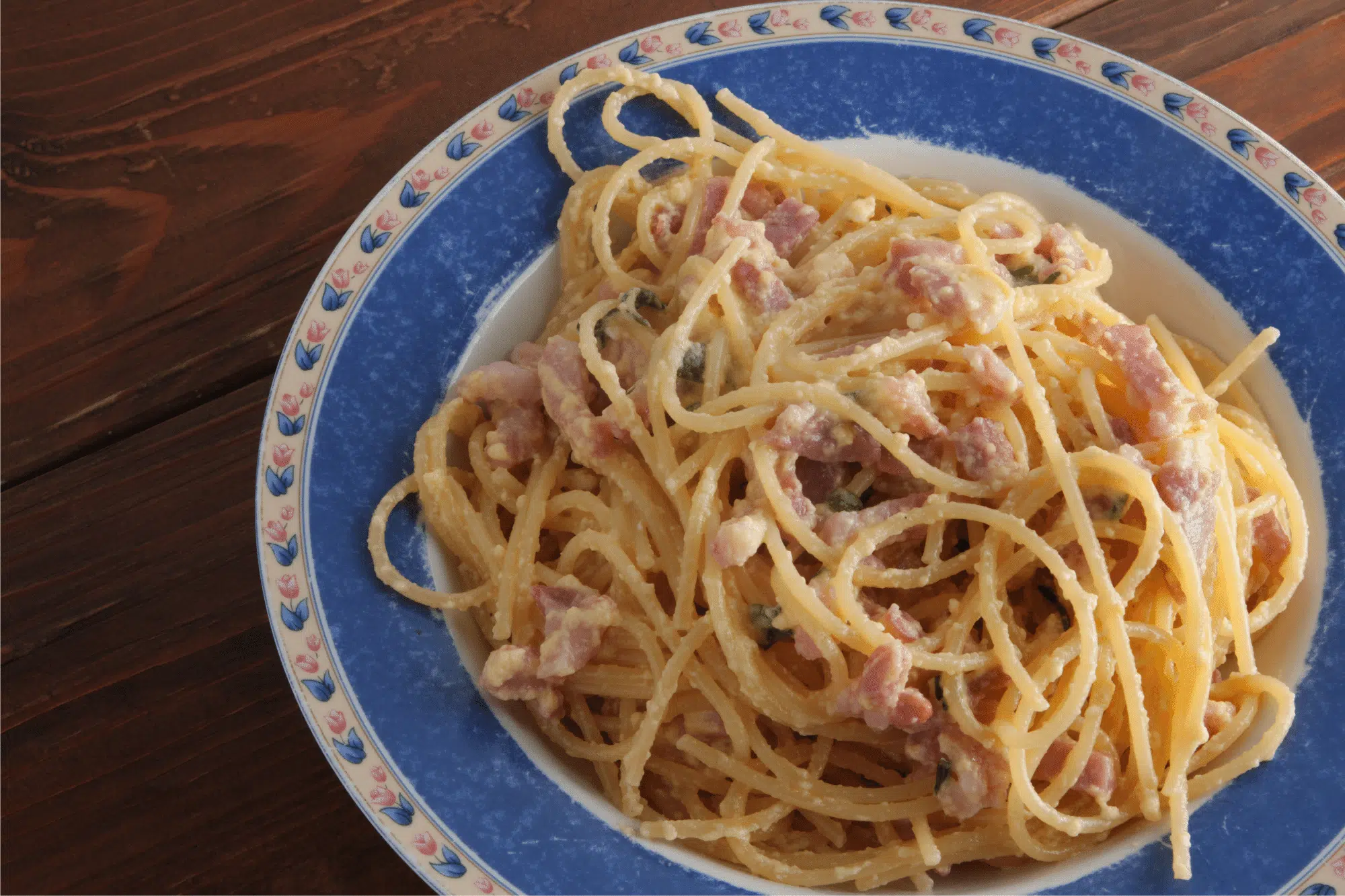
Some mornings call for something more substantial than toast, and this breakfast pasta alla carbonara delivers exactly that. It’s a bacon-and-egg breakfast reimagined as a silky bowl of spaghetti, coated in a rich sauce made from nothing more than beaten eggs and freshly grated parmesan.
I love this recipe because it skips the cream entirely. The eggs do all the heavy lifting, clinging to hot pasta and transforming into a glossy, velvety coating in seconds. Add crispy chopped bacon, softened onions, and a generous crack of black pepper, and you have a meal that feels indulgent but comes together in just 20 minutes.
This is my go-to version — more American diner than Roman trattoria — using smoked bacon instead of guanciale and parmesan instead of pecorino. It’s forgiving, fast, and endlessly satisfying. If you’ve never eaten pasta for breakfast, this is the recipe that will convert you.
Breakfast Pasta Alla Carbonara (Ready in 20 Min)
Equipment
- Large pot (for boiling pasta)
- Heavy skillet (12-inch / 30cm)
- Tongs or pasta fork
- Large mixing bowl
- Microplane or box grater (for parmesan)
Ingredients
- 1 pound spaghetti fresh
- 10 slices bacon chopped
- 1 tablespoon butter
- 2 cloves garlic minced
- 1 medium white onion chopped
- 5 medium eggs beaten
- 1 cup parmesan freshly grated
- 2 tablespoons parsley fresh, chopped
- 1 teaspoon black pepper freshly ground, or to taste
- 1 pinch salt for pasta water
Instructions
- In a heavy skillet, fry the bacon in the butter until just browned and crispy. Remove from the pan and reserve.
- Add the minced garlic, cook for 1 to 2 minutes until golden, and then add the onions. Cook for 5 to 7 minutes to soften.
- Meanwhile, in a mixing bowl, whisk together the beaten eggs and grated parmesan until smooth — this is your egg mixture. Boil a large pot of salted water and cook the pasta to al dente. Reserve 1 cup (240ml) of pasta water, then drain the pasta and return it to the pot off the heat. Immediately add the onions and garlic to the hot pasta and toss. Pour in the egg mixture and toss vigorously for 30–60 seconds — the residual heat will cook the eggs into a silky sauce. If the sauce is too thick, add a splash of reserved pasta water. Stir in the crispy bacon, parsley, and a generous amount of freshly ground black pepper. Serve immediately.
Notes
- Storage: Refrigerate leftovers in an airtight container for up to 2 days. The egg sauce will thicken as it cools — reheat gently over low heat with a splash of pasta water to restore creaminess. Not recommended for freezing.
- Make-ahead: Chop the bacon and onion the night before and store covered in the fridge. Beat the eggs and grate the parmesan in advance and refrigerate separately.
- Substitutions: Swap bacon for pancetta or guanciale for a more traditional flavour. Use pecorino Romano instead of parmesan, or a 50/50 blend of both. Swap spaghetti for rigatoni or penne.
- Pro tip: Reserve 1 cup of starchy pasta water before draining. If the sauce looks too thick or clumpy, add a splash of pasta water and toss vigorously — the starch helps emulsify the egg and cheese into a smooth, glossy coating.
- Temperature control: Remove the pot from the heat completely before adding the egg mixture. If the pan is too hot, the eggs will scramble rather than form a creamy sauce.
Nutrition
What Makes This Breakfast Pasta Alla Carbonara Special
Most carbonara recipes land squarely in the dinner category, but this version leans into what carbonara already is at its core — a bacon and egg dish. By reframing it as breakfast, you get a meal that’s more satisfying than a plate of scrambled eggs but just as fast to make.
The key difference here is the no-cream approach. Many American carbonara recipes add heavy cream, but this version relies entirely on beaten eggs and parmesan to create the sauce. When you toss the hot pasta with the egg mixture off the heat, the residual warmth gently cooks the eggs into a glossy, custard-like coating that clings to every strand of spaghetti. It’s richer-tasting than a cream sauce but actually lighter.
Using smoked bacon instead of guanciale gives the dish a distinctly breakfast character — that familiar smoky, crispy bacon flavour that pairs so naturally with eggs in the morning.
Equipment You’ll Need
- Heavy skillet (12-inch / 30cm) — A heavy-bottomed skillet renders the bacon fat slowly and evenly, giving you crispy pieces without burning. A thin pan will create hot spots that scorch the garlic.
- Large pot — You need a full pot of boiling salted water so the spaghetti has room to move and cooks evenly to al dente.
- Tongs or pasta fork — Essential for tossing the hot pasta with the egg mixture quickly and evenly. A spoon won’t distribute the sauce as well.
- Large mixing bowl — For whisking the eggs and parmesan together before adding to the pasta.
- Microplane or box grater — Finely grated parmesan melts into the egg mixture seamlessly. Pre-grated parmesan from a bag contains anti-caking agents that prevent it from melting smoothly, so grating your own block makes a noticeable difference in sauce texture.
Tips for Best Results
- Take the pot off the heat before adding the egg mixture. This is the single most important step. If the pan is too hot, the eggs will scramble into rubbery bits instead of forming a creamy sauce. Residual heat is all you need.
- Reserve pasta water. Scoop out a cup of the starchy cooking water before draining. If your sauce looks clumpy or too thick, a splash of pasta water loosens it and helps emulsify the egg and cheese.
- Work fast. Once the pasta is drained, you have about 60 seconds of optimal heat to add the egg mixture and toss. Have everything prepped and within arm’s reach before you drain.
- Use freshly grated parmesan. Pre-grated parmesan contains cellulose powder that prevents smooth melting. A block of Parmigiano-Reggiano grated on a Microplane dissolves into the egg mixture and creates a much silkier sauce.
- Don’t skimp on black pepper. Carbonara means “coal worker” — the dish is supposed to be peppery. A full teaspoon of freshly cracked pepper gives the dish its signature bite.
Substitutions and Variations
- Guanciale or pancetta instead of bacon: For a more traditional Italian flavour, swap the smoked bacon for cured pork jowl (guanciale) or pancetta. Both are fattier and saltier, so you may want to reduce the amount slightly.
- Pecorino Romano instead of parmesan: Authentic Roman carbonara uses pecorino, which is sharper and saltier. A 50/50 blend of pecorino and parmesan gives you the best of both worlds.
- Different pasta shapes: Rigatoni and bucatini are classic carbonara choices. Their tubes and hollows trap the egg sauce beautifully. Penne works in a pinch.
- Skip the onion for a purist version: Traditional Roman carbonara contains no onion or garlic. If you want a cleaner pork-and-egg flavour, omit both and let the guanciale and cheese do the talking.
- Add a pinch of red pepper flakes: If you like heat, a small pinch of red pepper flakes added to the bacon fat while cooking the garlic adds a subtle warmth that complements the black pepper.
Storage and Reheating
Carbonara is best eaten immediately — the egg sauce is at its silkiest straight from the pot. However, leftovers will keep in an airtight container in the refrigerator for up to 2 days.
To reheat, warm the pasta gently in a skillet over low heat with a splash of water or broth. Stir frequently and keep the temperature low — high heat will cause the egg sauce to separate and turn grainy. A microwave works in a pinch (30-second intervals, stirring between), but the stovetop method gives you a much better texture.
Freezing is not recommended. The egg-based sauce breaks down when frozen and thawed, resulting in a watery, grainy texture.
What to Serve With This
- Simple arugula salad with lemon juice and olive oil — the peppery greens and bright acid cut through the richness of the egg and bacon.
- Roasted cherry tomatoes — halve them, toss with olive oil and salt, and roast at 400°F / 200°C for 15 minutes. Their sweetness contrasts beautifully with the savoury pasta.
- Fresh fruit — sliced oranges or grapefruit segments alongside a bowl of carbonara make it feel like a proper breakfast spread.
- Crusty sourdough bread — for mopping up any sauce left at the bottom of the bowl.
- Strong coffee or espresso — because this is a breakfast dish, and the bold coffee flavour pairs surprisingly well with the salty, peppery pasta.
Frequently Asked Questions
Can I use dried pasta instead of fresh?
Absolutely. Dried spaghetti works perfectly and is actually more traditional for carbonara. Cook it to al dente according to the package directions — typically 8-10 minutes. The key is to reserve pasta water and work quickly after draining, regardless of whether you use fresh or dried.
How do I prevent the eggs from scrambling?
Remove the pot from the heat completely before adding the egg mixture. The pasta should be hot but the burner should be off. Toss continuously as you pour in the eggs — the constant motion distributes the mixture evenly and prevents any one spot from getting hot enough to scramble. If you’re nervous, let the drained pasta sit for 30 seconds before adding the eggs.
Why is my carbonara sauce clumpy instead of creamy?
This usually happens for one of two reasons: the pan was too hot (causing the eggs to scramble) or the parmesan wasn’t finely grated enough. Always use a Microplane or the finest holes on your box grater, and pre-mix the eggs and parmesan together thoroughly before adding to the pasta. A splash of reserved pasta water also helps smooth things out.
Can I make this without bacon for a vegetarian version?
You can, but it will taste quite different. Some cooks substitute smoked mushrooms or crispy fried shallots for a savoury, smoky element. The egg and parmesan sauce itself is vegetarian (with vegetarian-friendly parmesan), so the base of the dish works without meat — you just lose the bacon flavour.
Is carbonara safe to eat if the eggs aren’t fully cooked?
The residual heat from the pasta brings the egg mixture to approximately 160°F / 71°C, which is sufficient to kill salmonella. If you’re concerned, use pasteurised eggs — they’re heat-treated to eliminate bacteria while remaining raw, so they work identically in this recipe with zero food safety risk.
What is the difference between American-style and Roman-style carbonara?
Traditional Roman carbonara uses guanciale (cured pork jowl), pecorino Romano, egg yolks (sometimes with one whole egg), and black pepper — no onion, no garlic, no butter, and absolutely no cream. This recipe follows the American adaptation, which swaps in smoked bacon, parmesan, whole eggs, butter, onion, and garlic. Both are delicious — the American version is more familiar and forgiving for home cooks.
The Story Behind Carbonara
The origins of pasta alla carbonara are surprisingly murky for such a famous dish. The most popular theory connects it to Italian carbonari — charcoal workers in the Apennine Mountains — who needed a hearty, portable meal made from shelf-stable ingredients like cured pork, hard cheese, and eggs. The generous black pepper was said to resemble flecks of coal dust, giving the dish its name.
Another theory places carbonara’s creation in Rome during World War II, when American GIs brought bacon and powdered eggs to Italy. Roman cooks may have combined these ingredients with local pasta and cheese, creating a new dish from the collision of two food cultures. Whatever the true origin, carbonara didn’t appear in Italian cookbooks until the 1950s, making it a relatively modern classic.
If you tried this breakfast carbonara and loved it, I’d really appreciate a star rating and a quick comment below — it helps other breakfast pasta converts find the recipe!