





















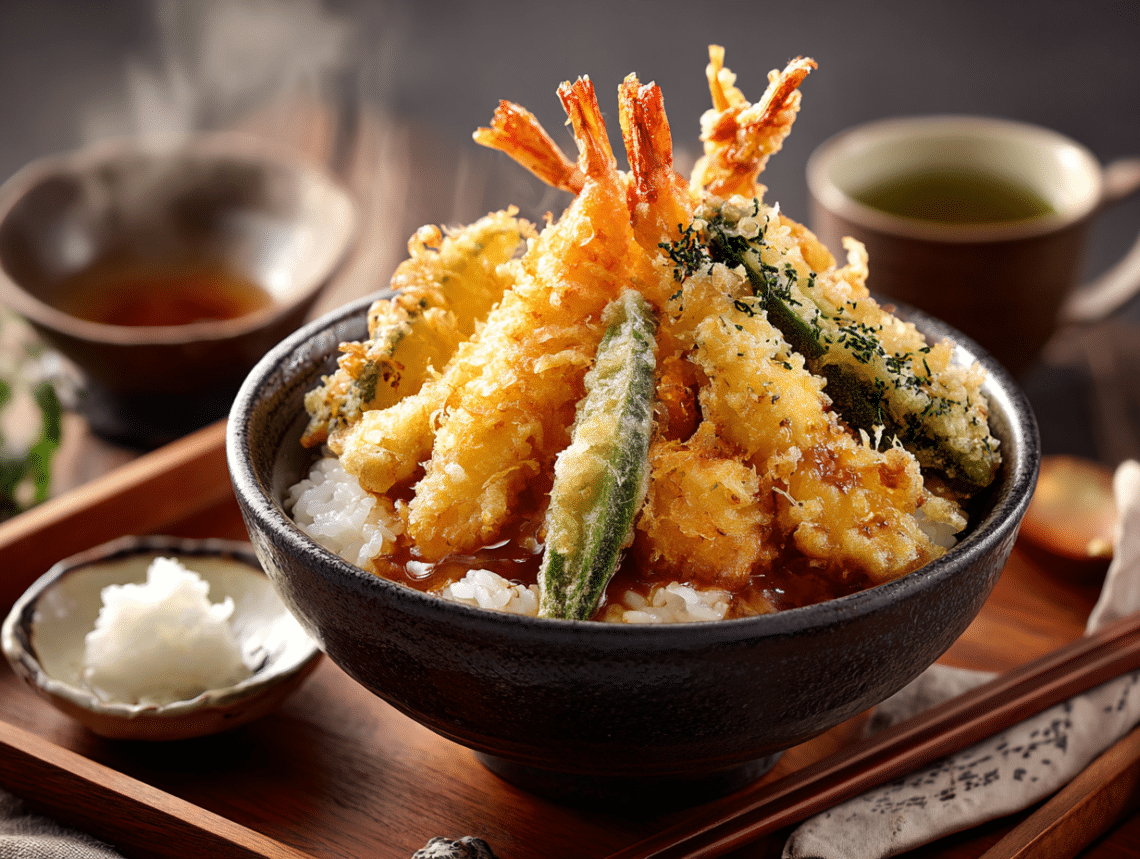
Tempura don — crispy battered prawns and vegetables over steamed short-grain rice, finished with savoury tempura sauce and furikake — comes together in about 40 minutes using pre-mixed tempura flour and bottled sauce, both available at any Asian supermarket. The honest reason to make it at home: restaurant versions run $40–$50 for four servings, and this costs roughly a third of that with results that hold up.
The technique that matters
Oil temperature is the one thing that separates crispy tempura from a greasy, soggy mess. You need the oil at 170–180°C (340–355°F) before the first piece goes in — too low and the batter absorbs oil instead of crisping, too high and the coating browns before the prawn cooks through. A kitchen thermometer takes the guesswork out completely; without one, drop a small amount of batter into the oil and look for it to rise and sizzle within two seconds. The second technique worth getting right is batter mixing: stir only until the flour is barely incorporated, leaving lumps. Overworked batter develops gluten and turns chewy instead of light. Cold water — straight from the fridge — slows that gluten development and keeps the coating delicate.
Common problems and fixes
- Batter slides off the prawns: The surface is too wet. Pat prawns completely dry with paper towels before dipping. Any moisture between the prawn and the batter creates steam that pushes the coating off during frying.
- Tempura turns soft within minutes of frying: The oil temperature dropped, usually from adding too many pieces at once. Fry in small batches — no more than 3–4 pieces at a time — and let the oil return to temperature between batches. Serve immediately; tempura does not hold well.
- Okra (ladies’ finger) releases slime into the batter: Cut okra pieces just before battering, not ahead of time. The cut ends weep moisture quickly, which thins the batter locally and causes uneven coating.
- Rice turns gluey or dry by serving time: Keep cooked rice covered with a lid or damp cloth off the heat while you fry. Skip the garnish of extra furikake on the rice before plating — not worth the extra dish — and let everyone add their own at the table so the rice stays intact.
- Prawns curl up tightly and cook unevenly: Make two or three shallow cuts across the underside of each prawn before battering. This severs the muscle that causes curling and keeps the prawn flat, which means more even contact with the hot oil.
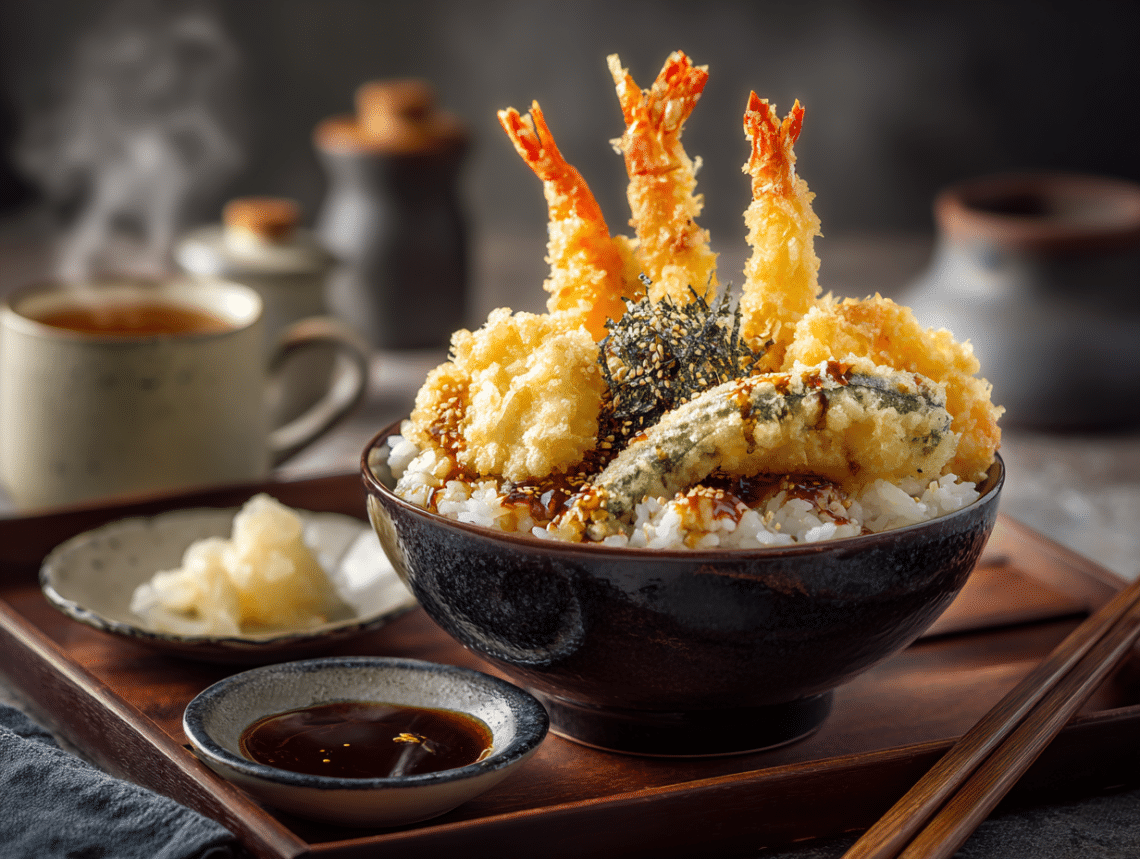
Japanese Tempura Don: Crispy Prawn Tempura Rice Bowl

Ingredients
- 4 cups cooking oil for deep-frying, enough for 3–4 inches depth in pan; use vegetable, canola, or rice bran oil
- 4 cups cooked Japanese short-grain rice about 2 cups (400g) uncooked
- 4 large shiitake mushrooms trimmed of caps and cut into halves
- 2-3 pieces okra (ladies' fingers) tail trimmed and cut on a slant
- 1 small carrot peeled and sliced
- 15-20 pieces tiger prawns approximately 300g / 10.5 oz, peeled and deveined, tails left on
- ¾ cup tempura flour pre-mix
- 1 cup ice-cold water
- 8 tablespoons tempura sauce such as Kikkoman Tentsuyu
- 4 tablespoons furikake seasoning
Instructions
- Place the tempura flour pre-mix in a medium mixing bowl. Gradually add the ice-cold water, stirring gently with chopsticks or a fork using quick, short strokes. Stop mixing while the batter is still slightly lumpy — overmixing develops gluten and creates a heavy coating. The consistency should be thinner than pancake batter, similar to single cream. Keep the bowl over ice if your kitchen is warm.
- Pour enough cooking oil into a deep heavy-bottomed saucepan or wok to reach a depth of 3–4 inches (7–10 cm). Heat the oil to 170–180°C / 340–355°F. Use a deep-fry thermometer to monitor the temperature throughout cooking.
- Pat dry the prawns and vegetables with a kitchen paper towel before frying.
- Test whether the oil is ready by dropping a small amount of tempura batter into the oil. If it sinks briefly, then rises to the surface within 1–2 seconds and sizzles steadily, the oil is at the correct temperature (170–180°C / 340–355°F). If it browns instantly, the oil is too hot — remove from heat briefly.
- Working in small batches of 3–4 pieces to avoid crowding the pan, dip each vegetable piece into the batter, let the excess drip off for a second, and gently lower it into the hot oil. Fry for 2–3 minutes, turning once with long chopsticks or tongs, until the coating is pale golden and crisp. The tempura should float on the surface while frying. If batter does not adhere well, stir an extra tablespoon of tempura flour into the batter. After all vegetables are fried, fry the prawns in batches for 2–3 minutes until golden and cooked through.
- When the coated layer turns golden brown, remove the tempura and place them on a kitchen paper towel or rack to absorb excess oil.
- To assemble each tempura don bowl, scoop 1 cup of hot steamed Japanese short-grain rice into a donburi bowl or deep serving bowl. Drizzle 2 tablespoons of tempura sauce evenly over the rice. Sprinkle 1 tablespoon of furikake seasoning in the centre. Arrange the freshly fried tempura on top and serve immediately while crispy. Repeat to assemble all four bowls.
Nutrition
Your questions, answered
Can I use plain flour instead of tempura flour?
You can, but the result will be noticeably heavier. Pre-mixed tempura flour contains starch and leavening that produce a lighter, crisper coating than plain flour alone — if you can find it at an Asian supermarket, it’s worth using.
What vegetables work best for tempura don?
Sweet potato, zucchini, okra, and mushrooms all fry well because they have low water content and hold their shape. Avoid watery vegetables like cucumber or tomato — they steam inside the batter and make the coating collapse.
Can I make this without a deep fryer?
Yes — a deep, heavy saucepan works fine. Fill it with at least 3 inches of oil so pieces can float freely, and use a thermometer to monitor temperature, since a shallow pan loses heat faster than a dedicated fryer.
Can kids help make this, and is it suitable for fussy eaters?
Kids can help mix the batter and set up the rice bowls safely away from the stove — the frying itself needs an adult. For picky eaters, plain prawns with no sauce on top are easy to plate separately before adding furikake and tempura sauce to everyone else’s bowls.
If you liked this one
- Authentic Japanese Chicken Teriyaki
- Quick and Delicious Homemade Chinese Fried Rice
- Soft and Sweet Japanese Mochi
- Authentic Spanish Seafood Paella