


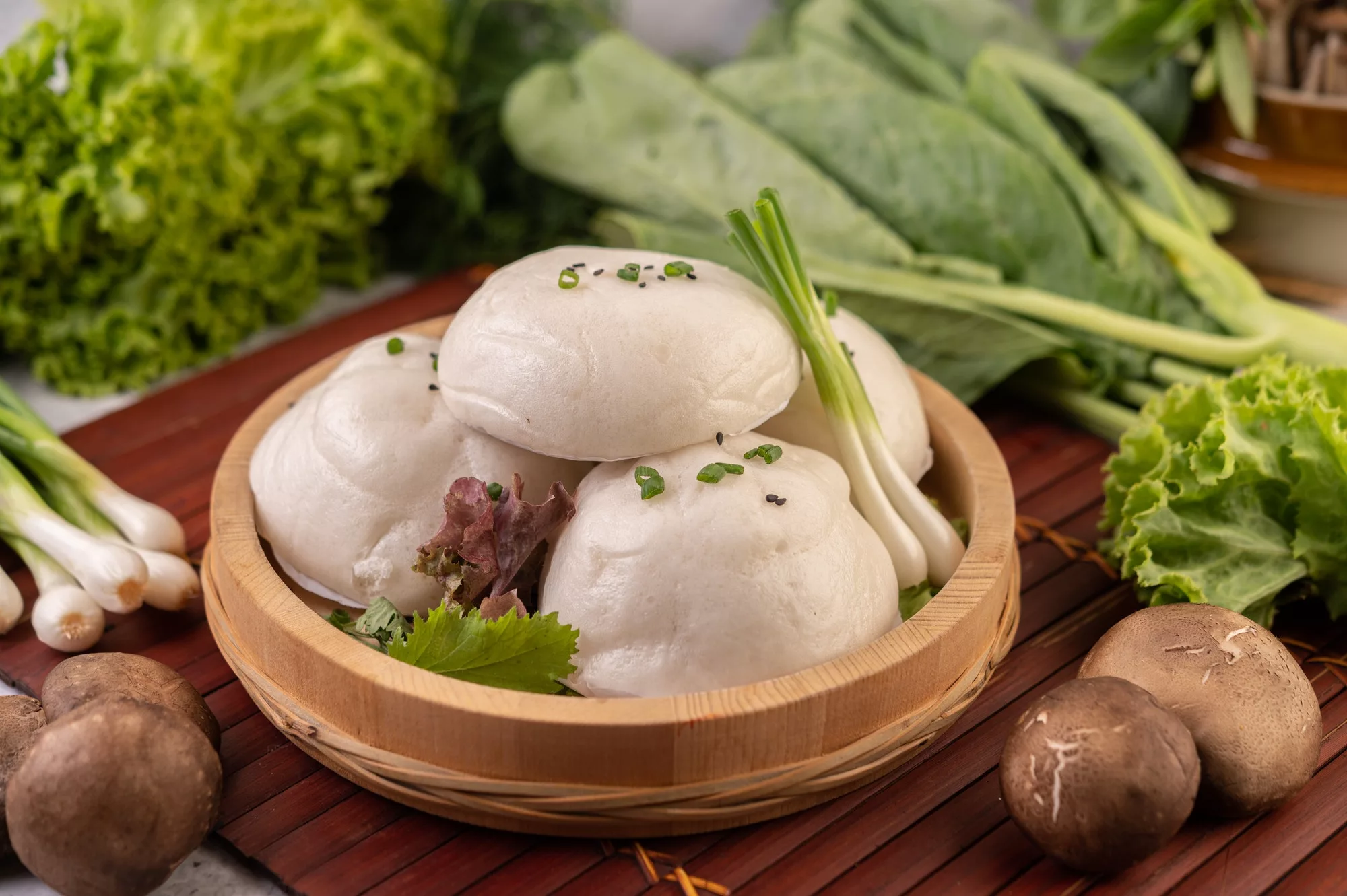
These steamed pork buns are one of my all-time favourite things to make at home. There’s something deeply satisfying about pulling apart a fluffy, pillowy bun and finding that sweet, savory, five-spice pulled pork tucked inside — it’s the kind of food that makes the whole kitchen smell incredible.
The dough comes together quickly with instant yeast, and while it rises, you have plenty of time to get the pork braising. I’ve included both a pressure cooker method (ready in 45 minutes) and a low-and-slow stovetop option, so you can work with whatever you have. The filling is rich with hoisin, oyster sauce, Shaoxing wine, and honey — a proper char siu-inspired flavour profile without the overnight marinading.
These buns are perfect for weekend meal prep, freezing beautifully for quick lunches. Once you’ve made them from scratch, the restaurant versions just won’t compare.
Steamed Pork Buns
Ingredients
Dough Ingredients
- 1 ½ teaspoon instant yeast
- ¾ cup warm water about 110°F / 43°C
- 2 tablespoons vegetable oil plus more for oiling the bowl
- 2 ½ cups unbleached all-purpose flour plus more for kneading
- 2 tablespoons granulated sugar
- 2 teaspoons baking powder
- 1 pinch table salt
Pork Filling Ingredients
- 1 tablespoon vegetable oil
- 2 pounds country-style pork ribs bone-in or boneless
- 1 pinch salt for seasoning
- 1 pinch freshly ground black pepper for seasoning
- ¼ cup hoisin sauce divided
- ¼ cup water
- 3 tablespoons soy sauce
- 2 tablespoons oyster sauce
- 2 tablespoons Shaoxing rice wine Sherry is a good substitute
- 2 tablespoons honey
- 2 tablespoons lightly packed brown sugar
- 1 teaspoon Chinese five-spice powder
- 2 tablespoons freshly grated ginger root
- 1 medium lettuce or cabbage leaves ; for steaming
Instructions
Dough Instructions
- Add water and yeast to a small bowl. Once foamy, add the oil and whisk to combine.
- Sift the flour, sugar and baking powder into a large bowl and make a well in the centre. Add the yeast mixture and mix into a soft, pliable dough.
- Turn dough out onto a clean surface and knead for 5 minutes or until smooth, pliable and elastic (Dough should not be sticky at this point. Knead in small amounts of additional flour if it is.) Place dough into a medium-size oiled bowl (or place on a Silpat and cover with the oiled bowl like in my photo), cover with plastic wrap and place it in the warmest part of your kitchen to rise for about 1 hour or until doubled in size.
- Pressure Cooker Method Instructions
- Heat a pressure cooker to medium-high and add oil. Season the pork with salt and pepper. When the oil is hot already, add the pork and sear on all sides until golden brown.
- Combine 2 tablespoons of the hoisin sauce, water, soy sauce, oyster sauce, Shaoxing wine, honey, brown sugar, five-spice powder, and grated ginger in a small bowl, whisking well to combine. Pour sauce over pork, lock the lid and cook for 45 minutes on high once pressure is reached.
Alternate Cooking Method Instructions
- Place salt-and-pepper-seasoned meat into a pan that has been preheated with 1 tablespoon of oil. Brown on all sides, add hoisin mixture, reduce heat to low and cover. Cook until meat is fall-apart tender, approximately 1 – 1/2 hours. This can also be done in a 325°F / 160°C (140°C fan-forced) oven.
- Once the meat is cooked, place it in a medium bowl and shred the pork using 2 forks. Add 3 tablespoons of the cooking liquid and the remaining 2 tablespoons of hoisin sauce to the pork and stir to combine. Taste and adjust seasoning with salt and more cooking liquid if the mixture seems too dry. Set mixture aside while preparing the dough.
Bun Assembly Instructions
- Line the base of your steamer with lettuce or cabbage leaves, leaving gaps between them to allow steam to circulate freely.
- Divide dough into 8 – 12 equal portions, depending on how big you want your buns to be. Roll each portion into a round ball. Shape the balls into discs about 4 inches in diameter, leaving the middle just a bit thicker than the edges. Spoon about a tablespoon in the centre of each round. Pull the edges up and pleat the dough around the filling, pinching as you work your way around the entire circle.
Bun Steaming Instructions
- Put water into a wok or large pot with a depth of 3 inches and heat over medium-high heat to a strong simmer.
- Stack several bamboo steamers in a wok or use a steamer insert into the pot. Ensure that the bottom of the steamer sits above the water level — the buns should cook from steam, not direct contact with boiling water.
- Arrange buns in the steamer at least 1-inch apart. Cover steamer and steam buns for approximately 15 minutes or until they are puffed and fluffy.
Nutrition
What Makes These Steamed Pork Buns Special
Most steamed pork bun recipes ask you to use a pre-made char siu from the store or a quick stir-fry filling. This recipe goes a different route — braising country-style pork ribs low and slow with hoisin, oyster sauce, Shaoxing wine, honey, and Chinese five-spice until the meat is genuinely fall-apart tender. The result is a filling that’s deeply savory, slightly sweet, and packed with layers of flavour that a quick-cook method simply can’t replicate.
The dough itself is beautifully simple. With baking powder and yeast working together, you get that signature cloud-like softness that great bao is known for — pillowy, slightly springy, and snow white. The combination of the two leaveners is what separates a good bao from an ordinary steamed bread.
Tips for Best Results
- Water temperature matters: Your warm water for the yeast should be around 110°F / 43°C — too hot and you’ll kill the yeast, too cool and it won’t activate properly. It should feel comfortably warm on the inside of your wrist.
- Don’t over-fill the buns: About one tablespoon of filling per bun is the sweet spot. Overfilling makes pleating nearly impossible and the buns will burst open during steaming.
- Space the buns properly: Leave at least 1 inch between buns in the steamer. They expand significantly and will fuse together if placed too close.
- Avoid lifting the lid: Once steaming begins, resist the urge to peek. Sudden temperature drops can cause the buns to deflate and wrinkle.
- Let the pork cool slightly before filling: Hot filling will make the dough sticky and difficult to work with. Room temperature or slightly warm filling is ideal.
Substitutions and Variations
- Pork cut: If you can’t find country-style ribs, boneless pork shoulder (also called pork butt) works perfectly and is often cheaper. Cut it into large chunks before braising.
- Shaoxing wine: Dry sherry is the closest substitute. In a pinch, mirin or even dry white wine will work, though the flavour profile shifts slightly sweeter with mirin.
- Five-spice powder: If you’re out, combine equal parts ground cinnamon, cloves, and star anise with a smaller amount of ground fennel and Sichuan peppercorn.
- Vegetarian version: Replace the pork with braised jackfruit or sautéed shiitake mushrooms tossed in the same hoisin-oyster sauce glaze.
- Flour: All-purpose flour is traditional for bao. Do not substitute bread flour — the higher gluten content will make the buns chewy rather than fluffy. Some bakers use a mix of all-purpose flour and cake flour (2:1 ratio) for an even softer texture.
Storage and Reheating
Refrigerator: Store fully cooked buns in an airtight container for up to 3 days. Reheat by steaming for 5-6 minutes until heated through.
Freezer: These buns freeze exceptionally well. Place cooked and cooled buns on a parchment-lined baking sheet and freeze until solid (about 2 hours), then transfer to a freezer bag. They’ll keep for up to 2 months. Steam from frozen for 8-10 minutes — no need to thaw first.
Leftover filling: Extra pork filling keeps in the fridge for up to 4 days and freezes for up to 3 months. It’s excellent over steamed rice, in lettuce wraps, or stuffed into flour tortillas for a fusion taco.
Do not microwave: Microwaving steamed buns dries them out and turns the dough rubbery. Always re-steam for the best texture.
What to Serve With This
- Dipping sauce: Mix soy sauce, rice vinegar, a drizzle of sesame oil, and thinly sliced spring onions for a classic dim sum dipping sauce.
- Hot and sour soup: The tangy, spicy broth pairs beautifully with the sweet-savory buns.
- Asian cucumber salad: Smashed cucumbers with rice vinegar, sesame oil, garlic, and chilli flakes provide a refreshing, crunchy contrast.
- Steamed greens: Blanched gai lan (Chinese broccoli) or bok choy with oyster sauce rounds out the meal.
- Pickled vegetables: Quick-pickled daikon and carrots add acidity that cuts through the richness of the pork.
Frequently Asked Questions
Why are my steamed buns yellow instead of white?
Yellow buns usually mean the flour was bleached or the dough was over-proofed. Use unbleached all-purpose flour as specified in this recipe, and don’t let the dough rise for longer than 1 hour. Some bakers also add a tiny amount of white vinegar (half a teaspoon) to the dough to help keep the buns bright white.
Can I use active dry yeast instead of instant yeast?
Yes, but you’ll need to proof it first. Dissolve 1 1/2 teaspoons of active dry yeast in the warm water with a pinch of sugar and wait 10 minutes until it’s foamy before adding it to the flour. The rest of the recipe stays the same.
Why did my buns wrinkle after steaming?
Wrinkling is almost always caused by a sudden temperature change. When the buns are done steaming, turn off the heat and leave the lid on for 3-5 minutes before removing it. This gradual cooling prevents the bun surface from contracting and wrinkling.
How do I know when the pork is done in the pressure cooker?
After 45 minutes at high pressure, the pork should shred effortlessly with two forks. If there’s any resistance, lock the lid and cook for an additional 10-15 minutes. Country-style ribs can vary in thickness, so use the fork test rather than relying on time alone.
Can I bake these buns instead of steaming them?
You can, but they’ll be a completely different product — more like a Chinese bakery-style baked bao with a golden, slightly sweet crust. Brush with egg wash and bake at 350°F / 175°C for 15-18 minutes. The texture will be bread-like rather than pillowy and soft.
Can I make the dough ahead of time?
You can refrigerate the dough after kneading (before the first rise) for up to 24 hours. Place it in an oiled bowl, cover tightly with plastic wrap, and store in the fridge. When ready to use, bring it to room temperature for 30 minutes, then proceed with shaping and filling.
How much filling should I use per bun?
About 1 heaped tablespoon per bun if making 12 smaller buns, or closer to 2 tablespoons if making 8 larger buns. The key is leaving enough dough at the edges to pleat and seal securely without the filling squeezing out.
The History of Steamed Pork Buns
Steamed pork buns — known as char siu bao (叉燒包) in Cantonese — are one of the most iconic dishes in Chinese dim sum culture. The name literally translates to “barbecue pork bun,” referring to the traditional char siu (Cantonese roast pork) filling. They’ve been a staple of Cantonese teahouses since at least the 19th century and remain one of the “Big Three” dim sum items alongside siu mai and har gow.
The steamed version with its snow-white, unfurling top is the classic Cantonese style, while the baked version with its shiny golden glaze is a Hong Kong bakery adaptation that became popular in the mid-20th century. Today, steamed pork buns are beloved across Southeast Asia, from Singapore’s hawker centres to Filipino siopao, each culture putting its own spin on the filling and dough.
If you make these steamed pork buns, I’d love to hear how they turned out — feel free to leave a star rating and share your experience in the comments below!


