





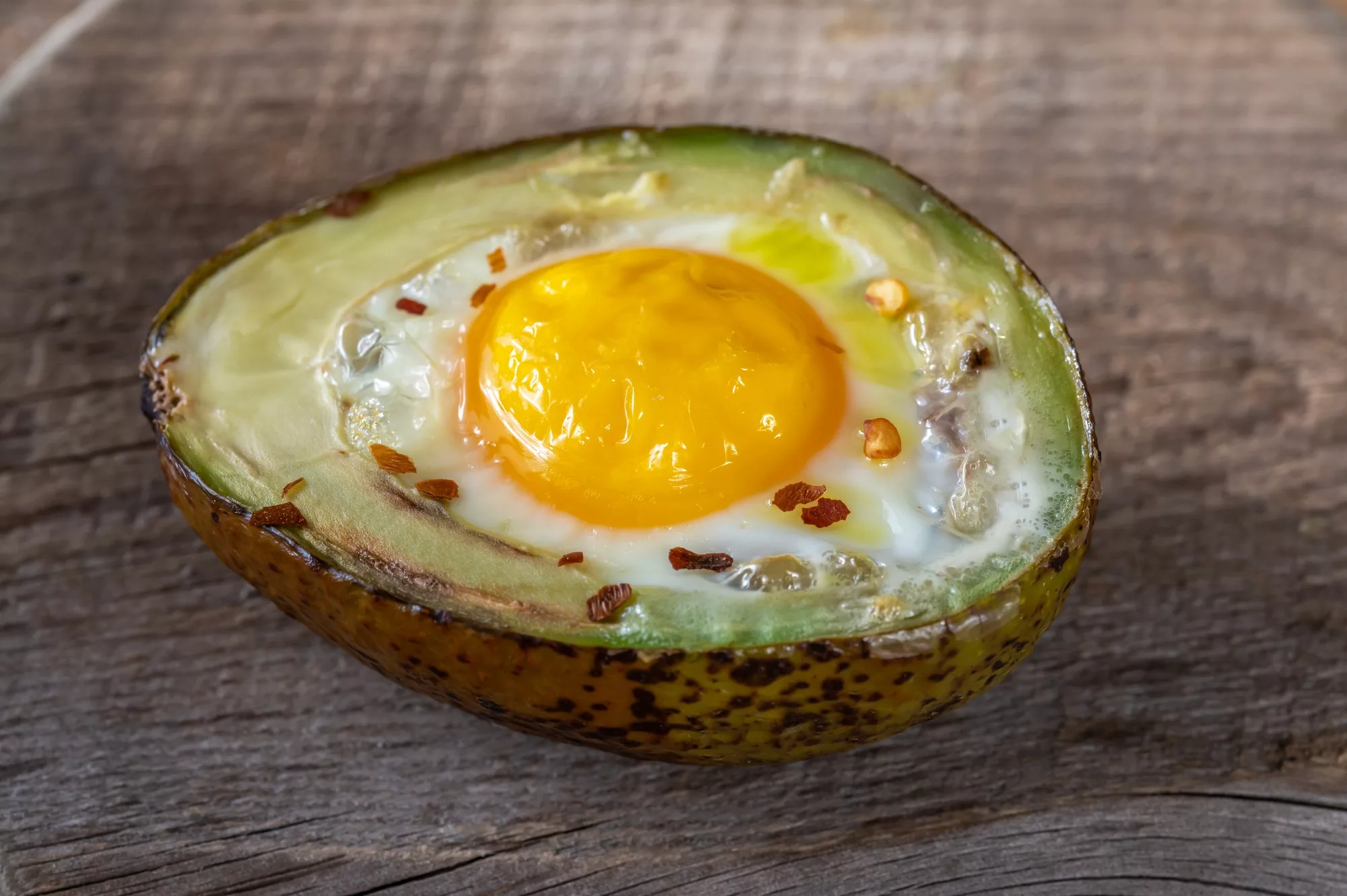
Two ingredients, one pan, done in under 15 minutes — baked avocado egg cups are a genuinely fast breakfast that doesn’t feel like a compromise. You halve a ripe avocado, scoop out a little flesh to make room, crack an egg into each half, and bake at high heat until the whites are set. The real reason to make these on a busy morning is the cleanup: one baking sheet, one small bowl, done.
Why this recipe works
Two things make this recipe reliable. First, the high oven temperature — 450°F — is deliberate. A lower temp would take too long and risk overcooking the yolk before the white fully sets. At 450°F, the white firms up in 10–12 minutes while the yolk stays runny. Second, scooping out 1–2 tablespoons of flesh from each half before adding the egg isn’t optional busywork — without it, the egg white overflows immediately and you lose most of it to the pan. The scoop creates just enough depth to hold the yolk and a good amount of white. Get those two things right and the recipe is hard to mess up.
Substitutions that actually work
- Avocado size matters more than variety: A large avocado gives you a bigger cavity and holds more egg white. A small avocado will fit the yolk but very little white — the result is edible but less satisfying. Stick with large if you can.
- Egg size: Large eggs are called for in the recipe. Extra-large eggs will overflow more; if that’s what you have, crack into a bowl first and pour in just the yolk plus about a tablespoon of white.
- Sriracha swap: Any hot sauce works. A thin smear of cream cheese or a teaspoon of pesto in the cavity before the egg adds flavor without any extra dishes — skip the garnish herbs after baking, not worth the extra dish.
- No ramekins or muffin tin: Crumple a sheet of foil into two rings and set the avocado halves inside them on the baking sheet. It works just as well.
Leftovers and make-ahead
Baked avocado egg cups don’t store well — the avocado browns within an hour and the egg texture suffers on reheating, so plan to eat them straight from the oven. If you want to get ahead, the only useful prep is scooping the avocado halves the night before: brush the cut surfaces lightly with lemon juice, place them cut-side down on a small plate, wrap tightly with plastic wrap, and refrigerate. They’ll hold overnight without significant browning. In the morning, crack in the eggs and bake from cold — add 1–2 minutes to the bake time since the avocado will be fridge-cold going into the oven.
If something goes sideways
- The whites are set but look wet and jiggly on top: The top surface of the white can look underdone even when the bottom is fully cooked. Give it the full 12 minutes before pulling it — the residual heat from the avocado continues cooking the white for about a minute after you take it out of the oven.
- The avocado tastes bitter or slightly off after baking: This usually means the avocado wasn’t fully ripe when it went in. An underripe avocado doesn’t soften properly at high heat and can turn slightly astringent. Use one that yields to gentle pressure before you start.
- The egg white spread across the whole baking sheet: The cavity wasn’t scooped wide enough, or the avocado tipped. Next time scoop a full 2 tablespoons from each half, and always use a ramekin, muffin tin, or foil ring — a flat baking sheet alone won’t keep them upright.
- The yolk is fully hard but the recipe said 10–12 minutes: Oven temperatures vary. If your oven runs hot, check at 9 minutes. A fully set yolk is fine to eat — just pull it a minute or two earlier next time if you want it runny.
- The avocado flesh looks gray and watery after baking: This happens when the avocado was overripe to begin with. Overripe avocados have higher water content and break down under heat. The egg will still be cooked, but the texture won’t be great — use avocados that are ripe but still hold their shape when halved.
Baked Avocado Egg Cups – Easy 2-Ingredient Breakfast
Equipment
- Small ramekins or muffin tin (to hold avocado halves upright)
- Small bowl (for cracking eggs before transferring)
- Spoon (for scooping avocado flesh)
- Rimmed baking sheet
- Instant-read thermometer (nice-to-have — to check egg whites have reached 160°F / 71°C for food safety)
Ingredients
- 1 large avocado ripe
- 2 large eggs
- 1 teaspoon Sriracha sauce optional
- 1 teaspoon lemon juice optional
- flaky sea salt
- ground black pepper
- seasonings and sauces of choice see notes
Instructions
- Preheat your oven to 450°F / 230°C (210°C fan-forced).
- Halve a ripe avocado lengthways and carefully remove the stone.
- Using a spoon, scoop out about 1–2 tablespoons of flesh from each avocado half to widen the cavity enough to hold an egg yolk and some white. Save the scooped avocado for another use.
- If desired, drizzle a small amount of sriracha, pesto, or your preferred sauce into the cavity before adding the egg.
- Crack one egg into a small bowl. Gently pour the yolk and as much white as will fit into the cavity of one avocado half — some white may overflow, which is normal.
- Top with flaky sea salt and black pepper.
- Repeat for the second egg and avocado half.
- Place the filled avocado halves in small ramekins or a muffin tin to keep them stable. Bake for 10–12 minutes at 450°F / 230°C until the egg whites are fully set but the yolks are still slightly runny. For fully set yolks, bake an additional 2–3 minutes.
Notes
- Storage: Baked avocado egg cups are best eaten immediately — avocado oxidises and turns brown within an hour. They do not store or reheat well.
- Make-ahead: Scoop out the avocado flesh the night before and store the halves cut-side down on a plate brushed with lemon juice, tightly wrapped in cling film, in the fridge. Crack in the eggs and bake fresh in the morning.
- Substitutions: Use any hot sauce in place of sriracha. For a milder option, try a thin layer of cream cheese or pesto in the cavity before adding the egg.
- Egg whites: If the egg white keeps overflowing, crack the egg into a small bowl first and pour in just the yolk plus a tablespoon of white — save the excess white for another use.
- Pro tip: Place the avocado halves in a muffin tin or small ramekins to keep them stable and upright during baking — this prevents tipping and egg spillage.
Nutrition
Frequently asked questions
How do I know if my avocado is ripe enough to use?
It should yield to gentle pressure from your thumb but not feel mushy or hollow. If the stem end pops off easily and the flesh underneath is green, it’s ready. A rock-hard avocado won’t soften properly in the oven in just 10–12 minutes.
Can I make more than two at once?
Yes — use one avocado and two eggs per serving and scale up as needed. Arrange all the filled halves in a muffin tin so they stay upright, and bake everything on the same rack. The bake time stays the same regardless of how many you’re making.
Do I have to use a muffin tin or ramekins, or can I just put them on a baking sheet?
You need something to hold them upright — avocado halves are rounded on the bottom and will tip on a flat surface. A muffin tin or ramekins are the easiest options, but crumpled foil rings work just as well if that’s what you have.
What if I only want a fully cooked yolk, not a runny one?
Bake for 14–15 minutes total instead of 10–12. Check at 14 minutes — the yolk should look matte and set rather than shiny and domed.
Is it safe to eat avocado that’s been baked in the oven?
Yes, baked avocado is completely safe to eat. The texture changes — it becomes softer and more buttery — but there’s no food safety concern with heating avocado.
Can I add cheese or other toppings before baking?
Yes, but keep toppings light so they don’t insulate the egg and slow down cooking. A small pinch of crumbled feta or a few thin shavings of parmesan added before baking work well. Save anything delicate like fresh herbs for after the oven.
If you liked this one
- Gourmet Avocado Toast with Poached Egg
- Fluffy Buttermilk Pancakes
- Tropical Sunrise Smoothie Bowl
- Classic Mexican Guacamole


