

















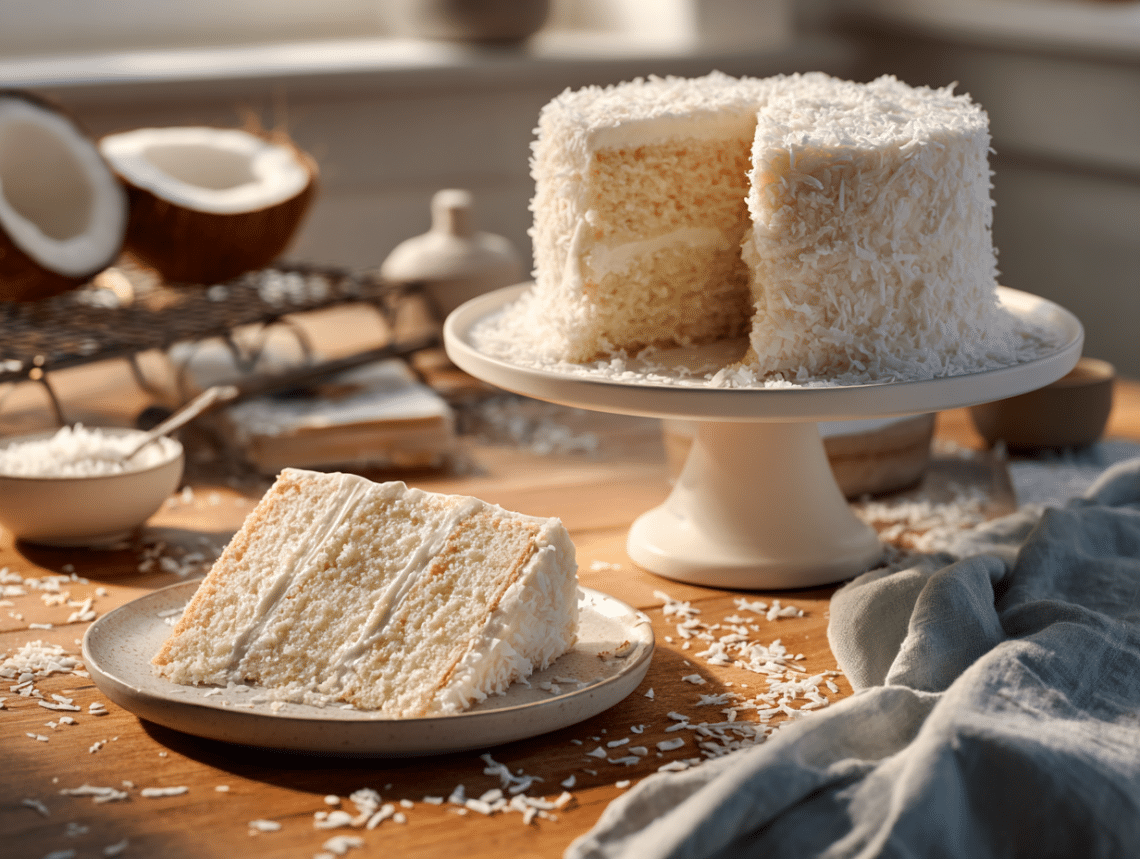
This is a two-layer coconut cake made with both coconut milk and coconut extract in the batter, finished with a tangy cream cheese frosting and a coat of desiccated coconut on the outside. The reverse-creaming method keeps the crumb tight and moist — which also means it holds up well when kids are involved and slices don’t need to be precious. If you want a from-scratch layer cake that looks impressive without requiring pastry skills, this is a reliable one to reach for.
Why this recipe works
Two things actually matter here. First, the reverse-creaming method — adding butter to the dry ingredients before the liquids — coats the flour in fat early, which limits gluten development and gives you a finer, more tender crumb than a standard creaming method would. Second, using both coconut milk and whole milk in the batter keeps the texture from getting dense; coconut milk alone can make cakes heavy, but the combination keeps things light. The egg whites (no yolks) also help — they add structure without the richness that would weigh the layers down.
If something goes sideways
- Frosting slides off or looks greasy: The cake was still warm when you frosted it. Cream cheese frosting melts fast. Let layers cool completely on a wire rack — at least 1 hour at room temperature — before you touch them with frosting.
- Frosting is too soft to spread cleanly: If your kitchen is warm or the cream cheese and butter were very soft, the frosting may be loose. Refrigerate it for 20–30 minutes, then beat briefly before using.
- Cake layers dome and crack in the middle: Oven runs hot, or the batter was overmixed after adding the egg white mixture. Use an oven thermometer to check your actual temperature, and stop mixing as soon as the batter looks uniform.
- Desiccated coconut won’t stick to the sides: Press it on immediately after the final coat of frosting goes on, before any skin forms. Work in sections — frost a section, press coconut in, move to the next.
- Layers stick to the tins: Greasing and flouring alone isn’t always enough for a butter-heavy batter. Make sure you’ve also lined the bases with parchment — the recipe calls for it, and it’s not optional.
Shopping notes
- Coconut milk: Use full-fat canned coconut milk for the batter. Shake or stir it well before measuring — the cream separates and sits on top. Carton coconut milk (the refrigerated kind) is much thinner and will affect the texture.
- Coconut extract / coconut essence: These are the same thing under different names depending on where you shop. Look for it near the vanilla extract. A little goes a long way — don’t be tempted to add extra.
- Desiccated coconut: This is finely shredded, dry coconut — not sweetened flaked coconut. The sweetened version clumps differently and makes the outside much sweeter. Check the label. Skip the garnish if you can’t find desiccated coconut — not worth a special trip.
- Cream cheese: Full-fat block cream cheese only. The spreadable kind in tubs has more water and will make the frosting runny.
Keeping and reheating
Once frosted, store the cake covered in the refrigerator for up to 4 days. The cream cheese frosting means it can’t sit out at room temperature for long — 2 hours maximum. Take slices out of the fridge about 20 minutes before serving so the crumb softens back up; cold cake straight from the fridge tastes denser than it actually is. Unfrosted cake layers can be wrapped tightly in plastic wrap and frozen for up to 2 months — thaw overnight in the fridge, then bring to room temperature before frosting. Frosted and assembled cake can also be frozen whole or in slices; wrap well and freeze for up to 6 weeks. Thaw in the fridge overnight.
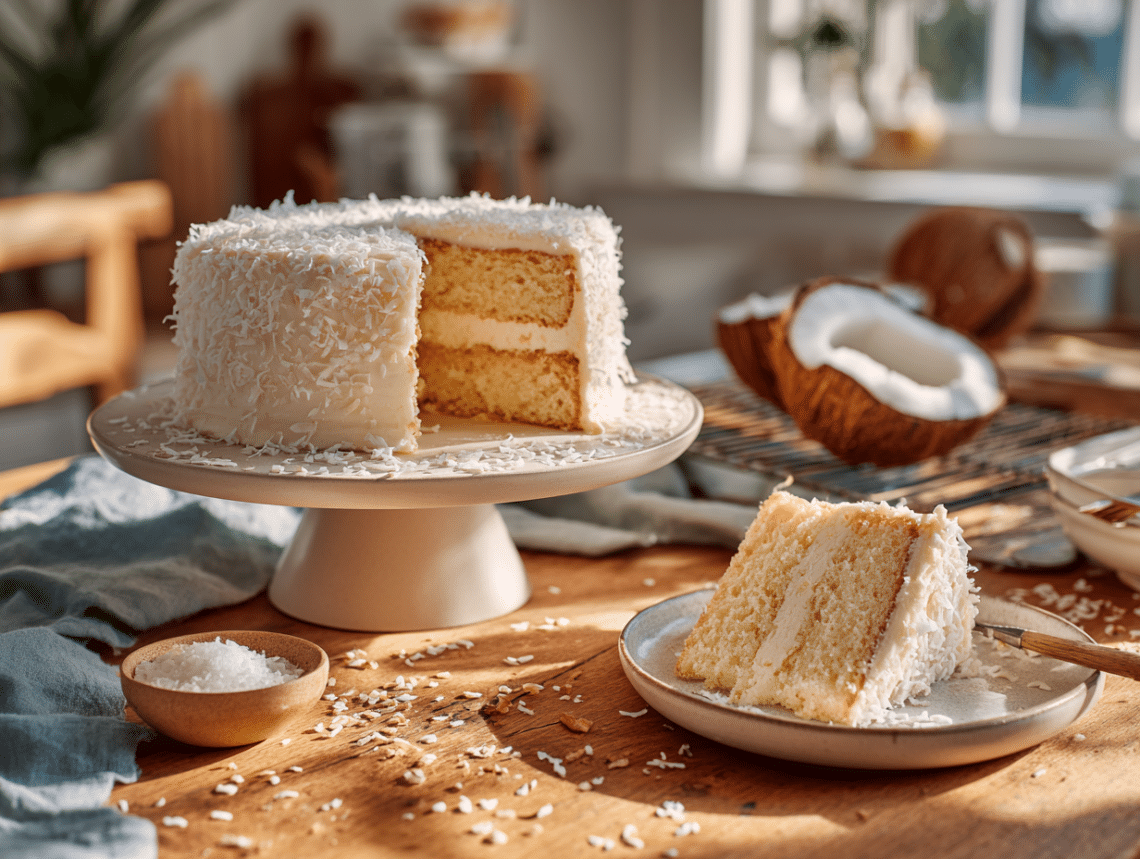
Coconut Cake With Coconut Cream Cheese Frosting

Ingredients
Coconut Cake Ingredients
- 5 large egg whites (5.3oz)
- ½ cup milk whole milk
- 1 tablespoon coconut essence or coconut extract
- 3 cups all-purpose flour plain flour
- 2 ½ cups granulated white sugar
- 1 tablespoon baking powder
- ½ teaspoon salt fine salt
- 1 cup butter 2 sticks ; unsalted, room temperature
- 1 cup coconut milk unsweetened, canned or carton
- 1 cup desiccated coconut for decorating
Coconut Cream Cheese Frosting Ingredients
- 8 oz cream cheese (227g) ; full-fat, room temperature
- ½ cup butter 1 stick ; unsalted, room temperature
- 4 cups icing sugar powdered sugar, sifted
- 1-3 tablespoons coconut milk
- 1 tablespoon coconut essence or coconut extract
Instructions
Coconut Cake Instructions
- Preheat oven to 350°F / 180°C (160°C fan-forced). Grease and flour two 9-inch (23cm) round cake tins and line the bases with parchment paper.
- Whisk together egg whites, milk (not coconut milk) and coconut essence.
- In another bowl (or in a stand mixer bowl if you have one), combine flour, sugar, baking powder and salt.
- Add the butter and coconut milk and combine at low speed until all the dry ingredients are moist. Turn the speed up to medium and beat together until light and fluffy, for about 2 minutes.
- Add the egg white mixture 1/3 at a time, beating just long enough between additions to combine.
- Divide the batter evenly between the two prepared pans. Bake at 350°F / 180°C (160°C fan-forced) for 35–40 minutes, until a skewer inserted into the centre comes out clean. Allow the cakes to cool in the tins for 10 minutes, then turn out onto a wire rack to cool completely before frosting.
Coconut Cream Cheese Frosting Instructions
- Beat together the room-temperature butter and cream cheese on medium speed until smooth, about 2 minutes. Gradually add the sifted icing sugar, ½ cup at a time, beating on low speed after each addition. Once all the sugar is incorporated, increase to medium-high and beat until light and fluffy, about 3 minutes.
- Add coconut essence and enough coconut milk to make a spreadable consistency.
- To assemble, use a serrated knife to level the tops of both cake layers. Place the first layer cut-side up on a serving plate or cake stand. Spread about 1 cup of frosting evenly over the top. Place the second layer cut-side down on top. Frost the top and sides of the entire cake with the remaining frosting. Gently press desiccated coconut onto the top and sides of the cake.
Nutrition
Common questions
Can I make this cake ahead of time?
Yes — the cake layers can be baked up to 2 days ahead and stored wrapped at room temperature, or frozen for up to 2 months. The frosting can be made a day ahead and kept in the fridge; let it come to room temperature and give it a quick beat before spreading.
Can I use a different pan size?
The recipe is written for two 9-inch (23cm) round cake tins. If you use 8-inch tins the layers will be taller and may need an extra 5–8 minutes in the oven — start checking early with a toothpick. Don’t try to bake this as a single layer in one deep tin; the center won’t cook through reliably.
Can I leave out the coconut extract?
You can, but the coconut flavor will be noticeably milder — coconut milk alone doesn’t give a strong flavor. If you skip it, the cake is still good but tastes more like a plain white cake with a hint of coconut.
My kids don’t like texture — can I skip the desiccated coconut on the outside?
Absolutely, the cake is completely finished without it. The coconut on the outside is purely decorative and doesn’t affect the flavor of the cake or frosting underneath.
If you liked this one
- Heavenly Strawberry Cake with Fresh Berries and Whipped Cream
- Indulgent Giant Chocolate Chip Cookie Cake for Celebrations
- Classic Soft Sugar Cookies Perfect for Every Occasion
- Zesty French Lemon Cake: A Taste of Provence Sunshine