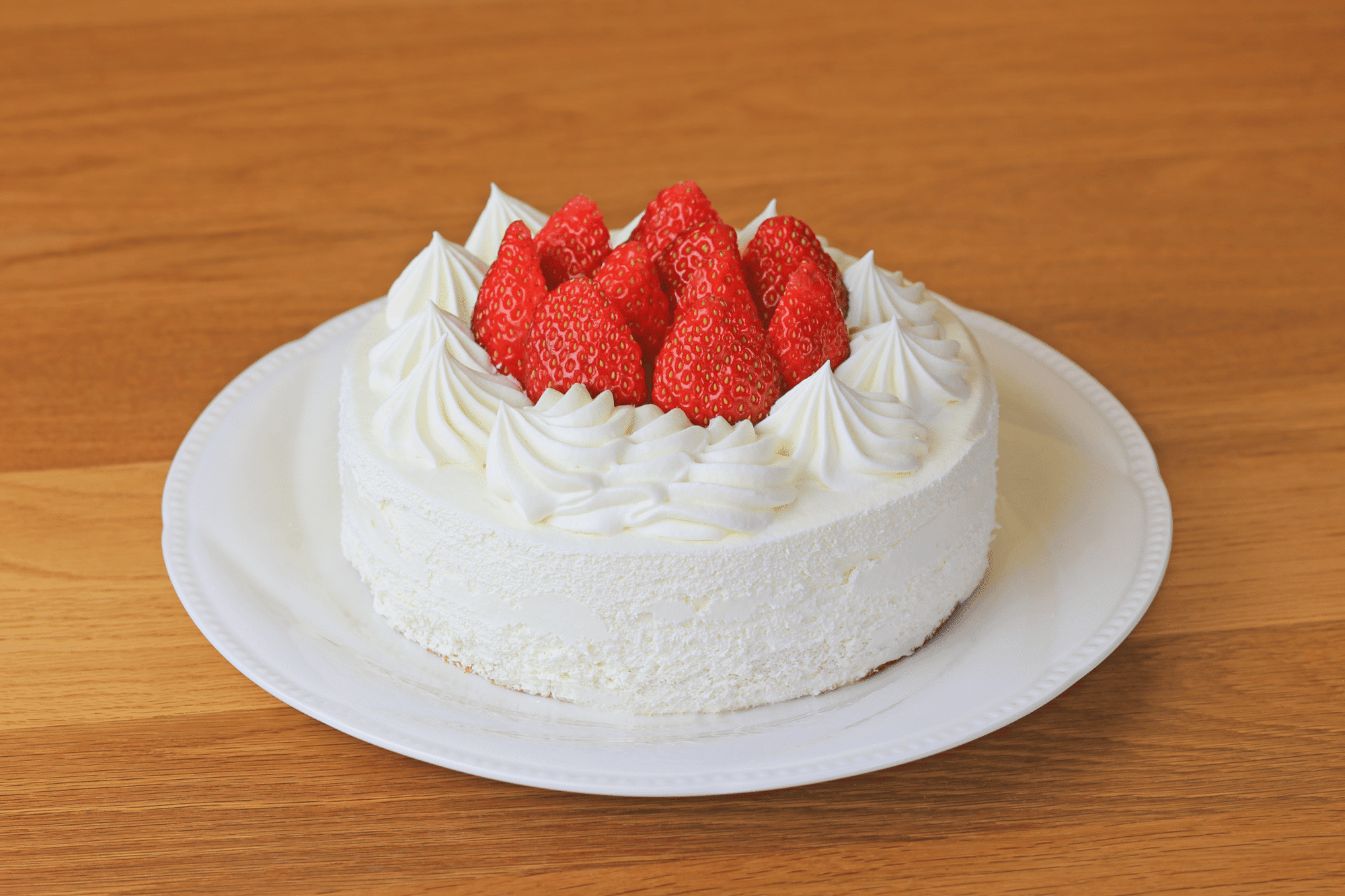


This strawberry shortcake with homemade pound cake is my favourite way to enjoy fresh strawberries. I’m not a fan of the dry biscuit-style shortcakes you see everywhere — I much prefer a tender, buttery pound cake as the base. It soaks up the strawberry juices beautifully and holds up under a generous dollop of whipped cream.
The recipe comes together with pantry staples you probably already have on hand. The pound cake itself is enriched with Greek yogurt for extra moisture, and the macerated strawberries need nothing more than a little sugar and lemon juice to release their natural syrup.
Here’s what I love most about this version:
- No special ingredients — butter, eggs, flour, yogurt, and fresh strawberries do all the work
- Make-ahead friendly — the cake and the strawberry topping can both be prepared in advance
- Feeds a crowd — 12 generous servings from one loaf
If you’ve got ripe strawberries sitting on the counter, this is exactly what they were waiting for.
Strawberry Shortcake with Pound Cake (Easy Recipe)
Equipment
- Stand mixer with paddle attachment
- 9×5 inch (23x13cm) loaf pan
- Medium mixing bowl
- Wire cooling rack
- Rubber spatula
- Toothpick or cake tester
Ingredients
- 2 pounds strawberries sliced, hulled
- 2 tablespoons sugar granulated
- 1 teaspoon lemon juice fresh
- 4 medium eggs room temperature
- 1 cup butter at room temperature
- 1 cup sugar granulated
- 1½ cups all-purpose flour
- ½ cup Greek yogurt plain
- ½ teaspoon salt
- 2 teaspoons vanilla extract pure
- ½ teaspoon baking powder
- 1 cup heavy whipping cream whipped to soft peaks
- extra as needed butter and flour for greasing pan
Instructions
Strawberry Topping Instructions
- Add strawberries, lemon juice and sugar in a medium bowl and mix. Cover and place in refrigerator until ready to use.
Pound Cake Instructions
- Preheat the oven to 325°F / 160°C (165°C fan-forced). Butter and flour a 9×5 inch (23x13cm) loaf pan, tapping out the excess flour.
- Whisk together flour, salt, and baking powder in a medium bowl. Set to the side.
- In a stand mixer fitted with the paddle attachment, beat the butter on medium speed for 2–3 minutes until smooth and creamy. Add 1 cup of sugar and mix until light and fluffy. Continue beating for 2–3 minutes until the mixture is light, pale, and fluffy.
- Add the eggs one at a time on medium speed, beating for about 30 seconds after each addition. Scrape down the sides and bottom of the bowl between each egg.
- Add yogurt and vanilla to bowl and mix until combined. Scrape the sides of the bowl before finishing.
- Add flour mixture and continue to mix, scraping the sides down to ensure it is well combined and smooth.
- Pour the batter into the prepared loaf pan and smooth the top with a rubber spatula. Bake for 55–65 minutes until the top is golden brown and a toothpick inserted into the centre comes out clean or with just a few moist crumbs attached. If the top browns too quickly, tent loosely with aluminium foil after 40 minutes.
- Cool the shortcake for 10 minutes before removing and transferring to the cooling rack.
- Once ready to serve, place a slice of pound cake on each plate, add a generous dollop of whipped cream, and spoon the macerated strawberries with their juices over the top.
Nutrition
What Makes This Strawberry Shortcake Special
Most strawberry shortcake recipes rely on dry, crumbly biscuits that fall apart the moment they meet whipped cream and fruit. This version uses a homemade pound cake as the base, which changes everything. The dense, buttery crumb holds its structure under the juicy macerated strawberries while absorbing just enough of their syrup to become irresistible.
The Greek yogurt in the batter is the secret weapon here. It adds a subtle tang that balances the sweetness of the strawberries and keeps the cake incredibly moist — even a day or two after baking. Combined with real butter and eggs, you get a tender, rich crumb that tastes like it came from a proper bakery.
The macerated strawberries are the other half of the magic. Tossing sliced strawberries with a little sugar and lemon juice draws out their natural juices, creating a built-in sauce that pools on the plate and soaks into each bite of cake.
Equipment You’ll Need
- Stand mixer with paddle attachment — essential for properly creaming the butter and sugar until light and fluffy, which creates the pound cake’s signature fine crumb. A hand mixer works in a pinch but takes longer and produces a slightly less even texture.
- 9×5 inch (23x13cm) loaf pan — the correct size ensures even baking. A pan that’s too large will give you a flat, dry cake; too small and the batter may overflow.
- Medium mixing bowl — you’ll need this for both the dry ingredients and the macerated strawberries.
- Wire cooling rack — allows air to circulate under the cake so the bottom doesn’t steam and become soggy.
- Rubber spatula — critical for scraping down the bowl between additions and smoothing the batter into the pan.
- Toothpick or cake tester — the only reliable way to check whether the centre of the pound cake is fully baked.
Tips for Best Results
- Room temperature ingredients are non-negotiable. Cold butter won’t cream properly and cold eggs can curdle the batter. Set your butter and eggs out at least 30 minutes before you start.
- Don’t rush the creaming step. Beat the butter and sugar for a full 3-4 minutes until the mixture is pale and visibly increased in volume. This incorporates air that makes the cake light.
- Add eggs one at a time and beat for 30 seconds after each. This gives the emulsion time to form properly and prevents a greasy, separated batter.
- Scrape the bowl obsessively. Unmixed pockets of butter or flour lurking at the bottom will show up as streaks in the finished cake.
- Start checking the cake at 50 minutes. Every oven runs differently, and pound cake goes from perfectly done to dry in a matter of minutes. A few moist crumbs on the toothpick are fine — the cake continues cooking from residual heat.
- Macerate the strawberries for at least 1-2 hours. The longer they sit, the more syrup they produce. This juice is the best part of the whole dessert.
Substitutions and Variations
- Greek yogurt → sour cream: Swap in an equal amount of full-fat sour cream for a slightly tangier, equally moist cake.
- Strawberries → mixed berries: Use a combination of raspberries, blueberries, and blackberries for a mixed berry shortcake. Adjust the sugar slightly since raspberries are more tart.
- Whipped cream → mascarpone cream: Fold 4 tablespoons of mascarpone into the whipped cream for a richer, more stable topping that holds its shape longer.
- Add lemon zest: Stir 1 tablespoon of finely grated lemon zest into the cake batter along with the vanilla for a bright, citrusy pound cake.
- All-purpose flour → gluten-free 1:1 blend: Use a cup-for-cup gluten-free baking flour like Bob’s Red Mill 1-to-1 for a gluten-free version. Add ¼ teaspoon xanthan gum if your blend doesn’t already include it.
- Make it boozy: Add 2 tablespoons of Grand Marnier or amaretto to the macerated strawberries for an adult version.
Storage and Reheating
- Assembled shortcake: Best eaten immediately. The whipped cream will deflate and the cake will get soggy if stored assembled.
- Pound cake only: Wrap tightly in cling film and store at room temperature for up to 3 days, or refrigerate for up to 5 days. Bring to room temperature before serving for the best texture.
- Freezing: Wrap individual slices in cling film, then in aluminium foil, and freeze for up to 3 months. Thaw at room temperature for 1-2 hours or microwave for 15-20 seconds.
- Macerated strawberries: Store in an airtight container in the fridge for up to 2 days. They’ll release more juice over time, which is a bonus.
- Whipped cream: Best made fresh. If you must make it ahead, stabilise it with 1 tablespoon of powdered sugar and refrigerate for up to 4 hours.
What to Serve With This
This strawberry shortcake is a complete dessert on its own, but here are some pairings that elevate it further:
- Vanilla ice cream — a scoop alongside the cake turns this into a full sundae situation
- Fresh mint — a few torn leaves scattered over the top add colour and a bright herbal note
- Balsamic glaze — a thin drizzle of aged balsamic reduction over the strawberries adds depth and a sophisticated edge
- Iced tea or lemonade — for a summer afternoon dessert, a cold citrusy drink is the perfect companion
- Espresso or strong coffee — the bitterness of coffee cuts through the sweetness of the cake and cream beautifully
Frequently Asked Questions
Can I use store-bought pound cake instead of making my own?
You can, but the texture and flavour won’t be the same. Store-bought pound cake is typically drier and less buttery than homemade. If you do go this route, look for a bakery-style pound cake from your grocery store’s bakery section rather than a pre-packaged one.
Why is Greek yogurt used instead of milk or buttermilk?
Greek yogurt adds moisture and fat to the batter without making it too liquid. Its natural acidity reacts with the baking powder to give the cake a slight lift, and it produces a crumb that stays moist for days. Sour cream works identically if you don’t have yogurt on hand.
Can I make the pound cake the day before?
Absolutely — pound cake actually tastes better the next day once the flavours have had time to meld. Wrap it tightly in cling film once completely cooled and store it at room temperature. Slice and assemble with strawberries and cream just before serving.
How do I know when the pound cake is done?
Insert a toothpick or cake tester into the centre of the loaf. If it comes out clean or with just a few moist crumbs clinging to it, the cake is done. If you see wet batter, return the cake to the oven for another 5 minutes and test again. The internal temperature should register around 200-210°F / 93-99°C on an instant-read thermometer.
Why did my pound cake crack on top?
A crack along the top of a pound cake is completely normal and actually desirable — it’s a sign that the crust set before the interior finished rising. The crack gives the cake its rustic, homemade appearance. If you want to minimise it, you can run a butter knife down the centre of the batter about 15 minutes into baking.
Can I use frozen strawberries?
Frozen strawberries will work for the macerated topping, but they’ll release much more liquid than fresh and the texture will be softer. Thaw them first and drain off about half the liquid before adding sugar and lemon juice. Fresh, in-season strawberries will always produce the best results.
A Little History of Strawberry Shortcake
Strawberry shortcake has been an American staple since at least the mid-1800s, when recipes began appearing in cookbooks across the country. The earliest versions used sweetened biscuit dough — the word “shortcake” originally referred to a cake made “short” with a high ratio of fat to flour. Over time, cooks began experimenting with sponge cakes, angel food cakes, and pound cakes as the base, and all three variations have their devoted fans.
The dessert’s popularity skyrocketed alongside America’s commercial strawberry industry, particularly in states like California and Florida where strawberries could be grown nearly year-round. Today, strawberry shortcake remains one of the most iconic warm-weather desserts in American cooking — simple, seasonal, and endlessly satisfying.
If you try this strawberry shortcake, I’d love to hear how it turns out for you — leave a star rating and a comment below to let me know!