

















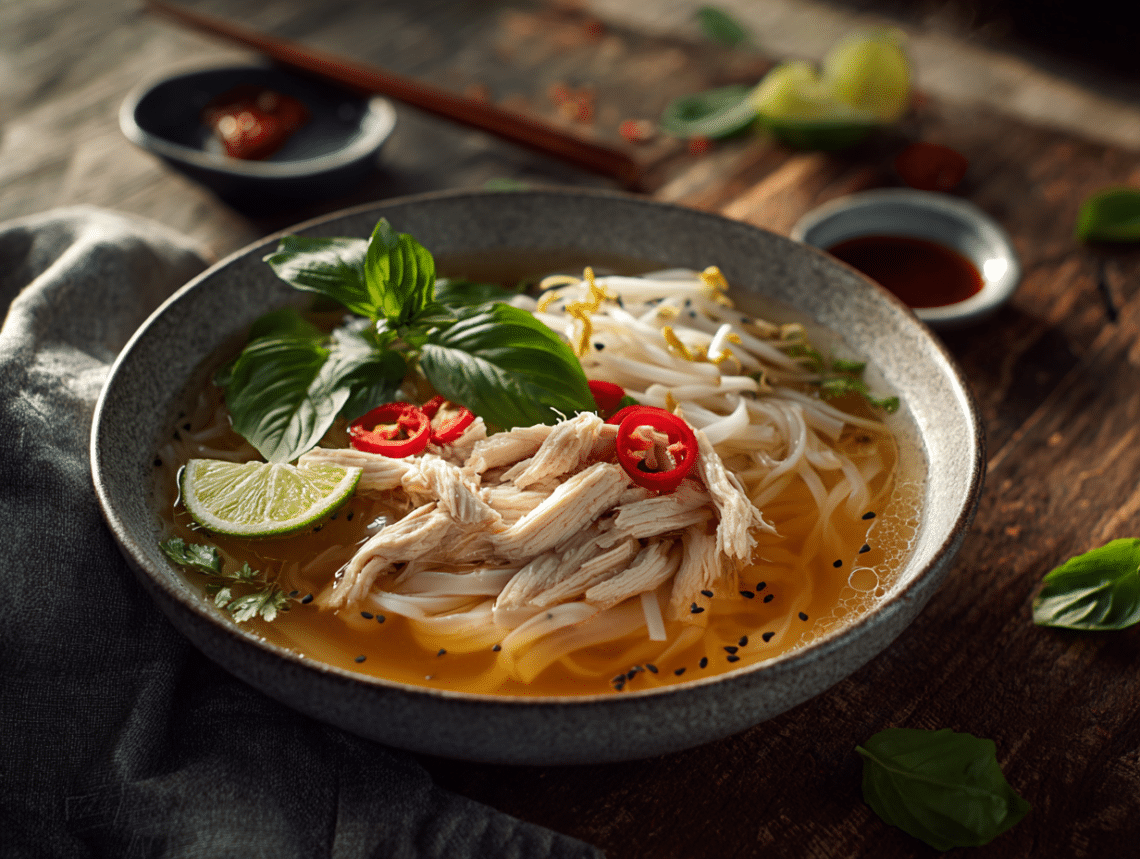
This chicken pho uses boneless breast and a short simmer — about 35 minutes — to build a broth that tastes genuinely aromatic without an all-day commitment. The spice work is simple: star anise, a single cinnamon stick, and fresh ginger slices do most of the heavy lifting. It lands on the table in under an hour, which is the honest reason most people make it on a weeknight.
Why this recipe works
Two things matter here. First, using whole spices — star anise pods and a cinnamon stick rather than ground versions — keeps the broth clear and prevents bitterness. Ground spices cloud the liquid and can turn sharp fast; whole ones release flavour gradually and are easy to strain out. Second, the chicken goes into cold water and comes up to a simmer slowly. This draws out proteins gently, so you get a cleaner broth with less foam to skim. Dropping raw chicken into already-boiling water seizes the exterior and traps more impurities inside — the resulting broth is murkier and slightly less flavourful. Neither step takes extra time. They just require starting right.
Keeping and reheating
Store the broth and noodles separately — noodles left in broth overnight turn soft and bloated. The broth keeps in the fridge for up to 4 days in a sealed container, or freezes well for up to 3 months; freeze it in individual portions so you can pull out exactly what you need. Cooked, shredded chicken keeps refrigerated for 3 days. Reheat broth on the stovetop over medium heat until it reaches a full simmer — microwaving works but tends to heat unevenly and dulls the spice aroma. Cook fresh noodles to order each time, which takes only 3 to 4 minutes. Skip re-freezing the broth once it’s been thawed.
If something goes sideways
- Broth tastes flat or watery: Fish sauce is almost always the fix. Add it one teaspoon at a time, tasting after each addition. A small squeeze of lime stirred directly into the pot — not just the bowl — also sharpens the overall flavour quickly.
- Broth is cloudy or grey: The heat was too high. Pho broth should never boil hard — keep it at a bare simmer with just a few bubbles breaking the surface. If it’s already cloudy, strain it through a fine-mesh sieve lined with a paper towel; it won’t be perfect, but it helps.
- Chicken is rubbery or dry: It cooked too long or at too high a temperature. Breast meat is done when it reaches 165°F internally — pull it out at that point, rest it for five minutes, then shred. Leaving it in simmering broth for an extra 10 minutes makes a noticeable difference in texture.
- Broth smells overwhelmingly of anise: One or two star anise pods is enough for 6 cups of broth. More than that and the anise note dominates everything else. If it’s already too strong, add an extra cup of water or low-sodium chicken stock and simmer for five minutes to dilute it. Skip the garnish of extra whole spices in the bowl — not worth the extra dish.
- Noodles clumped together after draining: Rinse them under cold running water immediately after cooking and toss with a few drops of neutral oil if you’re not serving right away. They’ll loosen back up when hot broth hits them in the bowl.
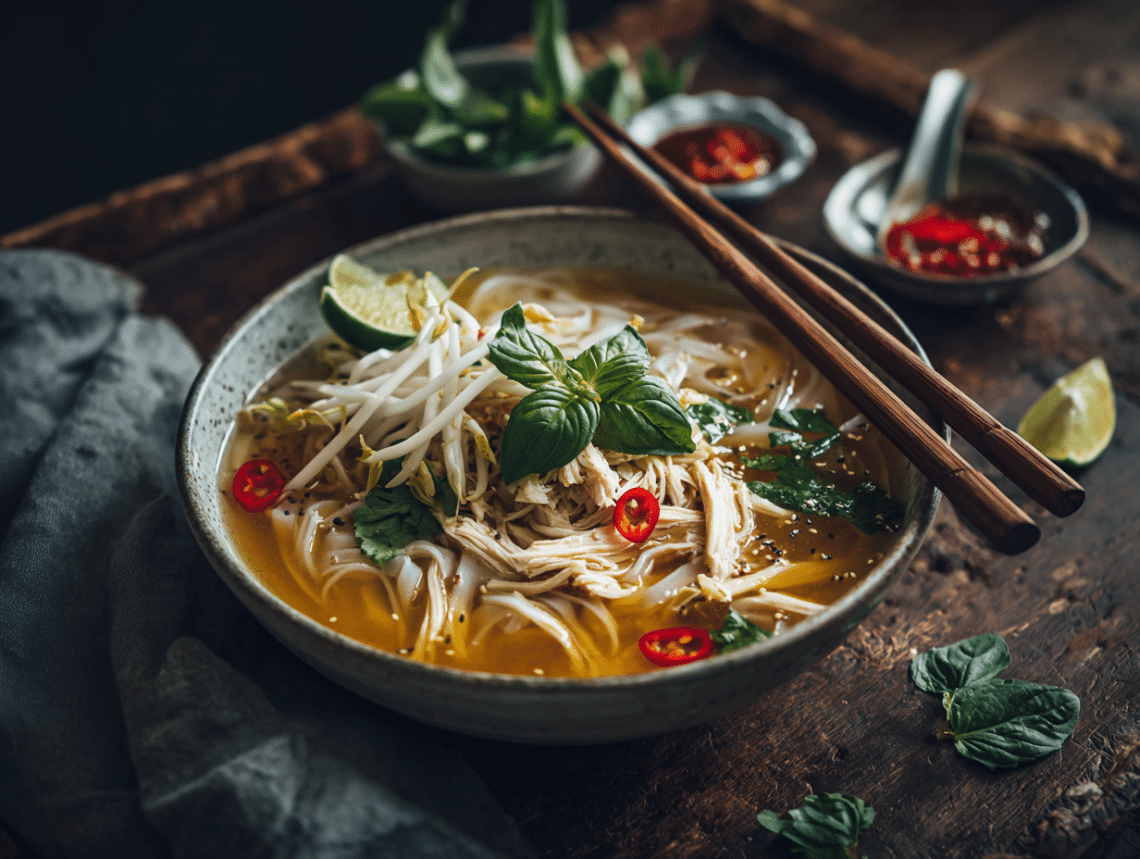
Chicken Pho Recipe: Easy Vietnamese Noodle Soup

Equipment
- Large stockpot or Dutch oven (4-quart minimum)
- Medium saucepan for noodles
- Colander or mesh strainer
- Sharp chef’s knife
- Large soup bowls for serving
- Fine-mesh skimmer or slotted spoon
Ingredients
- 1 lb boneless, skinless chicken breast
- 4 oz fresh bean sprouts about ½ standard package
- 1 bunch Thai basil about 1 cup leaves
- 1 medium lime cut into 4 pieces
- 2 medium red chili peppers sliced
- 4 leaves romaine lettuce optional
- 8 oz thin Vietnamese rice noodles (bánh phở)
- 6 cups water
- 4 cloves garlic thinly sliced
- 4 slices fresh ginger each about ¼ inch thick
- 3 whole star anise pods
- 1 stick cinnamon
- 1 tbsp neutral oil optional, for charring ginger and garlic
- 1 tsp sea salt
- 2 tbsp fish sauce adjust to taste
- 2 tbsp toasted black sesame seeds to sprinkle, optional
Instructions
- Place 1 lb (450g) chicken breast in a large stockpot with 6 cups of water. Bring to a boil over high heat, then reduce to a gentle simmer. Skim any foam or impurities that rise to the surface during the first few minutes.
- Add the star anise, cinnamon stick, ginger slices, garlic slices, and fish sauce to the simmering broth. Simmer gently for 20-25 minutes until the chicken is cooked through and the broth is fragrant.
- Stir the broth occasionally so that the seasoning dissipates well throughout the soup base.
- In a medium saucepan, bring water to a boil.
- Then quickly cook the Vietnamese thin rice noodles for about 4 minutes.
- Drain the hot water and place the noodles in cold running water so that it cools off and does not continue cooking.
- Remove the cooked chicken from the broth and shred or slice it against the grain. Strain the broth through a fine-mesh sieve if desired. Divide the cooked noodles among 4 large soup bowls, top with shredded chicken, and ladle the hot broth over the top.
- Then add all the fresh ingredients – the bean sprouts, toasted black sesame seeds, Thai basil leaves, sliced chili peppers, and even some cut romaine lettuce if you like.
- Squeeze a wedge of fresh lime into each bowl just before eating. Taste and adjust with additional fish sauce, chilli, or lime as desired. Serve immediately while the broth is piping hot.
Notes
- Storage: Refrigerate broth and noodles in separate airtight containers for up to 3 days. Keep fresh toppings (bean sprouts, basil, lime) separate and refrigerate for up to 2 days.
- Make-ahead: Prepare the broth a day ahead and refrigerate — the flavours deepen overnight. Cook noodles fresh when ready to serve so they don't become mushy.
- Substitutions: Swap chicken breast for boneless thighs for richer flavour and more forgiving texture. Use whole star anise pods instead of powder for a cleaner, more authentic broth.
- Freezing: The strained broth freezes well for up to 3 months. Do not freeze cooked rice noodles as they disintegrate upon thawing.
- Pro tip: Char the ginger slices and garlic in a dry skillet until blackened before adding to the broth for extra depth of flavour.
Nutrition
Common questions
Can I make the broth ahead of time?
Yes — the broth is actually better made a day ahead. Chilling it overnight lets the fat solidify on the surface so you can lift it off cleanly, and the spice flavour deepens slightly. Reheat it on the stovetop before serving and cook the noodles fresh.
What if I can’t find Thai basil?
Use Thai basil if you can — it has an anise-like, slightly peppery flavour that Italian sweet basil doesn’t replicate. If Thai basil isn’t available, fresh mint is a closer substitute than sweet basil and works well with the broth’s spice profile.
Is this recipe gluten-free?
Rice noodles are naturally gluten-free, and the main ingredient to check is the fish sauce — some brands add wheat. Look for a label that lists only anchovies, salt, and water, or check the manufacturer’s website to confirm it’s certified gluten-free.
Can I use chicken thighs instead of breast?
Boneless, skinless thighs work well and are more forgiving if they simmer a few minutes longer than planned. The broth will be slightly richer and a little darker in colour, which is not a problem — just a different result.
Try these next
- Fresh Vegetable Spring Rolls
- Authentic Japanese Chicken Teriyaki
- Sweet and Tangy Grape Chicken Salad
- Quick and Delicious Homemade Chinese Fried Rice