




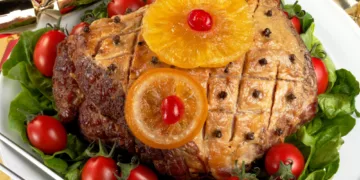

Italian pork loin braised in milk — known as maiale al latte — is one of the most underrated dishes in Emilia-Romagna’s legendary kitchen. A humble pork loin simmers low and slow in whole milk until the meat turns fork-tender and the milk breaks into the most incredible golden, caramelised sauce you’ve ever tasted.
I love this recipe for three reasons:
- It’s dead simple — five core ingredients and almost no active cooking time.
- It looks and tastes impossibly luxurious — guests will think you spent hours fussing over it.
- The milk sauce is addictive — those sweet, nutty curds clinging to each slice of pork are pure magic.
The slow braise in milk keeps the pork loin incredibly moist, which is a cut that can easily dry out with other methods. If you’ve never tried braising pork in milk before, this is the recipe that will convert you — and it’s ready with barely any effort on your part.
Italian Pork Loin Braised in Milk (Maiale al Latte)
Equipment
- Large heavy-bottomed pan or Dutch oven with lid (at least 5 quarts / 4.7L)
- Tongs for turning the pork loin
- Sharp carving knife
- Wooden spoon
- Instant-read meat thermometer
Ingredients
- 1 medium boneless pork loin roast about 2-2.5 lbs
- 1 large onion roughly chopped
- 1-2 tablespoons extra virgin olive oil
- 6 cups whole milk full-fat, or enough to nearly cover the pork
- 2 small bay leaves also called laurel leaves, optional
- 1 teaspoon fine sea salt plus more to taste
- ½ teaspoon freshly ground black pepper plus more for serving
- 1 teaspoon plain flour optional, for thickening the sauce; gluten-free if needed
Instructions
- Heat 1-2 tablespoons of extra virgin olive oil in a large heavy-bottomed pan or Dutch oven over medium heat. Add the roughly chopped onion and cook, stirring occasionally, for 5-7 minutes until softened and lightly golden.
- Push the onion to the edges of the pan. Season the pork loin all over with salt and pepper, then increase the heat to high. Sear the pork for about 5 minutes until deep golden brown on the bottom.
- Using tongs, turn the pork and sear for another 5 minutes until browned on the second side.
- Reduce the heat to the lowest setting. Slowly pour in the whole milk — it will bubble vigorously at first. The milk should nearly cover the pork; add a little more if needed.
- Tuck the bay leaves into the milk. Cover the pan with a lid slightly ajar and simmer on the lowest heat for 1 hour 30 minutes to 1 hour 45 minutes, turning the pork every 30 minutes. The pork is done when it reaches an internal temperature of 145°F / 63°C and feels very tender when pierced with a fork.
- Transfer the cooked pork to a cutting board and tent loosely with foil to rest for 10 minutes. If the sauce is still thin and watery, continue to the next step.
- If the sauce needs thickening, sprinkle in 1 teaspoon of plain flour (use gluten-free flour if needed) while whisking constantly over medium heat. The sauce will thicken within 1-2 minutes.
- The milk will have reduced into golden, caramelised curds in a creamy sauce. Use a wooden spoon to break up any large lumps and stir everything together into a cohesive sauce. This rustic, curdled texture is exactly what you want — it's the hallmark of authentic maiale al latte.
- Taste the sauce and season with salt as needed. Stir well.
- Carve the rested pork into ½-inch (1cm) slices. Arrange on a warm serving platter, spoon the milk sauce generously over the top, and finish with freshly ground black pepper. Serve immediately.
Notes
Notes
- Storage: Refrigerate sliced pork in its sauce in an airtight container for up to 3 days. The sauce thickens further when cold — reheat gently with a splash of milk.
- Freezer: Freeze portions with sauce for up to 2 months. Thaw overnight in the fridge before reheating.
- Make-ahead: This dish actually improves overnight as the pork absorbs more sauce flavour. Braise the day before, slice and reheat in a covered pan over low heat.
- Pro tip: Do not skip the initial high-heat sear — browning the pork builds a Maillard crust that adds depth to the final sauce and prevents a pallid, boiled appearance.
- Substitution: Bay leaves work identically to laurel leaves. For extra depth, add a strip of lemon zest or 4-5 sage leaves to the braising milk.
Nutrition
What Makes This Milk-Braised Pork Loin Special
Most pork loin recipes fight against the cut’s tendency to dry out. This Italian method solves that problem entirely by submerging the loin in whole milk and simmering it at the gentlest possible heat for nearly two hours. The milk proteins and fats baste the pork continuously, producing meat so tender you can practically cut it with a spoon.
But the real star is the sauce. As the milk reduces, its sugars caramelise and its proteins coagulate into rich, nutty, golden curds. It looks rustic — almost broken — and that’s exactly the point. Those sweet, savoury clusters spooned over each slice of pork are what elevates this from simple roast to something truly memorable. It’s the kind of dish that makes people put their fork down and ask, “What is IN this?”
This is cucina povera at its finest — peasant cooking that delivers aristocratic flavour from the humblest ingredients.
Equipment You’ll Need
- Large heavy-bottomed pan or Dutch oven (at least 5 quarts / 4.7L): The heavy base prevents the milk from scorching on the bottom during the long braise, and the volume accommodates the pork plus enough milk to nearly submerge it. A thin pan will give you burnt milk and bitter sauce.
- Tongs: Essential for turning the pork during searing without piercing the crust you’ve just built. A fork would puncture the meat and let juices escape.
- Sharp carving knife: A clean, even slice through the tender pork ensures each portion holds together and presents beautifully with the sauce.
- Wooden spoon: Needed for breaking up the caramelised milk curds and stirring them into a cohesive sauce at the end.
- Instant-read meat thermometer (nice-to-have): Takes the guesswork out of doneness. Pork loin is safe and perfectly tender at 145°F / 63°C — going much beyond that dries it out. Especially useful since cooking times vary with the size of your loin.
Tips for Best Results
- Bring the pork to room temperature before cooking — take it out of the fridge 30 minutes ahead. Cold meat dropped into hot oil won’t sear evenly and will cool the milk too rapidly.
- Don’t rush the sear. A proper golden-brown crust on both sides takes a full 10 minutes and provides the Maillard flavour base for the entire dish. Pale, grey pork = bland sauce.
- Keep the braise at the lowest possible simmer. You want lazy, occasional bubbles — not a rolling boil. Aggressive heat toughens the protein fibres in both the pork and the milk, and you’ll end up with rubbery meat in a grainy sauce.
- Turn the pork every 30 minutes during braising so both sides absorb the milk evenly and develop consistent flavour throughout.
- Don’t panic when the milk curdles. It’s supposed to. The curds are the sauce. Embrace them.
- Rest the pork for 10 minutes before slicing. This lets the juices redistribute so they end up on your plate with the sauce, not on the cutting board.
Substitutions and Variations
- Pork shoulder: Fattier and even more forgiving than loin. Use a boneless piece of similar weight and add 30 minutes to the braising time.
- Aromatics: Add a strip of lemon zest, 4-5 fresh sage leaves, or 3-4 whole garlic cloves to the braising milk for extra depth. All are traditional Emilia-Romagna variations.
- No flour thickener: If you want to skip the flour entirely, simply reduce the sauce over medium heat after removing the pork — the milk will continue to concentrate and thicken on its own. Stir frequently to prevent scorching.
- Dairy-free: This recipe fundamentally relies on the chemistry of milk proteins and fats. There is no convincing substitute — this is not the right recipe to adapt dairy-free.
- Wine addition: Some versions from Emilia-Romagna deglaze the pan with ½ cup of dry white wine after searing the pork and before adding the milk. The acidity helps the milk curdle into even more flavourful clusters.
Storage and Reheating
- Fridge: Store sliced pork submerged in its sauce in an airtight container for up to 3 days. The sauce solidifies when cold — this is normal and it melts back to creaminess when reheated.
- Freezer: Freeze individual portions of sliced pork in sauce for up to 2 months. Thaw overnight in the fridge.
- Reheating: Place sliced pork and sauce in a covered pan over low heat, adding a splash of milk if the sauce seems too thick. Heat gently for 8-10 minutes until warmed through. Avoid the microwave — it dries out the pork and makes the sauce grainy.
- Make-ahead tip: This dish genuinely improves overnight. The pork absorbs more sauce flavour as it sits. Braise it the day before your dinner, refrigerate it whole in the sauce, then slice and reheat just before serving.
What to Serve With This
In Emilia-Romagna, this dish is typically served with simple sides that let the milk sauce shine:
- Creamy polenta — the soft texture soaks up the sauce beautifully.
- Mashed potatoes — another natural sauce vehicle and a comforting pairing.
- Roasted root vegetables — carrots, parsnips, or turnips roasted until caramelised offer a sweet contrast to the savoury sauce.
- Steamed green beans or broccoli — a simple green vegetable adds colour and freshness to the plate.
- Crusty Italian bread — for mopping up every last drop of that golden sauce.
Frequently Asked Questions
Why does the milk curdle when braising pork?
The acid from the meat juices and the prolonged heat cause the milk proteins (casein) to coagulate and separate from the whey. This is completely intentional in maiale al latte. The curds caramelise and concentrate into the rich, nutty, golden sauce that defines this dish. If your milk stays perfectly smooth, you’ve done something wrong.
Can I use semi-skimmed or skimmed milk instead of whole milk?
Whole milk is strongly recommended. The fat content contributes to the richness of the sauce and helps keep the pork moist. Semi-skimmed will produce a thinner, less flavourful sauce. Skimmed milk will result in a watery, almost flavourless liquid that won’t reduce into proper curds. The fat is doing real work here — don’t skip it.
How do I know when the pork loin is done?
The most reliable method is an instant-read thermometer — the internal temperature should read 145°F / 63°C at the thickest point. Without a thermometer, the pork should feel very tender when pierced with a fork and offer no resistance. For a 2-2.5 lb loin, this typically takes 1 hour 30 minutes to 1 hour 45 minutes at a very gentle simmer.
My sauce is still watery after the pork is done. What do I do?
Remove the pork and tent it with foil. Increase the heat to medium and let the sauce reduce, stirring frequently. If you’re short on time, whisk in 1 teaspoon of plain flour — it thickens the sauce almost instantly. You can also use the back of a wooden spoon to crush the milk curds, which releases starch and helps bind the sauce naturally.
Is this the same as Arrosto di Maiale al Latte?
Yes. Arrosto di maiale al latte (pork roast in milk) and maiale al latte are the same traditional dish from Emilia-Romagna. Some versions start the braise in the oven rather than on the stovetop, and some add aromatics like garlic, sage, or lemon zest, but the core technique — pork simmered low and slow in whole milk — is identical across all regional variations.
Can I braise this in the oven instead of on the stovetop?
Absolutely. After searing the pork and adding the milk, cover the pot and transfer it to a preheated oven at 300°F / 150°C (130°C fan-forced). Braise for the same time — about 1.5 to 1.75 hours. The oven provides more even, consistent heat, which actually makes it easier to avoid scorching the milk on the bottom of the pan.
The History of Maiale al Latte
Maiale al latte is a cornerstone of the cucina povera (peasant cooking) tradition from Emilia-Romagna in northern Italy — a region already famous for Parmigiano-Reggiano, prosciutto di Parma, and balsamic vinegar. The technique of braising meat in milk dates back centuries, born from the practical reality that dairy and pork were the two most abundant ingredients on small Emilian farms. Milk tenderised tougher cuts, and the slow reduction created a sauce that added richness without expensive ingredients like wine or stock. The dish appears in Italian cookbooks as early as the 18th century, and Marcella Hazan’s celebrated English-language version in The Classic Italian Cook Book (1973) introduced it to home cooks outside Italy. Today it remains a Sunday lunch staple across Emilia-Romagna, Veneto, and Friuli — a beautiful reminder that the best Italian cooking has always been about simplicity, patience, and exceptional ingredients treated with respect.
If you make this milk-braised pork loin, I’d love to hear how it turned out — drop a star rating and a comment below to let me know!


