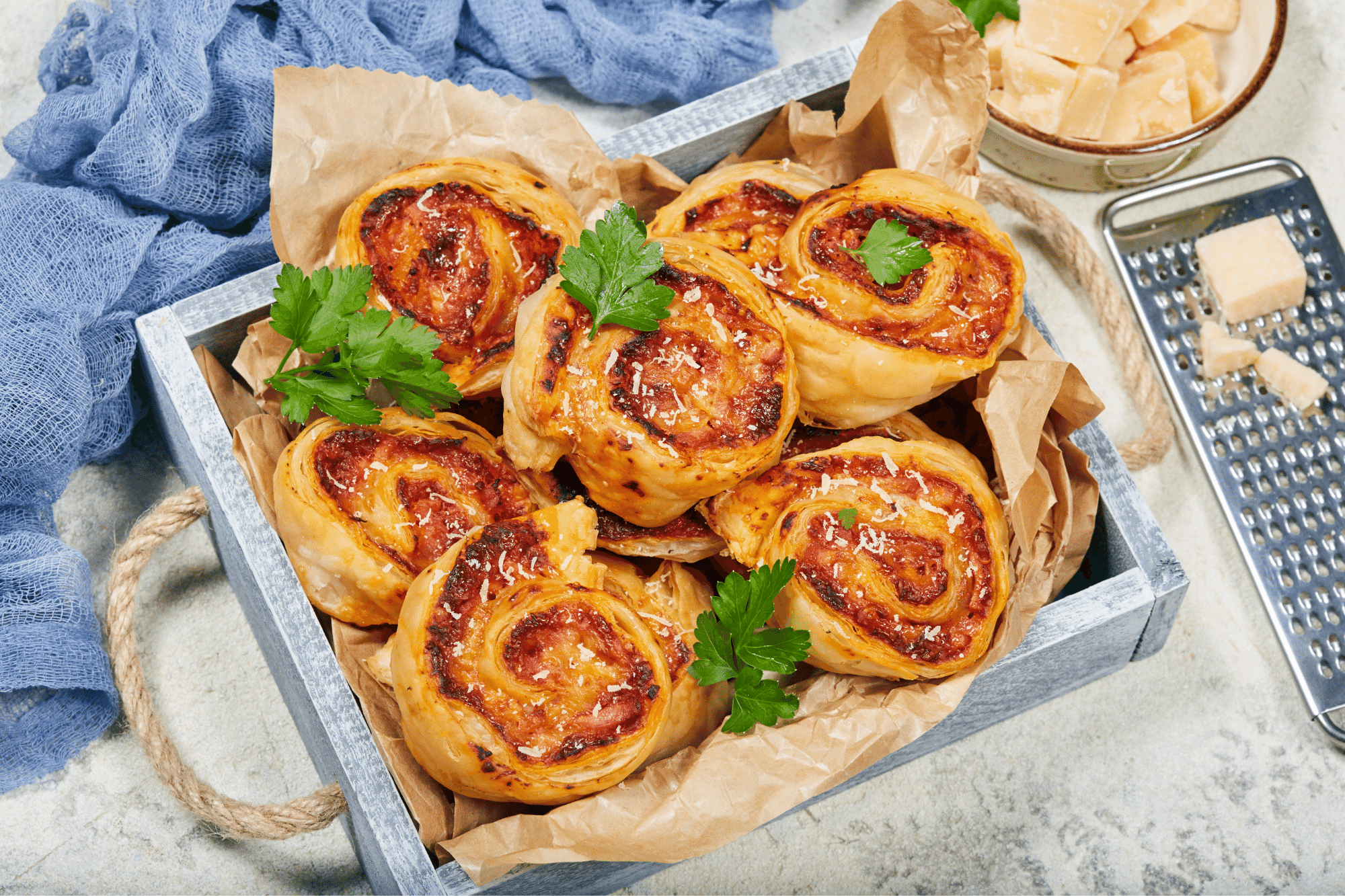

These easy pizza rolls are one of my favourite ways to switch up pizza night. Instead of a flat pie, you roll your favourite toppings inside soft yeasted dough, slice the log into spirals, and bake until golden and bubbly on top. The result? Cute, portable rolls with all the flavour of a great pizza.
The dough itself is dead simple — just flour, water, yeast, olive oil, salt, and a touch of sugar. A stand mixer does the kneading for you, and after a two-hour rise you’re ready to roll. Here’s what I love most about this recipe:
- Totally customisable — use whatever pizza toppings you like for the filling
- Freezer-friendly — assemble, freeze unbaked, then bake straight from frozen when cravings hit
- Crowd-pleasing — these disappear fast at parties and game-day gatherings
Whether you’re feeding unexpected guests or just want a fun weekend baking project, these pizza rolls deliver every time — soft dough, melty cheese, and zero fuss.
Easy Pizza Rolls Recipe (Freezer-Friendly!)
Ingredients
- 3 ½ cups all-purpose flour plus extra for dusting
- 1 ⅓ cups warm water around 40°C / 105°F
- 1 teaspoon sugar
- 2 teaspoons salt fine
- 2 tablespoons olive oil plus extra for greasing
- 1 envelope active dry yeast
- 2 cups shredded mozzarella cheese divided
- ½ cup pizza sauce or marinara plus toppings to taste
- as needed flour for dusting work surface
Instructions
- Add the yeast to warm water and set aside for 10 minutes.
- In the bowl of a standing mixer, mix together the flour, salt, sugar and olive oil until combined and then add the water with yeast.
- With speed on medium, mix until everything is combined. Once everything is combined, you will reduce the speed to low and mix for 10 minutes.
- Divide the rolled dough into 2 to 3 balls (depends on how many different fillings you want – I usually divide it into 2 balls) and put each of them into an oiled bowl – brush the tops of the dough with a bit of oil. Cover the bowls tightly with plastic wrap and place the dough in a warm place for approximately 2 hours, or until it doubles in volume.
- Once the dough is ready, preheat the oven to 200°C / 390°F (180°C fan-forced). Dust some flour onto your work surface, take a ball of dough and roll it out into a large rectangle, about 30x40cm (12×16 inches).
- Spread a thin layer of pizza sauce over the rolled dough, leaving a 1cm (½ inch) border. Add your favourite pizza toppings in a single even layer. Use a light hand with the cheese here and reserve about half for topping the rolls after slicing.
- Starting from one long edge, roll the dough tightly into a log shape, keeping it as even as possible. For thicker, puffier rolls, start rolling from a short edge instead.
- Using a sharp serrated knife or unflavoured dental floss, slice the roll into sections approximately 3–4cm (1.5 inches) thick. Place each roll cut-side up on a baking sheet, leaving space between them, and top each with the reserved mozzarella.
- Bake the pizza rolls at 200°C / 390°F (180°C fan-forced) for 20–25 minutes, or until golden brown, the cheese is bubbly, and the dough is fully cooked through. Let cool for 5 minutes before serving.
Nutrition
What Makes These Pizza Rolls Special
Unlike frozen store-bought pizza rolls with their crispy shells and mystery fillings, these homemade pizza rolls are built on a soft, pillowy yeasted dough that you make from scratch. The dough itself has just six ingredients and comes together in minutes with a stand mixer.
What sets this recipe apart is the rolling technique. Instead of stuffing individual pockets, you spread your toppings over a large sheet of dough, roll it into a tight log, and slice it into spirals — similar to making cinnamon rolls. Each piece has layers of dough and filling that bake together into something that’s part pizza, part bread roll, and entirely addictive.
The real magic? They freeze brilliantly. You can assemble a double batch, freeze half on a baking sheet, and have homemade pizza rolls ready to bake straight from the freezer whenever the mood strikes.
Equipment You’ll Need
- Stand mixer with dough hook — this dough needs 10 minutes of kneading on low speed, and a stand mixer handles that effortlessly while you prep your toppings. A hand mixer with dough hooks or even hand-kneading will work, but expect a longer kneading time.
- Rolling pin — essential for rolling the dough into a thin, even rectangle. A thinner sheet means more spirals in each roll and better filling distribution.
- Large mixing bowl — the dough needs to double in size during its two-hour rise, so choose a bowl that gives it plenty of room to expand.
- Rimmed baking sheet — the rim catches any cheese or sauce that bubbles out during baking, keeping your oven clean.
- Sharp serrated knife or unflavoured dental floss — a serrated knife cuts cleanly through the rolled dough without compressing the layers. Dental floss slid underneath and crossed over the top gives the cleanest cuts of all.
- Pastry brush — useful for oiling the dough balls before their rise and for brushing excess flour off the rolled dough before adding toppings.
Tips for Best Results
- Check your water temperature. The warm water for activating the yeast should be around 40°C / 105°F — warm to the touch but not hot. Water that’s too hot will kill the yeast; too cold and it won’t activate properly.
- Don’t skip the 10-minute knead. This extended mixing time on low speed develops the gluten structure that makes the dough elastic enough to roll thin without tearing.
- Roll the dough thin. Aim for about 3-4mm thickness. Thicker dough means fewer spirals and a bready, heavy result. Thinner dough gives you more layers and a better filling-to-dough ratio.
- Keep toppings in a single, even layer. Overloading the filling makes the roll impossible to seal and causes toppings to burst out during baking. Less is genuinely more here.
- Reserve cheese for the top. A generous handful of mozzarella on top of each sliced roll melts into a golden cap that hides any imperfections and adds an extra layer of flavour.
- Let them rest after baking. Five minutes of cooling lets the cheese set slightly, so the rolls hold together when you pick them up instead of collapsing into a molten mess.
Substitutions and Variations
- Bread flour instead of all-purpose: Gives a chewier, sturdier roll that holds up better to heavy fillings. Use the same quantity.
- Instant yeast instead of active dry: Skip the 10-minute blooming step and add the yeast directly to the dry ingredients. Use the same quantity (2 ¼ teaspoons / 7g).
- Wholemeal twist: Replace up to half the all-purpose flour with whole wheat flour for a nuttier flavour. You may need an extra tablespoon of water as whole wheat absorbs more liquid.
- Pesto base: Swap the pizza sauce for basil pesto and top with sun-dried tomatoes and mozzarella for a different flavour profile.
- Meat lovers: Layer cooked and cooled Italian sausage, pepperoni, or diced ham over the sauce before rolling.
- Veggie-packed: Sautéed mushrooms, roasted red peppers, and spinach make excellent fillings — just make sure to squeeze out any excess moisture first.
Storage and Reheating
- Room temperature: Pizza rolls stay good at room temperature for up to 4 hours — ideal for a party spread.
- Fridge: Store baked rolls in an airtight container for up to 3 days. Reheat in a 180°C / 350°F oven for 8-10 minutes until warmed through. Avoid the microwave — it makes the dough rubbery.
- Freezer (unbaked): Place shaped, uncooked rolls on a lined baking sheet and freeze until solid (about 2 hours). Transfer to a labelled freezer bag. Bake from frozen at 200°C / 390°F for 28-32 minutes. No thawing needed. Keeps for up to 3 months.
- Freezer (baked): Cool completely, then freeze in a single layer before transferring to a freezer bag. Reheat from frozen in a 180°C / 350°F oven for 12-15 minutes. Keeps for up to 2 months.
What to Serve With This
These pizza rolls are incredibly versatile. For a snack or appetiser, serve them with warm marinara sauce for dipping, a garlic butter drizzle, or a creamy ranch dressing. For a light meal, pair them with a crisp green salad dressed in a simple red wine vinaigrette and some marinated olives. They also work beautifully alongside a bowl of minestrone soup or a classic tomato soup for a cosy lunch.
For game day or parties, set out a selection of dipping sauces — marinara, pesto, garlic aioli, and spicy arrabbiata — and let guests mix and match. Kids love these in their lunch boxes served at room temperature.
Frequently Asked Questions
Can I make the dough ahead of time?
Yes. After the initial knead, place the dough in an oiled bowl, cover tightly, and refrigerate for up to 24 hours. The slow cold rise actually develops more flavour. Let the dough sit at room temperature for 30 minutes before rolling out.
Why did my pizza rolls come out doughy in the middle?
This usually happens when the filling is too thick or too wet. Spread toppings in a thin, even layer and avoid watery ingredients like fresh tomatoes. If using vegetables, sauté and drain them first. Also make sure your oven is fully preheated before baking.
Can I make these without a stand mixer?
Absolutely. Mix the ingredients in a large bowl with a wooden spoon until a shaggy dough forms, then turn it out onto a floured surface and knead by hand for 12-15 minutes until smooth and elastic. It’s more effort but produces the same result.
How do I know when the dough has risen enough?
The dough should roughly double in size. Press two fingers about 1cm into the surface — if the indentation springs back slowly and doesn’t fully fill in, the dough is ready. If it springs back immediately, give it more time.
Can I use shop-bought pizza dough instead?
Yes. A 450g ball of shop-bought pizza dough will work as a direct substitute. Skip the dough-making and rising steps entirely. Just let the dough come to room temperature for 20 minutes before rolling it out so it’s pliable enough to work with.
What’s the best way to slice the rolls without squishing them?
Use a sharp serrated knife with a gentle sawing motion rather than pressing down. Alternatively, slide a piece of unflavoured dental floss under the roll, cross the ends over the top, and pull — this gives the cleanest cut without any compression.
The Story Behind Pizza Rolls
Pizza rolls are a natural evolution of the Italian tradition of rotolo di pizza — rolled pizza dough filled with various ingredients. While the concept of rolling bread dough around fillings exists across many cultures — from Eastern European stuffed rolls to Turkish pide — the pizza roll as we know it borrows directly from Italian home cooking, where leftover pizza dough was never wasted.
The idea gained mainstream popularity in the United States with the invention of Totino’s frozen pizza rolls in 1968 by Jeno Paulucci. But the homemade version — using real yeasted dough and fresh toppings — is a completely different experience. It’s closer to what you’d find in an Italian bakery: soft, bready, and bursting with flavour rather than deep-fried and pocket-sized.
Making them at home brings you back to that original spirit of resourceful Italian cooking — simple dough, good ingredients, and a shape that makes pizza portable, shareable, and endlessly fun to customise.
If you make these pizza rolls, I’d love to hear how they turned out — drop a star rating and a comment below to let me know your favourite filling combination!