





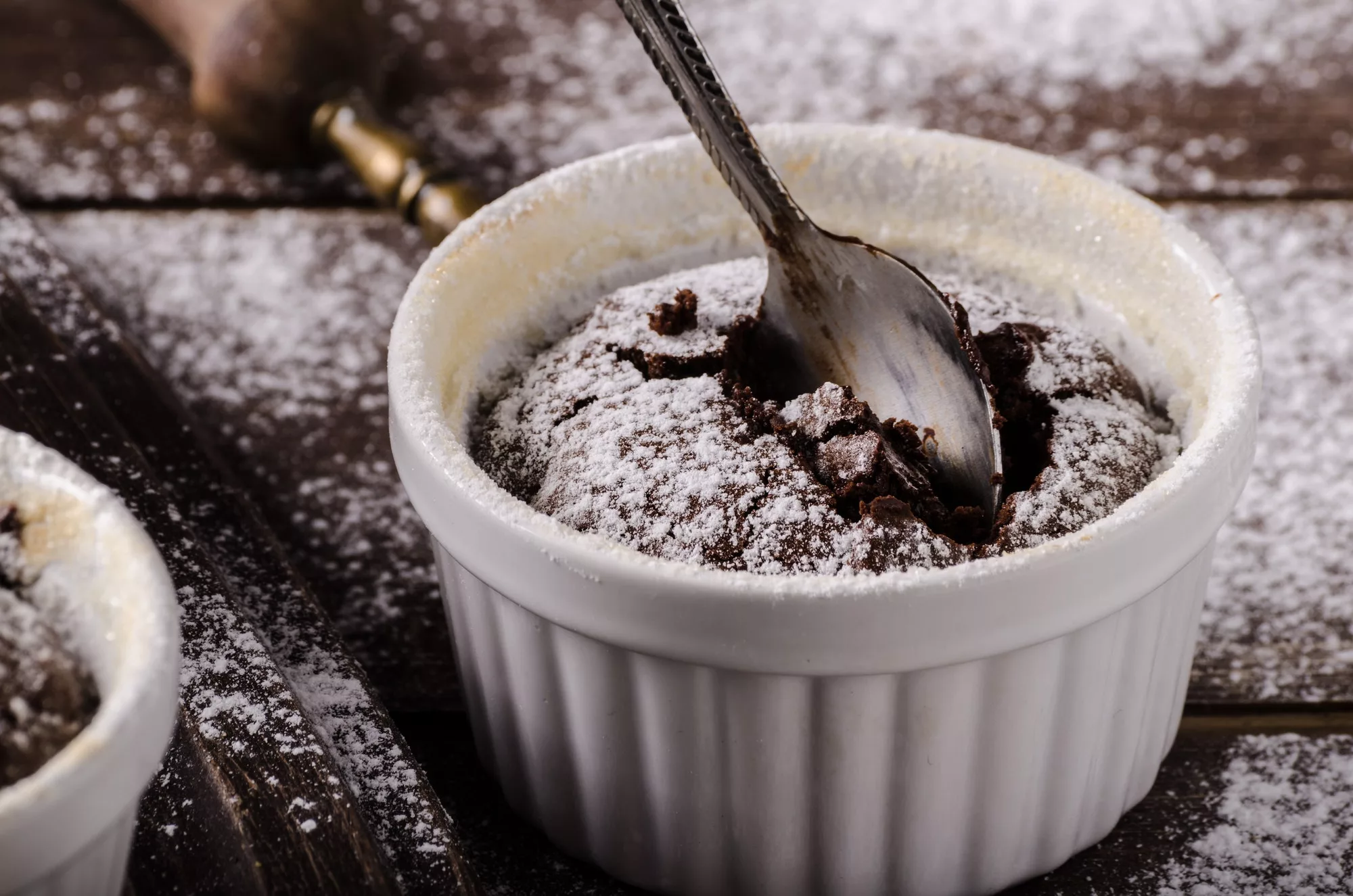
I created this chocolate protein mug soufflé for those moments when a chocolate craving hits hard and you need something now — not in an hour, not after preheating an oven, but in literally two minutes flat.
What makes this recipe special is its versatility. By adjusting the microwave time by just a few seconds, you get three completely different desserts from the same batter:
- 30 seconds — a molten, airy soufflé with a liquid centre
- 35 seconds — a self-saucing pudding with a gooey chocolate pool underneath
- 38 seconds — a moist, fudgy chocolate cake
The almond butter hidden in the centre melts into a rich, nutty pocket that hits you mid-bite. Combined with raw cacao loaded with antioxidants and a full scoop of protein powder, this is a dessert you can feel genuinely good about eating.
The single most important thing I can tell you: undercook it. Five seconds too many in the microwave is the difference between molten heaven and a dry sponge. Trust me on this one.
Chocolate Protein Mug Soufflé
Equipment
- Microwave-Safe Mug
- Whisk or Fork
- Microwave
Ingredients
- 1 scoop chocolate protein powder approximately 30g / 1oz
- ½ teaspoon baking powder
- 1 teaspoon sugar-free chocolate drinking powder
- 2 teaspoons unsweetened cacao powder such as Van Houten or any Dutch-process cacao
- ⅛ teaspoon fine salt
- 1 large egg
- 2-3 tablespoons unsweetened almond milk
- 1½ teaspoons almond butter
- 2 tablespoons activated almonds for serving (optional)
- 3 tablespoons extra cacao powder for serving (optional)
Instructions
- Combine all dry ingredients (protein powder, baking powder, choc drinking powder, cacao, salt) in a mug so that there are no lumps.
- Add the egg and almond milk. Stir very well.
- Dollop the almond butter into the centre and push down to not sit on the top.
- Microwave on high for 30 seconds for a soufflé texture, 35 seconds for a self-saucing pudding, or 38 seconds for a moist cake. These times are based on an 800W microwave — adjust by ±5 seconds for your microwave's wattage. It is much better to undercook than overcook. The texture should be just set on top with a visibly gooey centre.
- Let the mug stand for 15-20 seconds after microwaving — it will continue to cook from residual heat. If the top has set but the bottom is still liquid, remove the cooked top portion with a spoon and return the mug to the microwave for 5 seconds only.
- Serve immediately in the mug or turn out onto a small plate. Top with a dusting of cacao powder and a few roughly chopped almonds.
Nutrition
What Makes This Chocolate Protein Mug Soufflé Special
Most mug cakes are glorified sponges held together by sugar and flour. This one is fundamentally different. The combination of protein powder and egg creates a structure that can hold air without any flour at all, while the raw cacao delivers a deep, almost bittersweet chocolate flavour that sugar-free drinking chocolate alone cannot achieve.
The real magic is the almond butter pocket in the centre. As the microwave heats the batter from the outside in, that almond butter melts into a warm, nutty pool that you hit mid-bite. It also acts as an insurance policy — even if you slightly overcook the surrounding batter, that molten centre keeps the whole thing feeling luxurious.
What truly sets this apart is the time control. A 5-second difference in the microwave gives you three distinct desserts: an airy soufflé, a self-saucing pudding, or a dense fudgy cake. No other recipe gives you that kind of versatility from one set of ingredients.
Equipment You’ll Need
- Microwave-safe mug (12oz / 350ml capacity) — the mug needs enough room for the batter to rise without overflowing. A standard coffee mug works perfectly; avoid narrow-necked mugs as the batter puffs up significantly.
- Fork or small whisk — essential for breaking up lumps in the dry ingredients before adding the egg. Protein powder clumps easily, and any dry pockets will taste chalky in the finished soufflé.
- Microwave (800-1000W) — the timing in this recipe is calibrated for an 800W microwave. If yours is more powerful, reduce the time by 3-5 seconds. A microwave with a turntable ensures even cooking so you do not end up with one cooked side and one raw side.
Tips for Best Results
- Always undercook by 5 seconds on your first attempt. You can add more time; you cannot undo a dry, rubbery result. The batter should jiggle visibly in the centre when you pull it out.
- Let it rest for 15-20 seconds before eating. The residual heat continues cooking the centre, which is why undercooking is critical — it finishes itself.
- Push the almond butter below the surface. If it sits on top, it just melts across the surface instead of creating that molten pocket inside.
- Use room-temperature egg and milk. Cold ingredients require slightly longer microwave times, which increases the risk of overcooking the outer edges before the centre sets.
- Mix the dry ingredients thoroughly before adding the egg. Protein powder is notoriously clumpy — spend an extra 10 seconds breaking up any lumps with the back of a fork.
Substitutions and Variations
- Protein powder: Whey, casein, and plant-based (pea, rice, soy) all work. Plant-based proteins tend to absorb more liquid, so use the full 3 tablespoons of milk. Casein produces a denser, more pudding-like texture.
- Almond butter: Swap for peanut butter, cashew butter, or sunflower seed butter. Sunflower seed butter makes this completely nut-free. Nutella works too but adds sugar.
- Almond milk: Any milk works — oat, coconut, dairy, soy. Full-fat coconut milk makes the result extra rich and creamy.
- Cacao: Dutch-process cacao gives the deepest chocolate flavour. Natural cocoa powder works but tastes slightly more acidic.
- Extra gooey centre: Drop 3-4 dark chocolate chips in alongside the almond butter before microwaving.
- Vanilla version: Replace the cacao and drinking chocolate with vanilla protein powder, a splash of vanilla extract, and a tablespoon of freeze-dried strawberries for a strawberry shortcake mug cake.
Storage and Reheating
This soufflé is at its absolute best eaten within 60 seconds of leaving the microwave. The airy soufflé texture deflates quickly, and by the 15-minute mark you have a rubbery puck rather than a molten dessert.
Do not make this ahead and reheat it. The entire recipe takes under 3 minutes from start to finish, so there is no practical reason to batch-prepare. Instead, pre-mix the dry ingredients in bulk — combine protein powder, baking powder, drinking chocolate, cacao, and salt in a jar. One portion’s worth keeps in an airtight container at room temperature for up to 2 weeks. When a craving strikes, scoop your dry mix into a mug, add the egg and milk, drop in the almond butter, and microwave.
What to Serve With This
- Greek yoghurt — a cold dollop of full-fat Greek yoghurt against the hot soufflé creates a beautiful temperature contrast and adds extra protein.
- Fresh berries — raspberries and strawberries cut through the richness of the chocolate and cacao.
- A drizzle of nut butter — warmed almond or peanut butter drizzled over the top doubles down on the nutty flavour.
- Coconut cream — whipped coconut cream keeps this dairy-free while adding a subtle tropical sweetness.
- A pinch of flaky sea salt — Maldon salt or similar on top just before serving elevates the chocolate flavour dramatically.
Frequently Asked Questions
Why did my mug soufflé turn out dry and rubbery?
You microwaved it too long. This is the single most common mistake. Even 5 extra seconds can turn a molten soufflé into a dry sponge. Start at 25 seconds and add 5-second bursts until you find your microwave’s sweet spot. The centre should still jiggle when you remove it — residual heat finishes the job.
Can I bake this in the oven instead of microwaving it?
You can, but it becomes a different dessert entirely. Transfer the batter to a greased ramekin and bake at 180°C / 350°F (160°C fan-forced) for 10-12 minutes. It will not rise as dramatically as a traditional soufflé since the egg whites are not whipped, but you will get a lovely warm chocolate cake with a soft centre.
What protein powder works best for this recipe?
Chocolate whey concentrate produces the most cake-like crumb with the best rise. Whey isolate also works well. Plant-based proteins (pea, rice, soy blends) tend to be denser and absorb more liquid — if using plant-based, add the full 3 tablespoons of milk and consider adding an extra teaspoon of milk if the batter looks too thick. Avoid collagen protein as it does not provide the structure needed to rise.
Why does the recipe say it serves 4 when it clearly makes one mug?
That was a mistake in the original recipe card. The ingredient quantities listed make exactly one single-serve mug soufflé. To serve 4 people, simply multiply all ingredients by 4 and make them in individual mugs, microwaving one at a time.
Can I make this without the almond butter?
Yes, but you lose the molten centre that makes this special. The almond butter melts into a warm, gooey pocket inside the soufflé. Without it, the texture is more uniformly cake-like. If you cannot eat nut butters, sunflower seed butter is the closest substitute and keeps the recipe nut-free. A small square of dark chocolate pressed into the centre also works as an alternative.
Is this actually a soufflé?
Not in the traditional French sense — a classic soufflé requires whipped egg whites folded into a base and baked in an oven. This is closer to a molten mug cake that achieves a similar light, airy rise from the combination of the whole egg, baking powder, and rapid microwave heating. The texture when timed correctly is remarkably soufflé-like: puffed, airy on top, and liquid in the centre.
The Rise of the Protein Mug Cake
Mug cakes exploded onto the internet around 2009 when the concept of a single-serve microwave cake went viral. Early versions were essentially regular cake batter scaled down — loaded with flour, sugar, and oil. As the fitness and macro-tracking communities grew through the 2010s, protein powder started replacing flour in mug cake recipes, creating a new category of high-protein, lower-carb single-serve desserts. The addition of cacao rather than standard cocoa powder reflects a broader shift toward functional ingredients — raw cacao contains significantly higher levels of flavonoids and polyphenols than processed cocoa. This recipe sits at the intersection of convenience cooking and mindful nutrition, proving that a dessert can satisfy a deep chocolate craving while delivering 26 grams of protein and virtually no added sugar.
If you give this chocolate protein mug soufflé a try, I would love to hear how it turned out for you — drop a star rating and leave a comment below with your microwave timing so other readers can dial in their perfect result.


