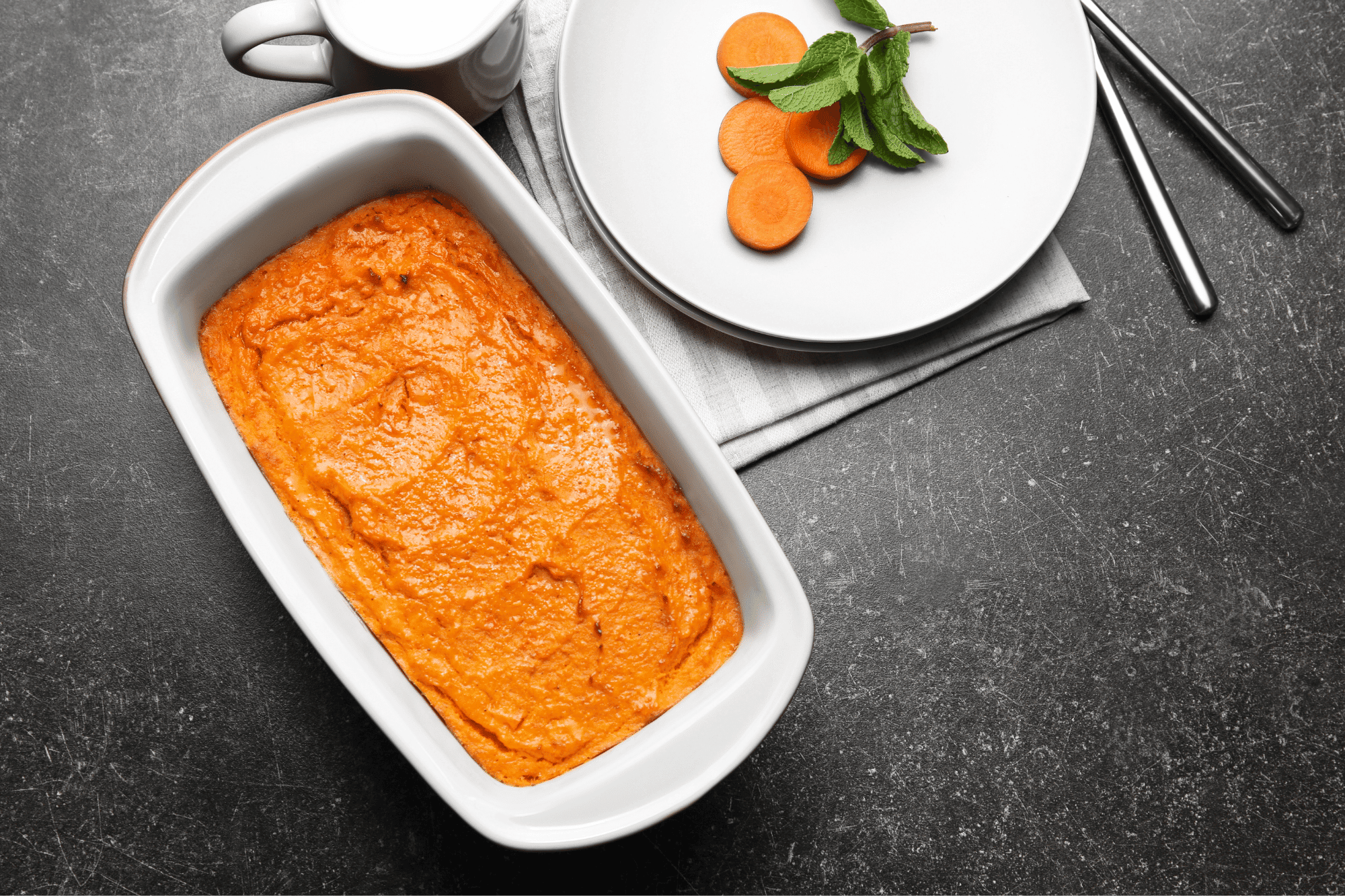





This fluffy carrot souffle is the dish that disappears first at every holiday table. It’s sweet and buttery with an incredibly light texture — somewhere between a soufflé and a carrot cake, but far easier to make than either one.
You start by boiling carrots until they’re melt-apart tender, then blend them smooth with sugar, butter, eggs, and just a touch of flour. The result is a golden, puffed-up dish that tastes like dessert but works beautifully as a side. Kids who swear they hate carrots will devour it without question.
I’ve brought this to potlucks, Thanksgiving dinners, and casual weeknight meals, and the reaction is always the same — people go back for seconds and then ask for the recipe. The best part? It comes together in about 15 minutes of hands-on time before the oven does the rest.
If you love carrot cake flavors but want something that pairs with roasted turkey, glazed ham, or a simple rotisserie chicken, this fluffy carrot soufflé is exactly what you need on your table today.
Fluffy Carrot Souffle Recipe
Ingredients
- 3 pounds carrots peeled and chopped
- 1 ½ cups sugar
- 3 teaspoons baking powder
- 3 teaspoons vanilla extract
- 4 tablespoons all-purpose flour
- 6 medium eggs beaten
- 1 cup butter softened
- 2 teaspoons confectioner's sugar optional
Instructions
- In a large pot, boil carrots in hot water until soft and tender for about 20 to 25 minutes.
- While the carrots are cooking grease a 13×9 backing pan with butter
- Drain carrots thoroughly and transfer them to a mixing bowl. Mash carrots in the mixing bowl with a pastry blender or puree in a blender.
- While carrots are still hot, add sugar and beat with an electric mixer.
- Beat in baking powder and vanilla until well blended and smooth.
- Beat in flour and eggs until well blended.
- Beat in butter. Pour batter into baking pan.
- Bake at 350 F / 175°C (180°C fan-forced) for 1 hour or until the souffle top is golden brown.
- Dust lightly with 2 teaspoons of confectioner's sugar just before serving
Nutrition
What Makes This Fluffy Carrot Soufflé Special
Unlike a traditional French soufflé that requires careful egg-white folding and split-second timing, this carrot soufflé is wonderfully forgiving. It uses whole beaten eggs rather than separated whites, which means you get a light, fluffy texture without the stress of deflation the moment you open the oven door.
What sets this recipe apart from a standard carrot casserole is the ratio of carrots to sugar and butter. Three full pounds of carrots give it a deeply natural sweetness and vibrant orange color, while the sugar and butter transform the purée into something that tastes remarkably like crustless carrot cake. The baking powder provides lift, creating that signature puffed top that’s golden and slightly firm on the outside but pillowy soft underneath.
This is also one of those rare dishes that bridges the gap between side dish and dessert. Serve it alongside savory mains and it holds its own, but dust it with confectioner’s sugar and it could easily close out a meal.
Tips for Best Results
- Don’t overcook the carrots. Chopped carrots only need 20-25 minutes of boiling to become fork-tender. Cooking them for a full hour makes them waterlogged, which adds excess moisture to your batter and can prevent the soufflé from setting properly.
- Drain the carrots extremely well. After draining in a colander, let them sit for a few minutes and even press them gently with a clean towel. Extra water is the number one reason carrot soufflés turn out dense or soggy.
- Purée until completely smooth. A pastry blender will leave small chunks. For the fluffiest result, use a food processor or blender to get a silky-smooth carrot purée with no lumps.
- Add the butter while the carrots are still warm. The residual heat helps the softened butter melt and incorporate evenly into the batter without leaving greasy pockets.
- Don’t open the oven during the first 45 minutes. Like any soufflé, a sudden temperature drop can cause the center to sink. Check for doneness only in the last 15 minutes.
- Use room-temperature eggs. Cold eggs can cause the butter in the warm carrot mixture to seize slightly, leading to an uneven batter.
Substitutions and Variations
- Reduce the sugar: If you prefer a less sweet version for a savory dinner, reduce the sugar to 1 cup. The carrots themselves provide natural sweetness, so the soufflé will still taste pleasantly sweet.
- Add warm spices: Stir in 1 teaspoon of ground cinnamon and ¼ teaspoon of ground nutmeg with the vanilla to lean even further into carrot cake territory.
- Use gluten-free flour: Swap the 4 tablespoons of all-purpose flour for a 1:1 gluten-free flour blend. The amount is so small that there’s virtually no texture difference.
- Make it dairy-free: Replace the butter with an equal amount of coconut oil or a plant-based butter stick. The flavor shifts slightly but the texture remains fluffy.
- Add a pecan topping: Before baking, sprinkle ½ cup of chopped pecans and 2 tablespoons of brown sugar over the top for a praline-style crust.
- Use sweet potatoes: Replace half the carrots with an equal weight of peeled, chopped sweet potatoes for a carrot–sweet potato soufflé hybrid with even deeper flavor.
Storage and Reheating
Refrigerator: Let the carrot soufflé cool completely, then cover the pan tightly with aluminum foil or plastic wrap. It keeps well in the refrigerator for up to 4 days. The texture will deflate somewhat as it cools — this is completely normal and expected.
Reheating: Cover the pan with foil and reheat in a 325°F oven for 20-25 minutes until warmed through. The soufflé won’t puff back up to its original height, but the flavor and soft texture remain excellent. Avoid microwaving full portions, as the edges tend to dry out unevenly.
Freezing: This soufflé freezes well for up to 2 months. Wrap individual portions or the entire pan in plastic wrap followed by a layer of aluminum foil. Thaw overnight in the refrigerator before reheating in the oven. Do not freeze after reheating.
Make-ahead option: You can prepare the batter up to 24 hours in advance and store it covered in the refrigerator. Let it come to room temperature for 30 minutes before baking, and add 5-10 extra minutes of oven time since the batter will be cooler.
What to Serve With This
This carrot soufflé is a natural fit for holiday tables. Pair it with roasted turkey, glazed ham, or prime rib — its sweetness complements rich, savory proteins beautifully. For a complete Thanksgiving or Easter spread, serve it alongside green bean casserole, mashed potatoes, and cranberry sauce.
For everyday dinners, it works well beside rotisserie chicken, baked pork chops, or honey-glazed salmon. The buttery sweetness of the soufflé balances anything with a savory or slightly salty profile.
If you’re leaning into the dessert angle, serve squares of carrot soufflé warm with a dollop of whipped cream or a drizzle of cream cheese glaze made from powdered sugar, cream cheese, and a splash of vanilla. A scoop of vanilla ice cream alongside a warm square is also surprisingly wonderful.
Frequently Asked Questions
Is carrot soufflé the same as carrot casserole?
They’re very similar and the names are often used interchangeably, especially in Southern cooking. The main difference is that a carrot soufflé typically has more eggs and baking powder, giving it a lighter, more airy texture than a dense casserole. This recipe uses 6 eggs and 3 teaspoons of baking powder, which produces that signature fluffy rise.
Can I use baby carrots instead of regular carrots?
Yes, baby carrots work fine and save you peeling time. Use the same weight — 3 pounds — and boil them for about 15-20 minutes since they’re smaller and cook faster. Just be sure to drain them thoroughly, as baby carrots can hold more surface moisture.
Why did my carrot soufflé sink in the middle?
The most common causes are opening the oven door too early, underbaking, or excess moisture in the carrot purée. Make sure your carrots are well-drained after boiling, bake for the full hour at 350°F, and resist checking until at least the 45-minute mark. A slight sink after cooling is normal — it won’t puff as tall as it was in the oven.
Can I make carrot soufflé in a Bundt pan or ramekins?
Absolutely. Grease the Bundt pan well with butter and flour since the batter is sticky. For individual ramekins, reduce the baking time to 30-35 minutes and check for doneness with a toothpick. Ramekins make an elegant presentation for dinner parties.
How do I know when the carrot soufflé is done?
The top should be golden brown and slightly firm to the touch. Insert a toothpick into the center — it should come out clean or with just a few moist crumbs. The edges will pull away from the pan slightly. If the top is browning too quickly but the center is still jiggly, tent it with foil and continue baking.
Is this carrot soufflé very sweet?
With 1½ cups of sugar plus the natural sweetness of 3 pounds of carrots, this recipe is definitely on the sweeter side — closer to a dessert than a savory side. If you want to serve it as a dinner side dish, you can safely reduce the sugar to 1 cup or even ¾ cup without affecting the texture.
Can I use canned carrots instead of fresh?
Canned carrots will work in a pinch, but the flavor and color won’t be as vibrant. You’ll need about six 14.5-ounce cans, well drained, to equal 3 pounds. Skip the boiling step entirely — just drain, mash or purée, and proceed with the recipe. Fresh carrots genuinely make a noticeable difference here.
The History of Carrot Soufflé
Carrot soufflé has deep roots in Southern American cooking, where sweet vegetable casseroles have been holiday staples for generations. Dishes like sweet potato casserole, corn pudding, and squash casserole all follow the same template: cook a vegetable until tender, enrich it with butter, eggs, and sugar, then bake until golden and puffed.
The carrot version gained particular popularity in the 1960s and 1970s, partly thanks to Piccadilly Cafeteria, a beloved Southern chain that served carrot soufflé as one of its signature sides. Their version became so iconic that copycat recipes spread through church cookbooks and community recipe cards across the South.
While the name “soufflé” borrows from French culinary tradition, this dish is far more relaxed than a classic French soufflé. There’s no careful folding of egg whites or anxious watching through the oven window. It’s really a sweet carrot pudding that puffs beautifully in the oven — proof that Southern cooks have always known how to turn humble root vegetables into something truly celebratory.