







































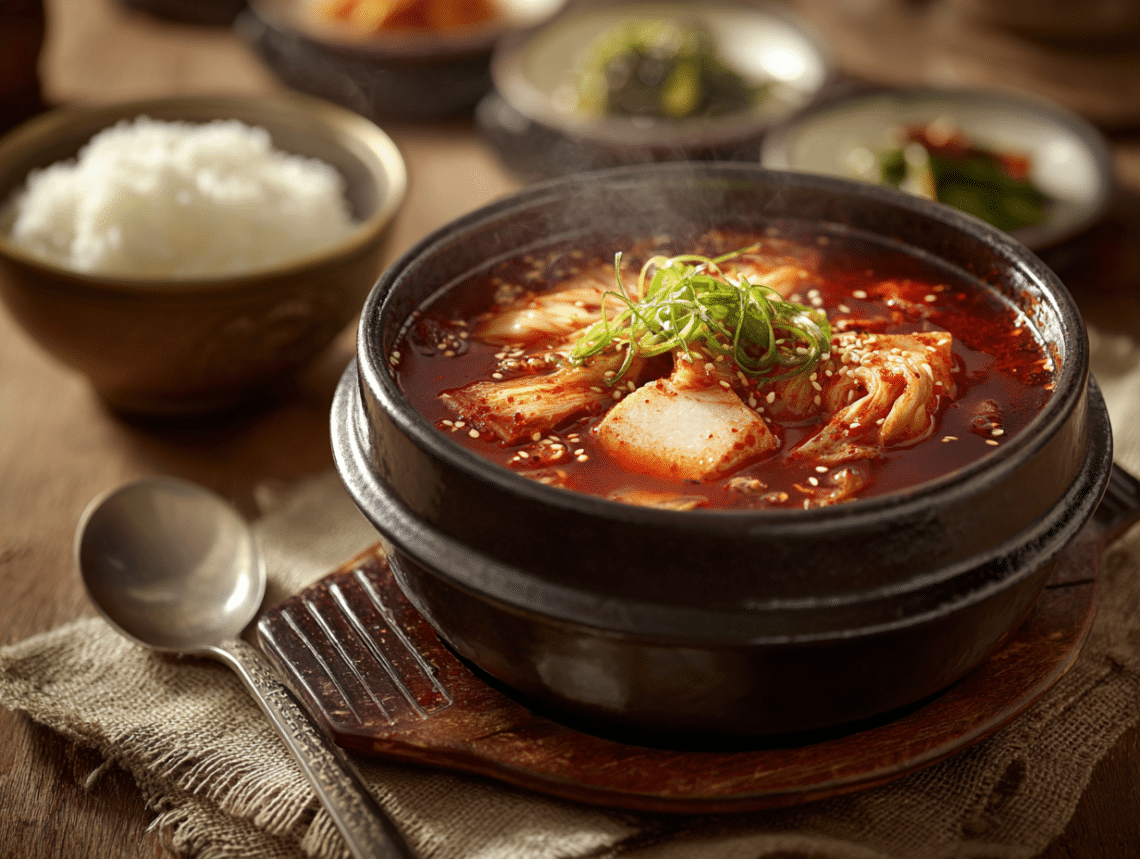
Kimchi jjigae is a Korean pork belly and kimchi stew that comes together in 35 minutes using a short list of pantry staples. The honest reason to make it on a weeknight: it tastes like it took much longer, and the main ingredient — aged kimchi — is something most people already have sitting in the back of the fridge. This recipe uses anchovy stock, gochujang, and gochugaru to build a broth that’s spicy, savory, and a little funky in the best way.
The technique that matters
The stir-fry step before adding the stock is where the flavor gets built, so don’t rush it. Browning the pork belly first — 5 to 7 minutes until the edges color and the fat renders — gives you actual fond in the pot. When you add the kimchi-spice mixture and stir-fry for another 2 to 3 minutes, the gochujang caramelizes slightly and the kimchi loses its raw edge. If you skip straight to adding liquid, the broth tastes flat. High heat and a dry pot at this stage matter more than anything else in the recipe.
Ingredient notes
- Aged kimchi: This is non-negotiable for the flavor to work. Kimchi that’s been open in the fridge for at least a month and smells noticeably sour is what you want. Fresh kimchi from a newly opened jar won’t give you the same depth.
- Anchovy stock: Sold as dried anchovies (myeolchi) at Korean or Asian grocery stores — simmer a small handful with a piece of dried kelp (dashima) in water for 10 minutes, then strain. In a pinch, a good-quality fish sauce stirred into plain water (about 1 teaspoon per cup) gets you closer than plain water alone.
- Gochugaru: Korean chili flakes, not cayenne or regular chili powder. The flavor is smokier and less sharp. Most Asian grocery stores carry it, and it keeps well in the freezer. If you genuinely can’t find it, a mix of mild paprika and a small amount of cayenne is a workable substitute — use 1½ tablespoons paprika and ½ teaspoon cayenne per 2 tablespoons called for.
- Cheongju (Korean rice wine): Mirin works fine here and is easier to find. Dry sherry is also a reasonable swap.
- Tofu: Medium-firm or soft both work. Firm tofu holds its shape better if you’re reheating leftovers.
Troubleshooting
- Broth tastes thin or one-dimensional: Add 1 to 2 tablespoons of kimchi brine (the liquid in the kimchi jar) and let it simmer for another 2 minutes. The brine adds salt, acid, and fermented depth all at once.
- Stew is too spicy to eat: Add a few more cubes of tofu — it absorbs heat — or stir in a small splash of water and a pinch of sugar to pull the spice back without diluting the flavor too much.
- Pork belly is chewy, not tender: It needs more time. Give it an extra 5 minutes of simmering with the lid on before you add the tofu. Thin slices should be tender by 15 minutes total cook time; thicker cuts may need up to 20.
- Tofu falling apart in the pot: Add it gently and resist stirring after it goes in. Use a spoon to push it under the broth rather than mixing. Soft tofu especially needs to be handled like it might break — because it will.
- Stew tastes too salty: A small amount of unsalted tofu or a few extra tablespoons of plain water can balance it. Hold off on adding the salt called for until the very end, after you’ve tasted — the kimchi, brine, and gochujang all bring salt of their own.
Make-ahead notes
This stew keeps well. Store leftovers in an airtight container in the fridge for up to 3 days — the flavor actually improves by day two as the broth continues to develop. Reheat gently on the stovetop over medium-low heat with a splash of water or stock to loosen it; the tofu will soften further but still tastes good. For freezing, leave the tofu out before you freeze — it turns grainy when thawed. Freeze the stew base (pork, kimchi, broth) for up to 2 months, then add fresh tofu when you reheat. Skip the sesame oil garnish until just before serving — adding it during reheating dulls the flavor.

Kimchi Jjigae (Kimchi Pork Belly Stew)

Ingredients
- 9 oz pork belly thinly sliced
- 1 tbsp rice wine Korean rice wine (cheongju) or mirin
- 1 medium onion thickly sliced
- 1 cup kimchi aged, cut into bite-size pieces
- 2 tbsp gochujang chili paste
- 2 tbsp gochugaru chili powder
- 3 cloves garlic finely minced
- 1 tsp sesame oil drizzled before serving
- 1 tsp cooking oil
- 3 sprigs green onions sliced
- 10.5 oz tofu medium-firm or soft, cubed (2cm)
- 1 tsp salt
- 3 cups anchovy stock
- 2 tsp sesame seeds toasted, for garnish
- 2-3 tbsp kimchi brine optional, recommended
Instructions
- Mix the pork slices with rice wine in a bowl and keep them aside.
- Meanwhile, slice the onions and mix them nicely with kimchi, garlic, gochugaru and gochujang.
- Heat the cooking oil in a medium-large pot or ttukbaegi over medium-high heat. Add the marinated pork belly slices in a single layer and stir-fry for 5 to 7 minutes until the edges are lightly browned and the fat has started to render.
- Add the kimchi-onion-spice mixture to the pot and stir-fry for 2–3 minutes until the kimchi is slightly caramelised and the gochujang is fragrant. Pour in the anchovy stock and bring to a boil over high heat.
- Reduce the heat to medium-low and simmer for 10 minutes until the pork belly is fully cooked through and tender. Add the tofu cubes and sliced green onions, then simmer for another 5 minutes until the tofu is heated through and has absorbed some of the broth flavour.
- Taste the broth and adjust with salt or a splash of kimchi brine if needed. Remove from heat, drizzle with sesame oil, and serve immediately in the cooking pot. Top each bowl with toasted sesame seeds and finely sliced green onion tops. Serve with steamed white rice.
Nutrition
Common questions
Can I use fresh kimchi if that’s all I have?
You can, but the stew will taste noticeably milder and less complex. To compensate, add an extra tablespoon of gochujang and a teaspoon of rice vinegar to mimic some of the sourness that aged kimchi provides naturally.
What can I use instead of pork belly?
Pork shoulder (butt) cut into thin strips works well and is often cheaper. Canned tuna is a common Korean home-cook substitute — drain it well and add it with the kimchi rather than browning it first.
Do I have to use anchovy stock, or can I just use water?
Water works in an emergency, but the broth will taste noticeably thinner. A teaspoon of fish sauce per cup of water is a faster substitute that gets you most of the umami without making stock from scratch.
Is this recipe very spicy?
At the amounts listed, it’s medium-hot — noticeable heat but not overwhelming for most adults. Cut the gochugaru to 1 tablespoon and the gochujang to 1 tablespoon if you want a milder version, and add more tofu to further absorb the heat.
What do I serve with kimchi jjigae besides rice?
Steamed white rice is the standard pairing and genuinely the best one — it balances the salty, spicy broth. A few simple banchan (small Korean side dishes) like cucumber slices or blanched spinach round out the meal without much extra work.
More recipes to try
- Authentic Japanese Chicken Teriyaki
- Quick and Delicious Homemade Chinese Fried Rice
- Fresh Vegetable Spring Rolls
- Soft and Sweet Japanese Mochi